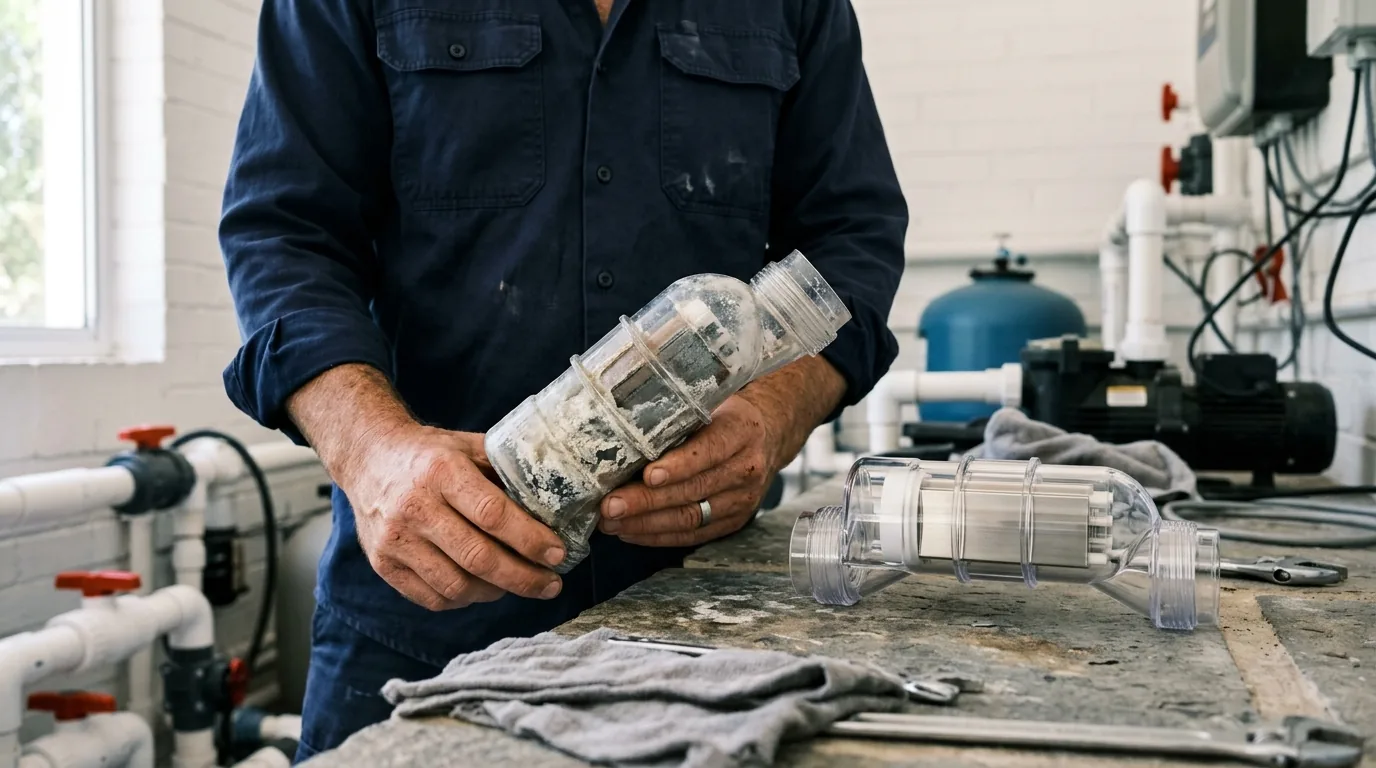
Repairing a salt chlorinator in Mallorca usually starts with a technician visit to test the system, descale the cell and check the flow switch, sensors and control unit. In many cases cleaning or a single part brings it back to life. If the cell is worn out, a replacement cell is the most common repair, and when the whole unit is old or parts are hard to find, replacing the system can make more sense. This guide explains what the repair involves, what it typically costs and how to make the new parts last in the island's hard water.
What a repair visit involves
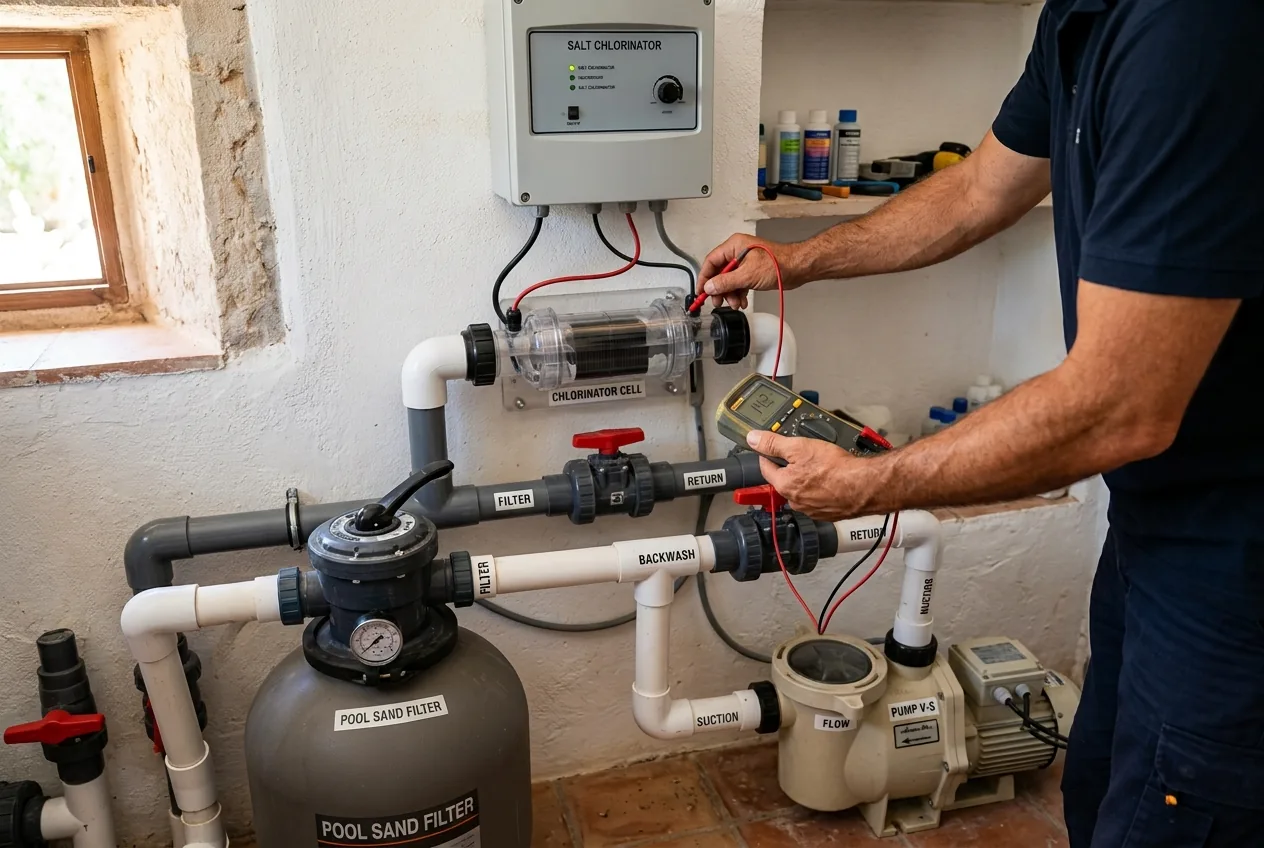
A good technician works through the system in a logical order rather than simply swapping the cell. A typical visit includes:
- Testing the water: salt level, pH, free chlorine and, where relevant, hardness and stabiliser
- Removing and inspecting the cell, then descaling it if it is coated with calcium
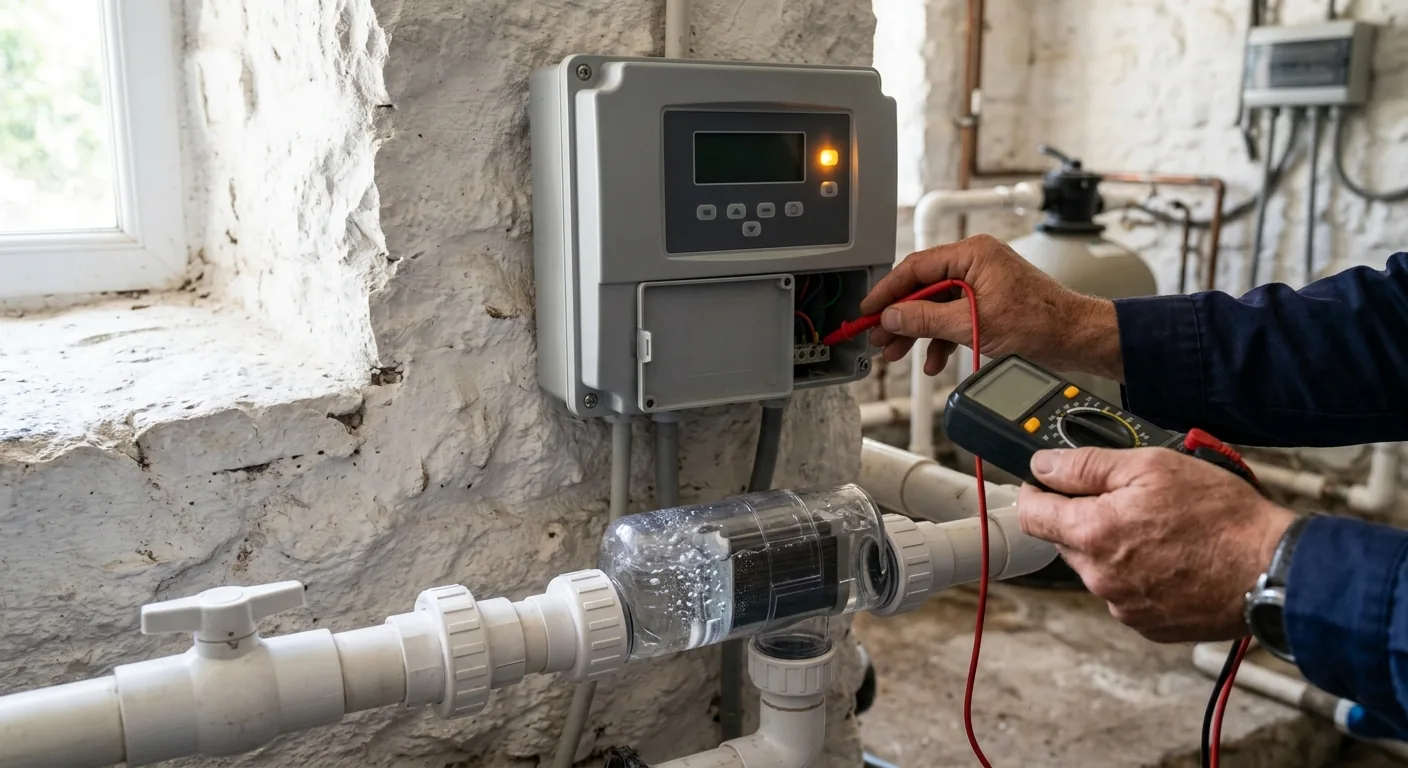
- Measuring the cell output or current draw to see whether the plates still produce chlorine efficiently
- Checking the flow switch or gas sensor, which stops the cell when there is no water flow
- Testing the salt and temperature sensors, if your model has them
- Checking the control unit: display, power supply board, fuses and error history
- Inspecting wiring and connectors between the control unit and the cell for corrosion, which is common near the coast because of salt air
- Confirming pump running hours and filter condition, since poor circulation often looks like a chlorinator fault
At the end you should get a clear explanation of what was wrong, what was fixed on the spot and what needs ordering.
Parts that are commonly replaced and how long cells last
The salt cell is the part that wears out. Its coated titanium plates lose their coating gradually, and once it is gone the cell can no longer produce enough chlorine, however clean it is. Other parts that are often replaced include the flow switch, cell cables and connectors, the cell housing or unions if they crack or leak, sensors, and the power board inside the control unit.
How long a cell lasts varies widely. As a rough guide, many cells last a few seasons, but the real lifespan depends on the hours the system runs each year, the output setting, water hardness, how often the cell scales up and how well pH and salt are kept in range. Cells in holiday homes that run at high output all summer with little supervision tend to wear out faster.
Repair or replace the whole system?
Replacing just the cell is usually the right call when the control unit works well and the model is still supported. Replacing the whole system becomes worth considering when:
- The unit is old and the control board or display is also failing
- Original or compatible cells for your model are no longer available, or are expensive relative to a new system
- The system is undersized for the pool, so it struggles in peak summer
- You want features your current unit lacks, such as automatic pH or redox control, or app monitoring
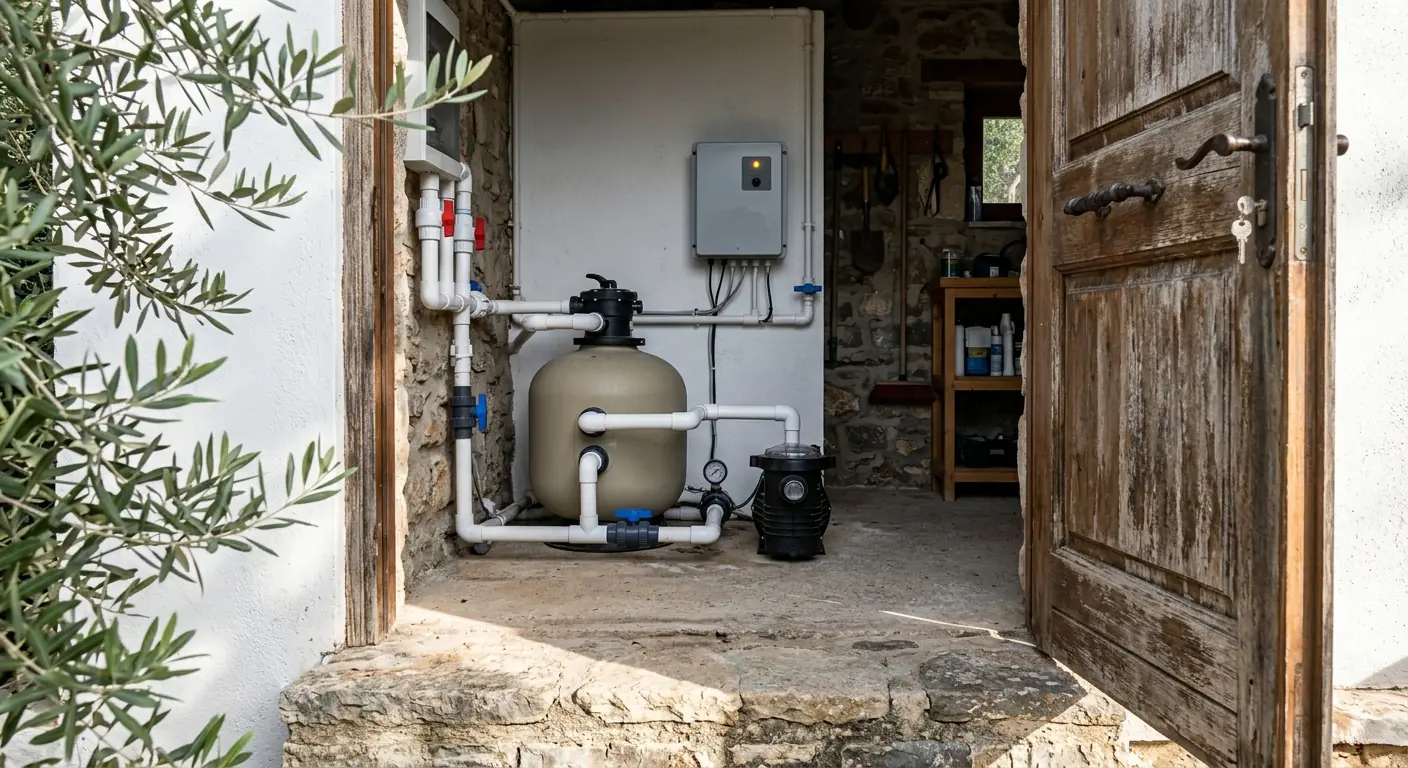
A useful comparison: if a replacement cell plus other repairs comes close to the price of a new salt chlorination system, the new system often gives better value and a fresh warranty. If your pump and filter are also old, it may be time to look at renewing the filtration and salt system together, often alongside a broader pool renovation.
Replacement cells: original or compatible?
Most manufacturers sell original replacement cells, and several suppliers offer compatible cells designed to fit popular models. Compatible cells can be cheaper, but quality varies. Before ordering anything, note the exact brand, model and cell size from the label on the control unit or the cell itself. Check that the cell is rated for your pool volume, that the connectors and housing match, and that it will not void any remaining warranty on the control unit. Ask the technician what warranty comes with the cell they fit.
Adding pH and redox control
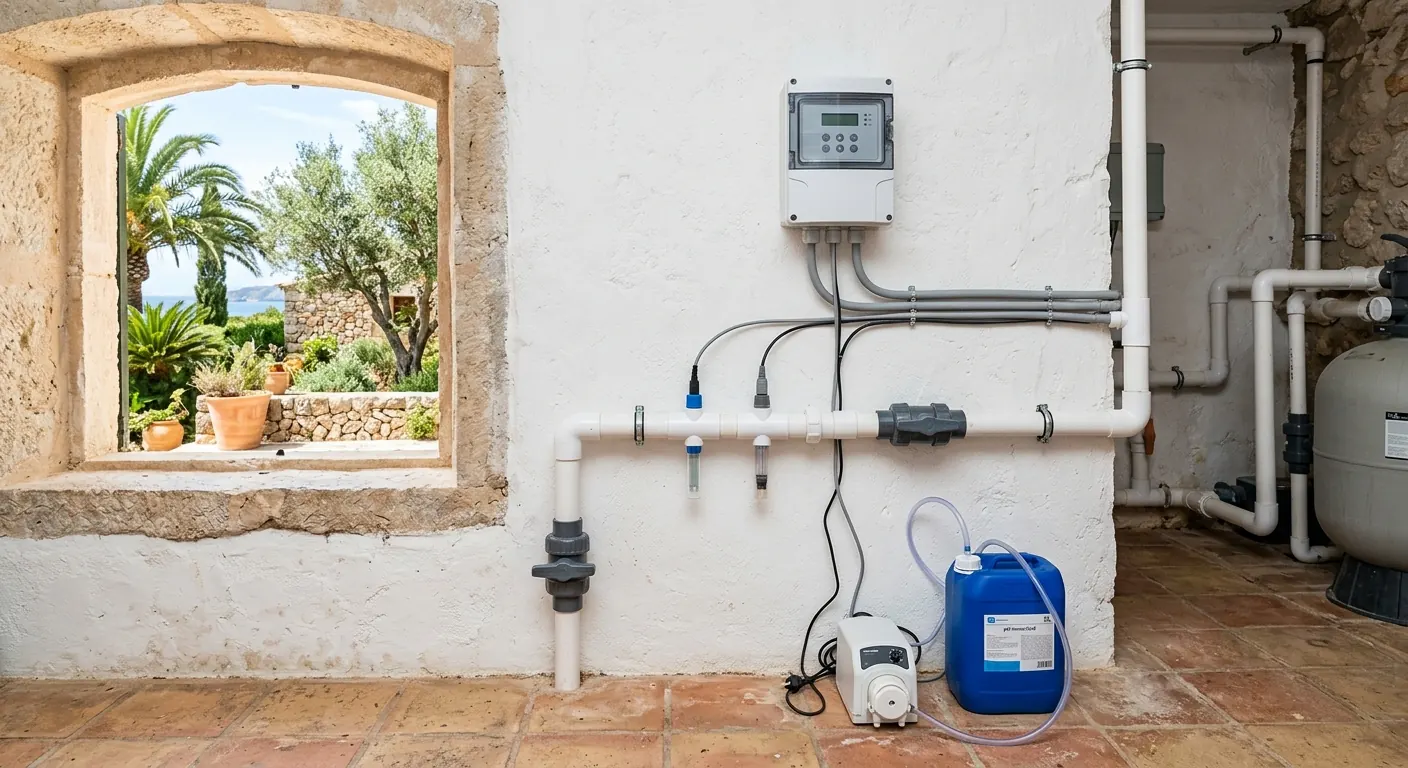
A repair is a good moment to add automatic pH control, and possibly redox (ORP) control. Salt chlorination tends to push pH up, and in Mallorca's hard water high pH also speeds up scaling. A pH controller doses acid automatically to keep it in range, which helps the chlorine work effectively and protects the new cell. A redox controller adjusts chlorine production to demand, so the cell does not run harder than necessary. Both need regular probe calibration and replacement probes over time, so ask about maintenance as well as installation.
Keeping a new cell working in hard water
Scale is the main enemy of salt cells on the island. To get the most out of a new cell:
- Keep pH in the recommended range, ideally with automatic dosing
- Inspect the cell regularly in summer and descale it as soon as you see a white crust, following the manufacturer's instructions
- Use self-cleaning polarity reversal if your unit has it, but do not rely on it alone
- Avoid running at maximum output when it is not needed
- Keep salt within the specified range, since low salt stresses the cell
- Consider how you top up the pool: fill water from wells or hard mains supplies adds calcium every time
- Ask about reducing chlorine production in winter, when the water is cold and demand is lower
When to book and what to ask
Spring is the busiest time for pool technicians in Mallorca, as owners open their pools and prepare rentals for the season. If you know the cell is tired, booking the repair in autumn or winter usually means faster appointments and time to order parts calmly. If something fails in spring or summer, book early and mention any error codes and the model when you call.
Useful questions to ask a technician:
- Have you tested the cell output, and how much life does it have left?
- Is the fault in the cell, the flow switch, the sensors or the control unit?
- Are you fitting an original or compatible cell, and what warranty does it have?
- Is my model still supported, and are parts readily available?
- Would adding pH or redox control make sense for my pool?
- Is a new system better value than repairing this one?
Costs
Typical ranges in Mallorca, before IVA (VAT):
- Diagnosis and cell cleaning: €90–250
- Replacement salt cell, fitted: €400–1,200
- New salt chlorination system: €900–2,500
- New filtration and salt system: €2,500–7,000
The final price depends on the model, cell size, whether parts are original or compatible, access to the plant room and whether additional parts such as sensors or a pH controller are included.
Getting quotes
On Mallorca Villa Experts you can describe your salt chlorinator problem once, including the model and any error messages. Up to 3 vetted pool specialists in your area will then quote you directly, free and with no obligation, so you can compare repair and replacement options side by side.