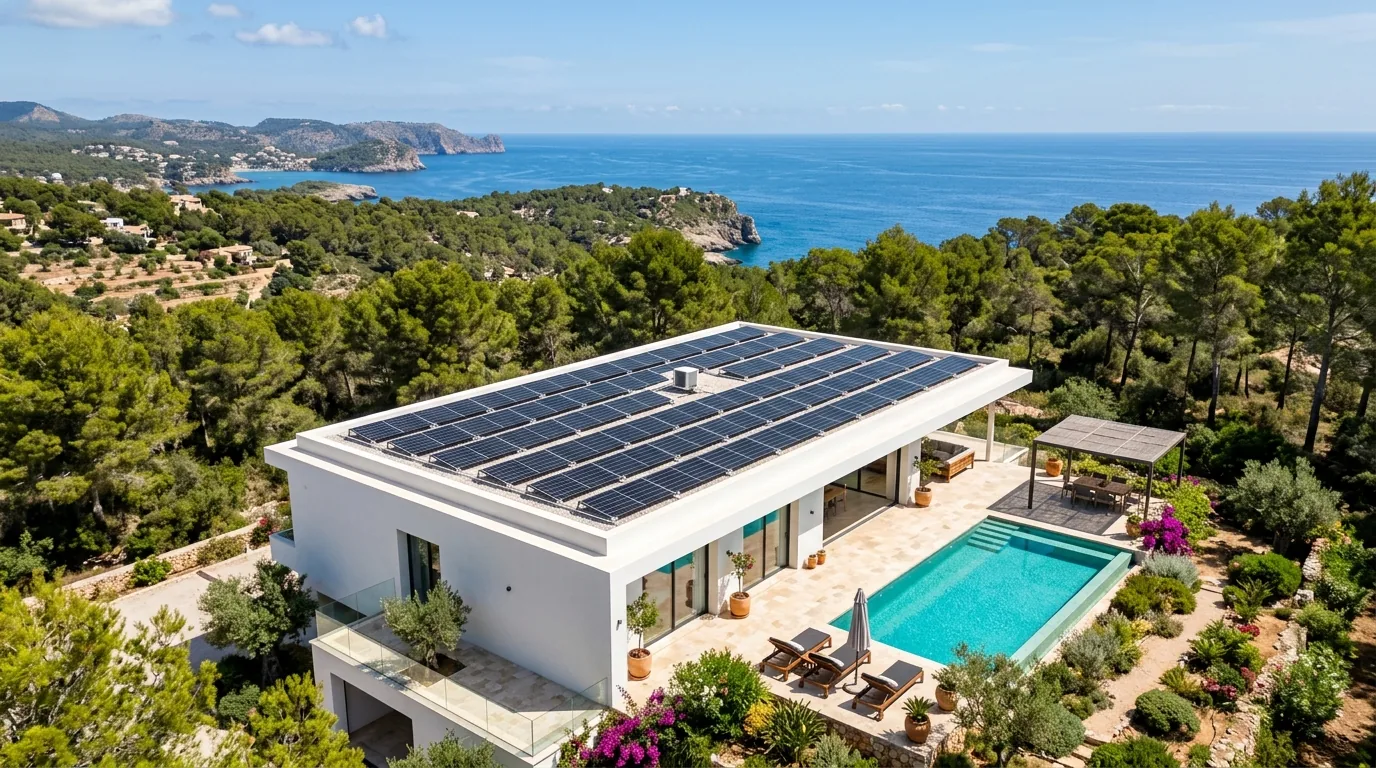
Yes, solar panels make a lot of sense for most villas in Mallorca. With about 2,800 hours of sunshine a year and high electricity use from pools, air conditioning and heat pumps, a well-sized system can cover a large share of your daytime consumption. Permits, roof layout and protected-area rules still need checking for each property.
Why solar suits Mallorca villas
Mallorca gets about 2,800 hours of sunshine a year, and the sunniest months are also the months when villas use the most electricity. A pool pump running for many hours a day, air conditioning in several bedrooms, a pool heat pump and guests in a holiday rental all push consumption up exactly when the panels produce the most.
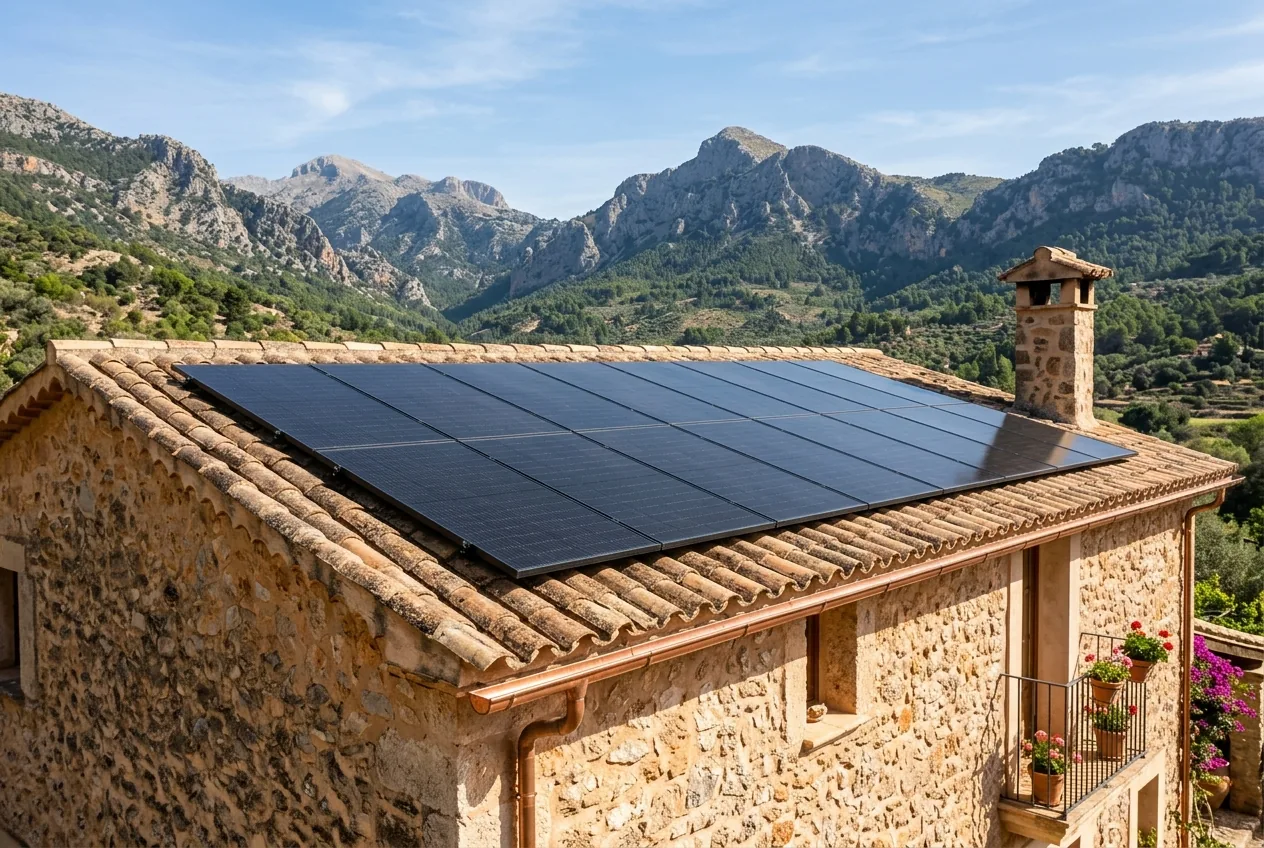
Many villas also have generous roof areas, flat terraces or outbuildings such as garages and pool houses that can carry panels. Fincas often have space for a small ground-mounted array, although this usually needs closer planning review than a roof installation.
There are local factors to plan for. Salt air on the coast is hard on cheap frames and fixings, so stainless or anodised mounting hardware is worth insisting on. The tramuntana wind can be strong, especially in the north, which affects how panels are anchored on flat roofs. Dust and calima episodes mean panels benefit from occasional cleaning, ideally with softened or demineralised water rather than hard mains water, which leaves limescale marks.
Sizing a system for your villa
The right size depends on how much electricity you use and when. The best starting point is a year of electricity bills, or the hourly consumption data your distributor can provide.
As a rough guide:
- A 5–6 kWp system suits a smaller villa or a home with moderate air conditioning and a pool pump.
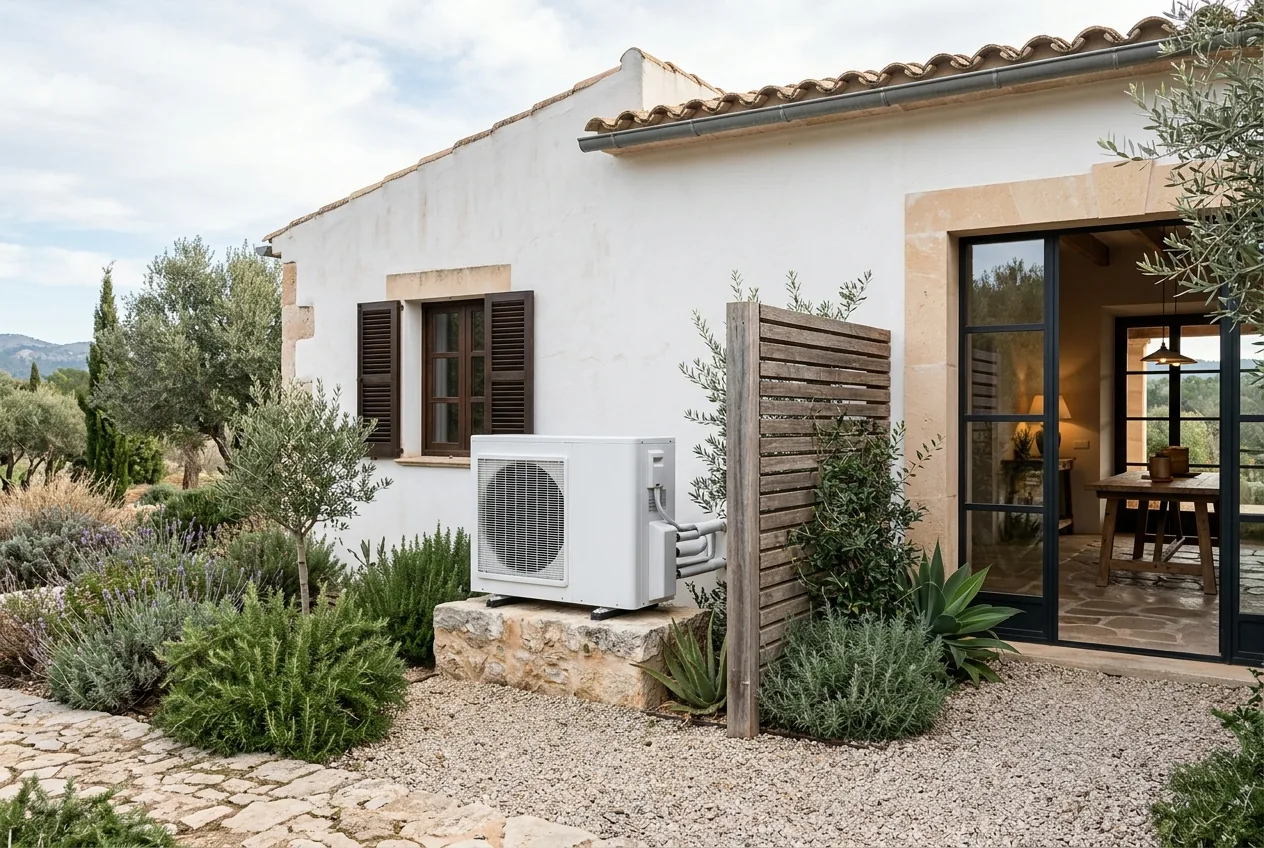
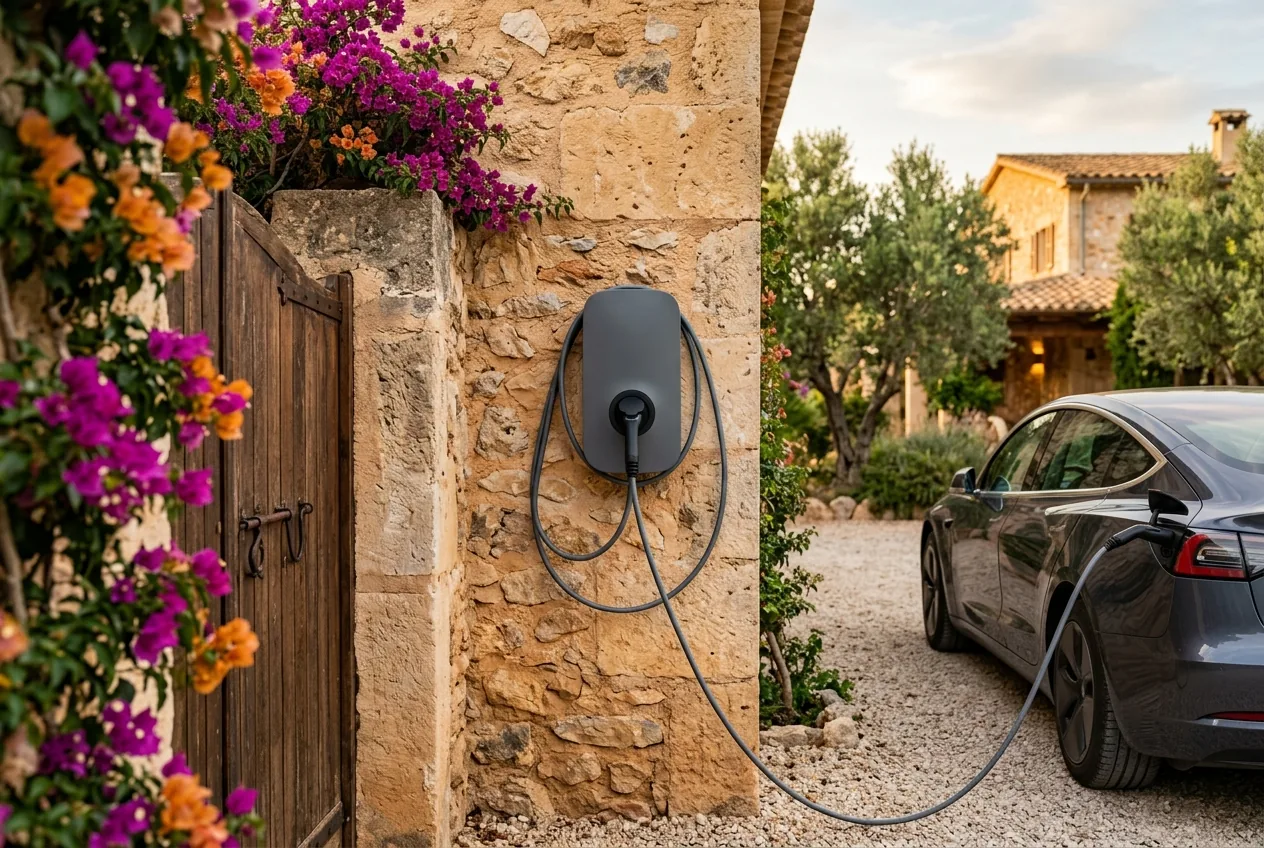
- A 10–12 kWp system suits a larger villa with a pool, several air conditioning units, a heat pump or an electric car.
- Holiday rentals that are busy in summer and empty in winter may be better sized for summer daytime use than for the annual total.
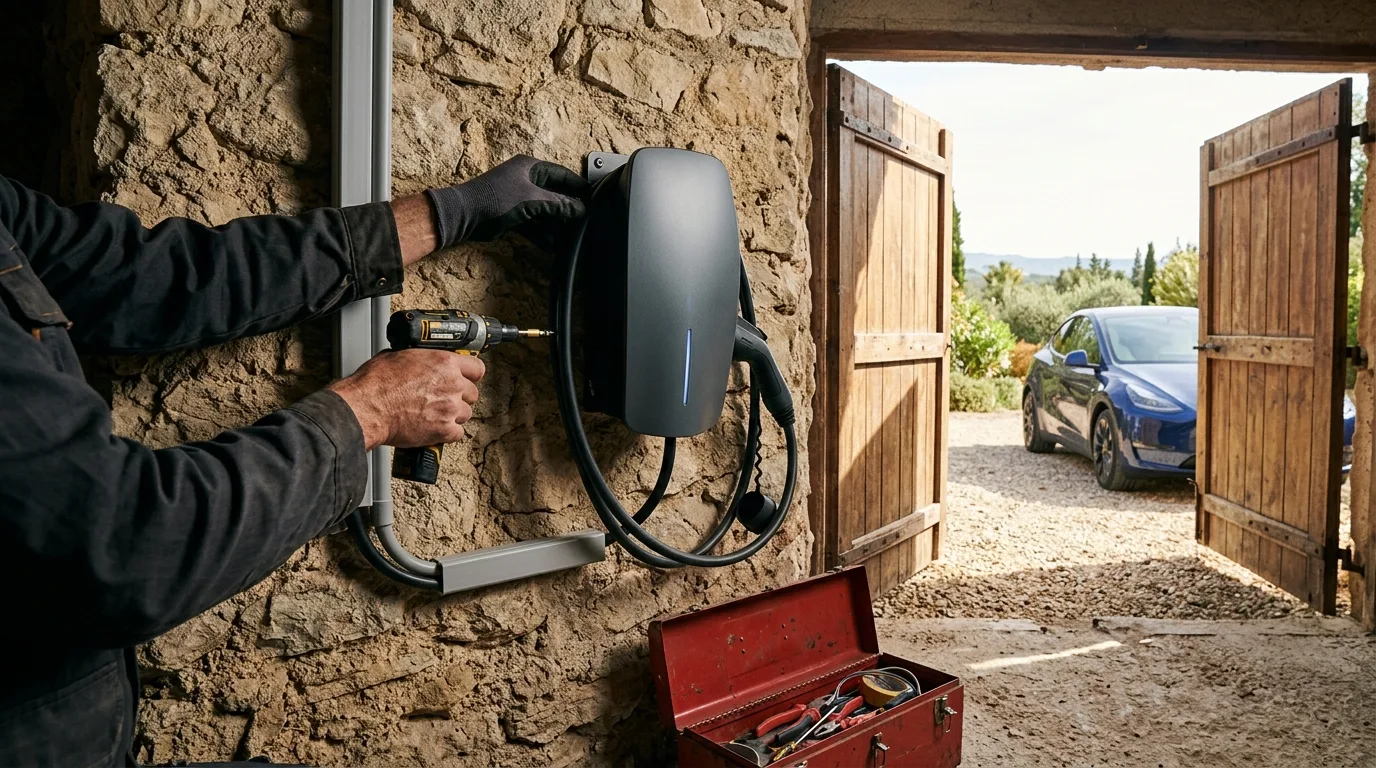
Think ahead too. If you plan to add aerothermal heating, a pool heat pump or an EV charger in the next few years, tell the installer now. It is usually cheaper to size the inverter and wiring for future loads at the start than to upgrade later.
Self-consumption and surplus compensation
Most villa systems in Spain are installed as grid-connected self-consumption (autoconsumo). You use the solar power directly in the house while the sun shines, and the grid covers the rest. When the panels produce more than you use, the surplus is exported.
In most cases you can join a simplified compensation scheme, where the energy you export is credited against the energy part of your electricity bill each month. That credit is usually worth less than the price you pay for grid electricity, and it generally cannot reduce the bill below the fixed charges. The exact terms depend on your supplier and contract, so ask your installer and your electricity company how compensation works in your case.
The practical lesson is simple: solar pays back fastest when you use the power yourself. Running the pool pump, appliances and pool heat pump during the day helps noticeably.
Batteries and backup power
A home battery stores surplus daytime solar for use in the evening and at night. This raises your self-consumption, which matters because exported energy is usually worth less.
Batteries are not always the best investment. If most of your consumption is during the day, or the villa is empty for much of the year, the extra cost can take a long time to recover. They make more sense for homes that are occupied year round, have high evening use or want resilience against power cuts.
A standard grid-connected system switches off during a power cut for safety reasons. If backup matters to you, for example in rural areas where outages are more frequent, ask specifically for a hybrid inverter and battery with a backup function, and agree which circuits should stay powered.
Permits and protected areas
For a typical rooftop installation on a house in an urban area, a notification to the council (ayuntamiento) is usually enough, rather than a full building licence. Your installer will normally handle this, together with registering the installation with the regional authorities and the connection paperwork with the distributor.
Rules vary between municipalities, and they are stricter in some situations:
- Protected areas such as the Serra de Tramuntana, where visual impact is assessed and panels may need to be low profile or hidden from view.
- Listed or historic buildings and old town centres.
- Ground-mounted arrays and installations on rustic land (suelo rústico), which may need a fuller planning application.
Always check with the council or your installer before ordering equipment, especially for a finca in a protected landscape.
Possible local tax reductions
Some councils in Mallorca offer incentives for homes that install solar, such as a temporary reduction in the annual property tax (IBI) or a discount on the construction tax (ICIO) charged on the works. These vary by municipality and can change from year to year. Ask your council or installer what is currently available and whether you need to apply before the works begin.
Costs and payback
Typical installed prices in Mallorca, before IVA (VAT):
- Solar system 5–6 kWp: €6,500–9,500
- Solar system 10–12 kWp: €12,000–18,000
- Home battery 10–15 kWh: €6,000–12,000
The final price depends on roof type and access, the mounting system, panel and inverter quality, cable runs and any extra design work required in protected areas.
Payback depends mainly on how much of the solar power you use yourself. For villas with high daytime consumption it is often under ten years, and a quality system should keep producing well beyond that. Homes that are empty for long periods, or that export most of their production, will see a slower return. A good installer should show you an estimate based on your own consumption rather than a generic promise.
Choosing an installer
Look for an authorised electrical installer who can legalise the system and handle the paperwork with the council and the distributor. Before signing, ask for:
- A production estimate based on your roof orientation, shading and location.
- A clear breakdown of panels, inverter, battery, mounting and labour.
- Warranty terms for panels, inverter, battery and the installation work itself.
- Who manages permits, registration and the compensation scheme.
- A monitoring app, so you can see production and consumption on your phone.
Compare two or three quotes, and check that the installer has experience with coastal conditions and, if relevant, protected areas. Autumn and winter are often the easiest time to schedule the work.
Getting quotes
If you are considering solar for your villa, you can describe your project once on Mallorca Villa Experts. Up to 3 vetted solar specialists in your area will then quote you directly, free and with no obligation, so you can compare designs and prices side by side.