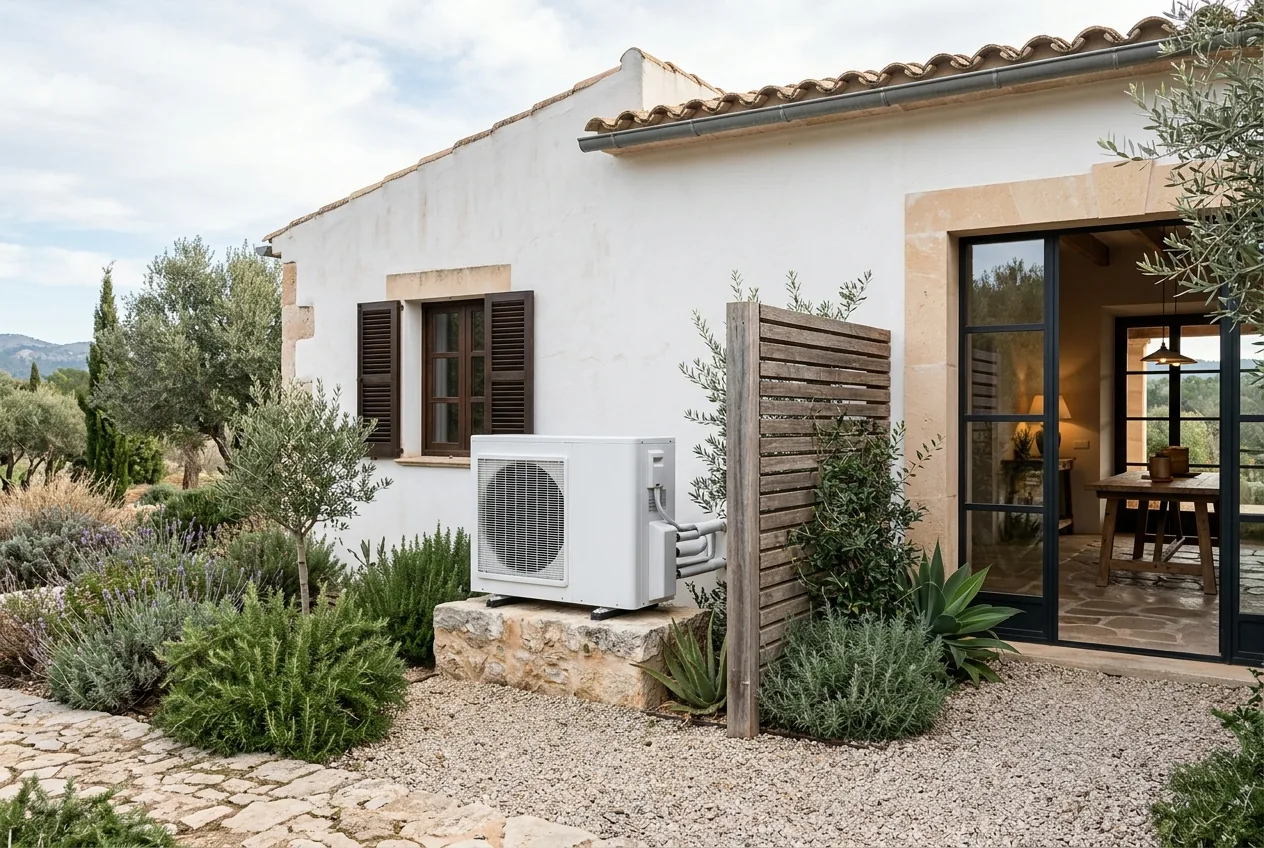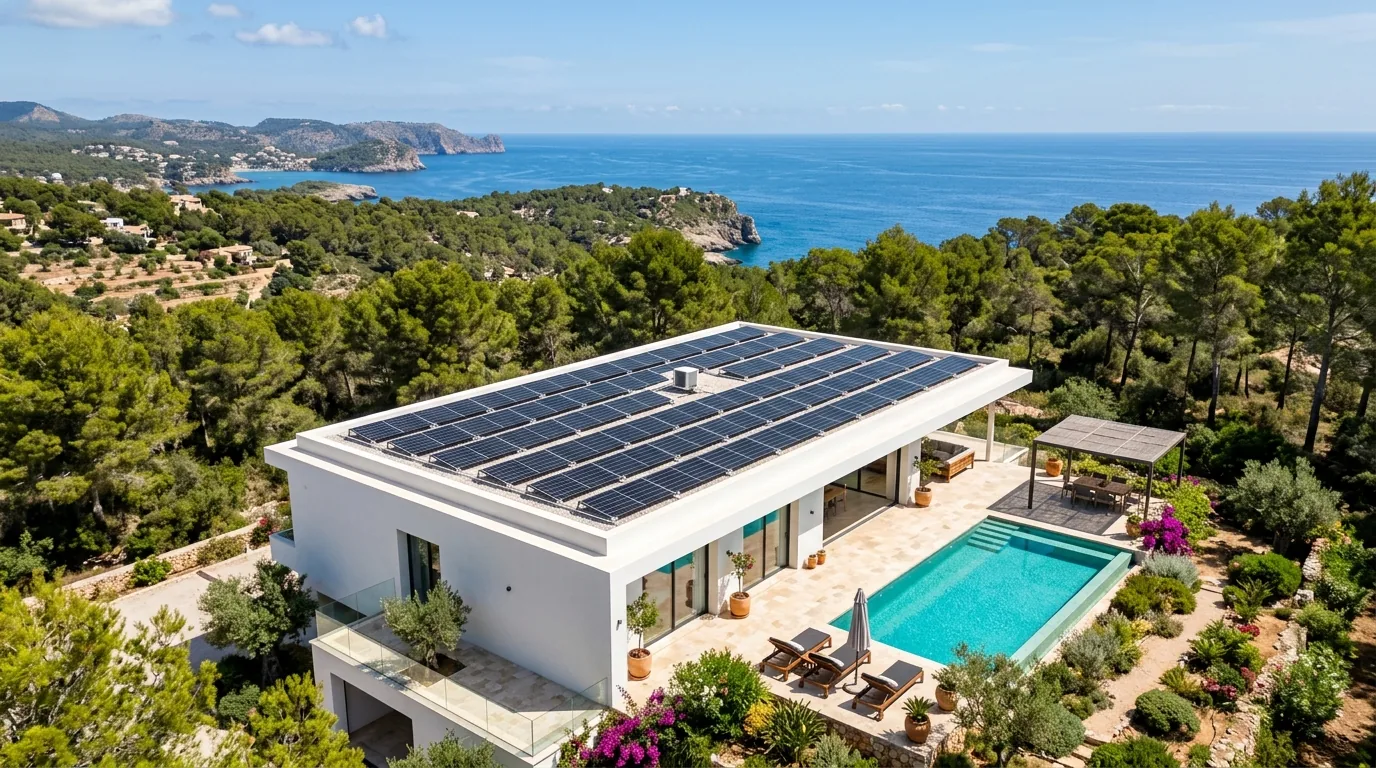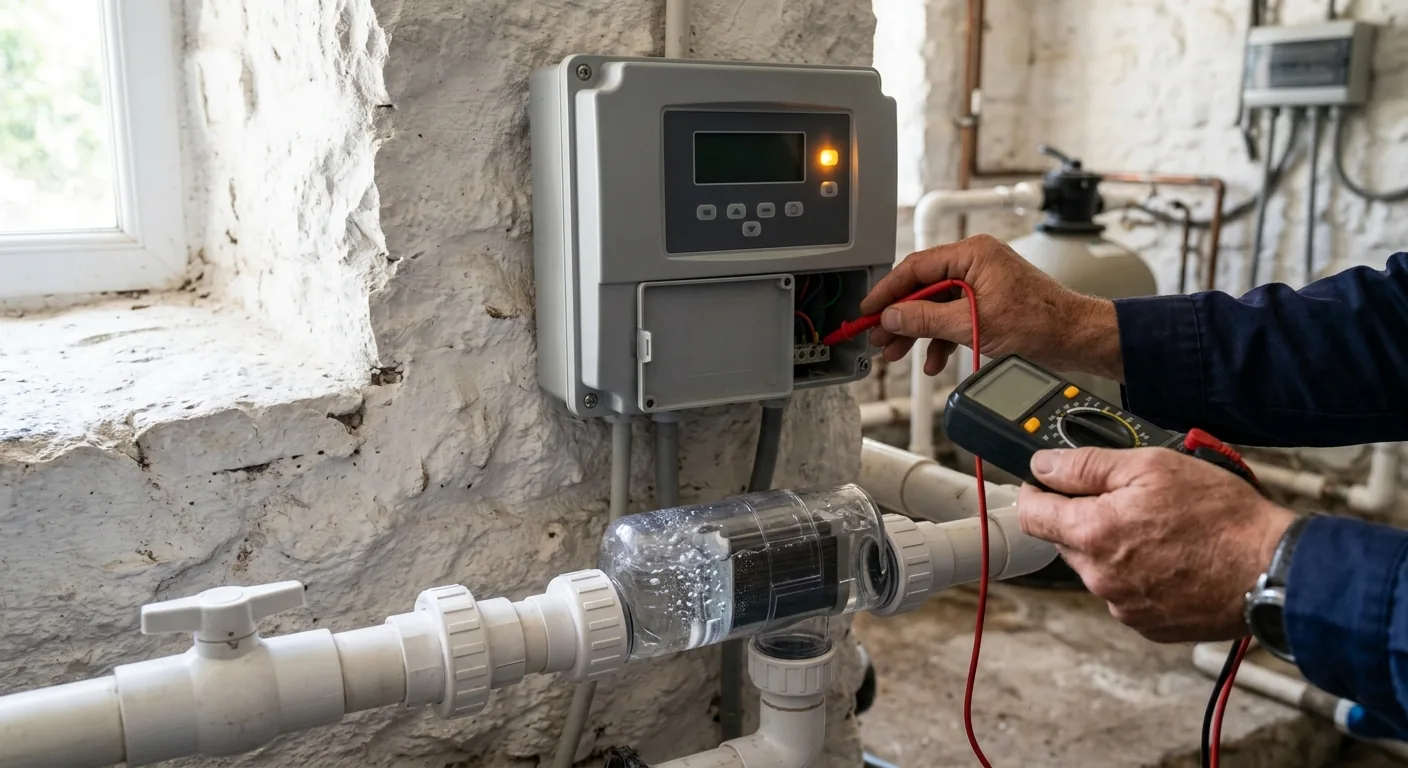
An air-to-water heat pump, known in Spain as aerotermia, is one of the most efficient ways to heat, cool and provide hot water for a villa in Mallorca. It draws heat from the outside air, even in winter, and moves it into a water circuit that feeds underfloor heating, radiators or fan coils and a hot water tank. Thanks to the island's mild climate it works efficiently for most of the year, and it pairs especially well with solar panels.
How an air-to-water heat pump works
An outdoor unit extracts heat from the air using a refrigerant circuit and a compressor, much like an air conditioner running in reverse. That heat is passed to water, which circulates through the house. For each unit of electricity it uses, a good system delivers several units of heat, which is why it usually costs much less to run than electric heaters, heating oil or bottled gas.
One system can cover three jobs:
- Heating in winter, through underfloor heating, radiators or fan coils.
- Cooling in summer, by reversing the cycle, mainly through fan coils or gently through underfloor circuits.
- Domestic hot water all year, stored in an insulated tank.
Mallorca's winters are mild compared with northern Europe, so the heat pump rarely has to work in very cold conditions. That keeps efficiency high, so a well-designed system can be the only heating in most villas.
Underfloor heating, radiators or fan coils
Underfloor heating is the ideal partner. It works at low water temperatures, where heat pumps are most efficient, and gives even, comfortable warmth without visible radiators. It makes most sense in new builds or full renovations, where floors are being lifted anyway. It can also provide light cooling in summer, provided the installer controls humidity to avoid condensation on the floor.
Radiators can work with a heat pump, but older radiators were usually sized for the hotter water of a boiler. They may need to be larger, or replaced with low-temperature models, to heat rooms properly.
Fan coils are compact units, similar to air conditioning indoor units, that blow air across a water coil. They heat and cool quickly and are often the best choice where summer cooling is a priority. Many villas combine underfloor heating for winter with fan coils in bedrooms and living areas for summer.
Pairing with solar and heating the pool
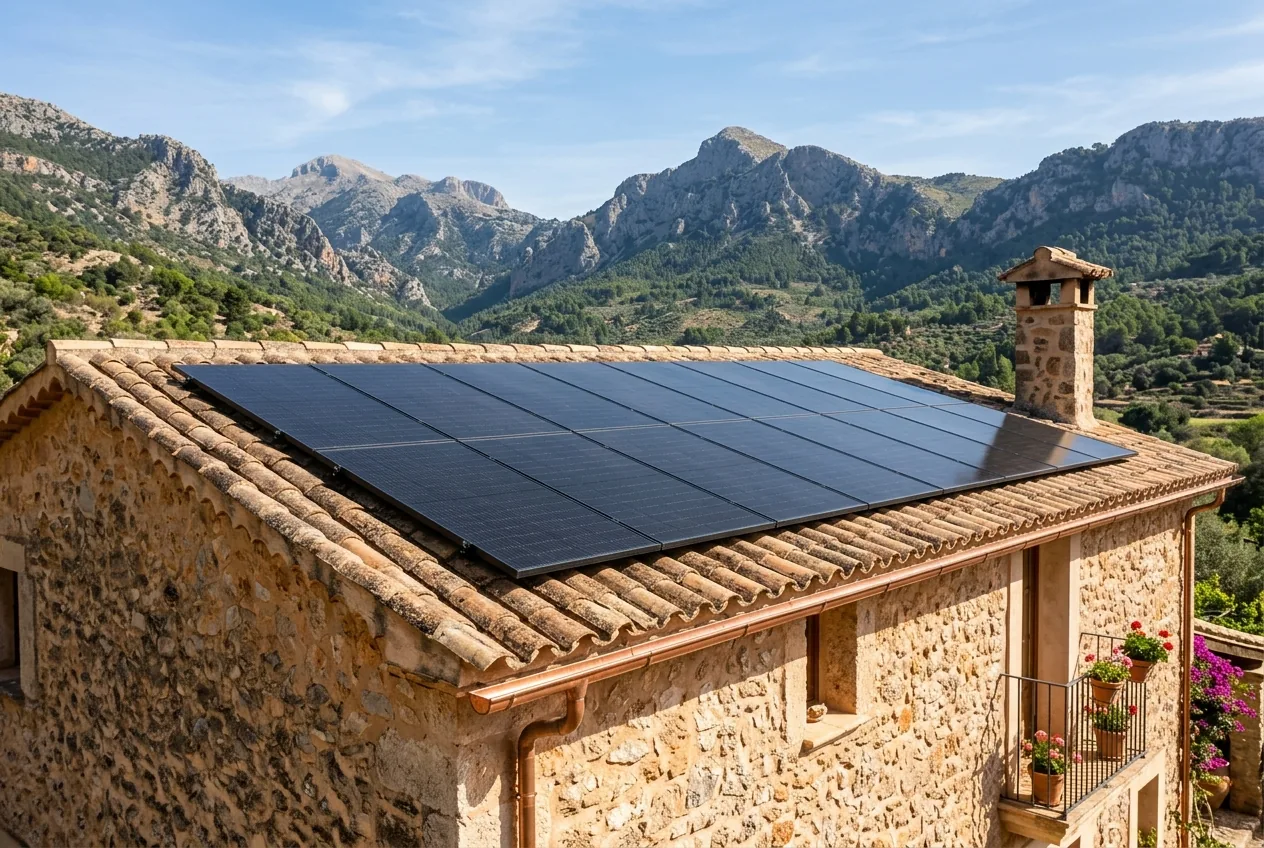
Aerotermia and solar panels are a natural match in Mallorca. The heat pump runs on electricity, and solar panels produce it cheaply during the day. Good controls can heat the hot water tank, pre-cool the house or warm the floors while the sun shines, so more of the energy comes from your own roof. If you are planning both, design them together so the solar system is sized for the extra load.
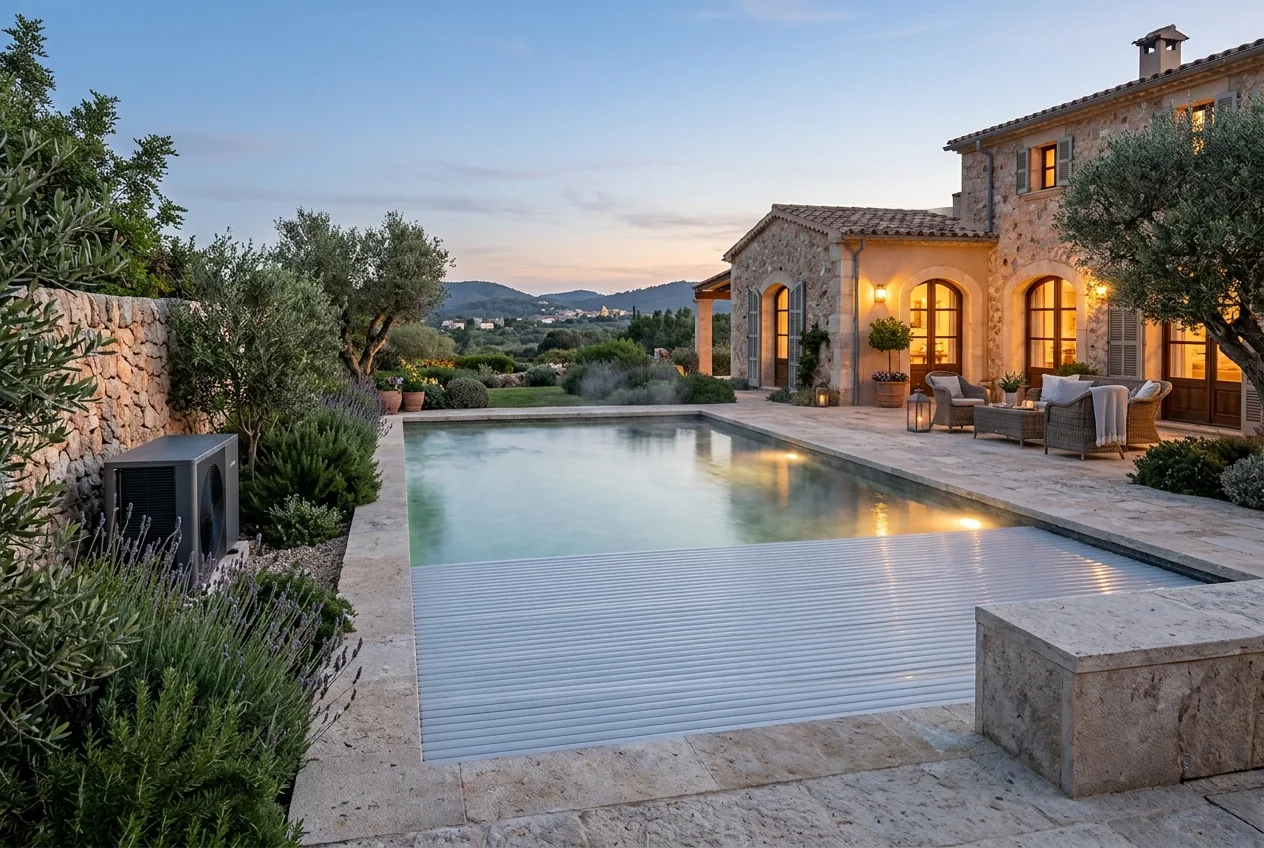
Heating the pool is a common request. There are two main approaches:
- A dedicated inverter pool heat pump, which is simple and independent of the house system.
- Connecting the pool to the main aerothermal system through a heat exchanger, which can work well if the unit has spare capacity outside the heating season.
Either way, a pool cover makes a big difference, because an uncovered pool loses much of its heat overnight.
Sizing, noise and placement
Sizing should always be based on an installer's heat-loss calculation for your villa, not a rule of thumb. It takes into account floor area, ceiling heights, glazing, insulation, orientation and how many bathrooms need hot water. An oversized unit costs more and can cycle on and off inefficiently, while an undersized one struggles on the coldest nights or with a full house of guests.
The outdoor unit makes some fan and compressor noise. Modern units are fairly quiet, but placement still matters:
- Keep it away from bedroom windows and neighbours' boundaries.
- Avoid enclosed corners where sound echoes and airflow is restricted.
- Use anti-vibration mounts and leave space for maintenance access.
- On the coast, choose a sheltered spot and ask for anti-corrosion treatment against salt air.
In protected areas such as the Serra de Tramuntana, and in historic town centres, the visual impact of outdoor units may be regulated. Ask the council (ayuntamiento) or your installer whether a notification or permit is needed and where the unit can go.
Older stone houses and insulation
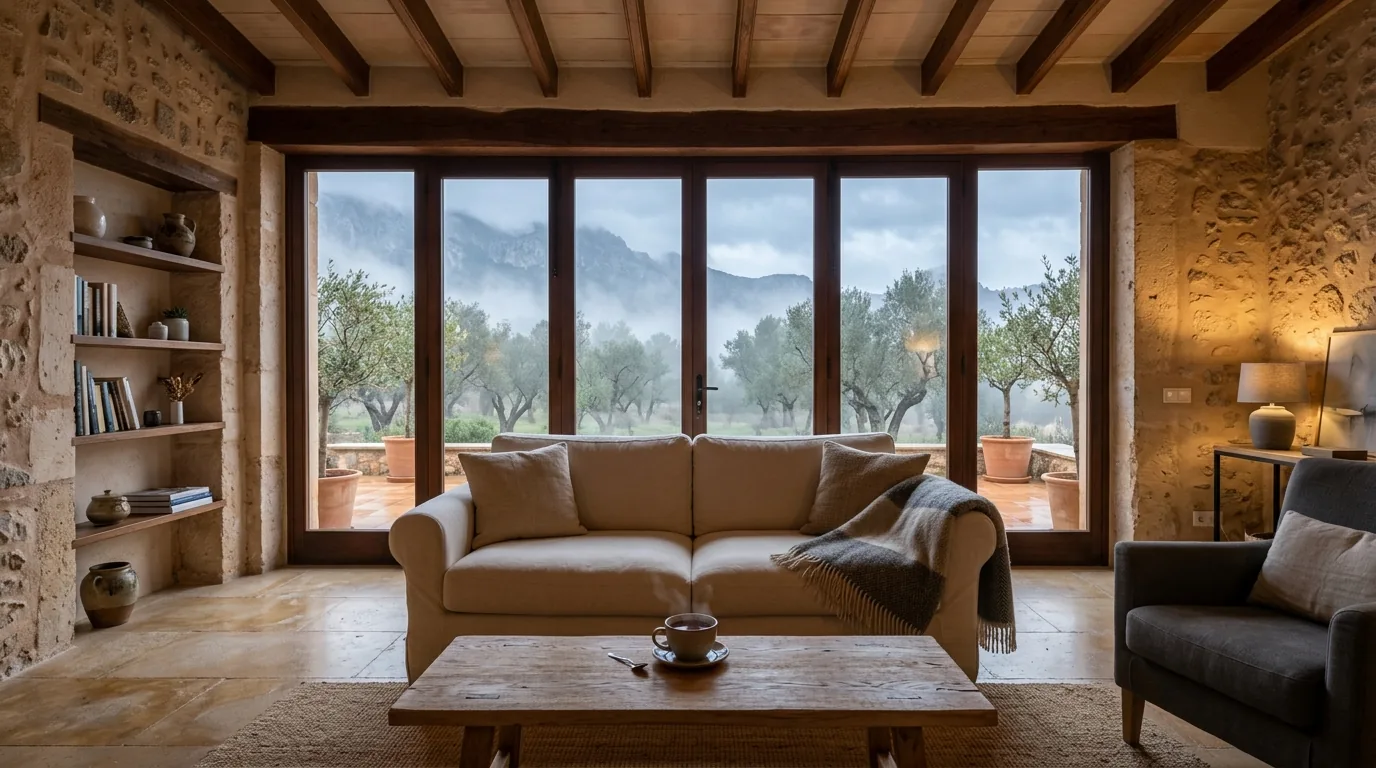
Many Mallorcan fincas have thick stone walls that keep the house cool in summer but can feel cold and damp in winter if the building is poorly insulated. A heat pump can work very well in these houses, but insulation and airtightness determine how large the system needs to be and how much it costs to run.
Before choosing a system for an older property, consider improving roof insulation, replacing single glazing and dealing with damp. Underfloor heating often fits well in a restoration, because floors are usually being renewed. Where floors cannot be touched, fan coils or low-temperature radiators may be more practical.
Running costs and maintenance
Running costs depend on the size and insulation of the house, how warm you keep it, how much hot water is used and your electricity tariff. In general, a well-designed heat pump costs considerably less to run than electric heaters, heating oil or bottled gas, and combining it with solar panels lowers costs further. Ask your installer for an estimate for your own villa.
Maintenance is straightforward but should not be skipped:
- An annual service to check refrigerant pressures, controls and the water circuit.
- Keeping the outdoor coil clean, especially near the coast or after dust episodes.
- Protecting against limescale, because Mallorca's hard, calcium-rich water can scale up the hot water tank and heat exchanger. A water softener is often recommended.
- Regular high-temperature cycles in the hot water tank to prevent legionella, which is especially important in holiday rentals.
Costs
Typical installed prices in Mallorca, before IVA (VAT):
- Villa air-to-water heat pump with hot water: €12,000–18,000
- System with underfloor heating, about 300 m²: €25,000–50,000
- Inverter pool heat pump: €3,000–8,000
The final price depends on the size of the house, the heat emitters chosen, existing pipework and how much building work is involved.
Choosing an installer
Choose an authorised installer with real experience of aerothermal systems, not just air conditioning. Before signing, ask for:
- A written heat-loss calculation explaining the unit size.
- A clear breakdown of heat pump, tank, emitters, controls and labour.
- Noise levels and the proposed outdoor unit location.
- Warranty terms for the equipment and the installation.
- A maintenance plan and who provides after-sales service on the island.
Autumn is a good time to install, before the heating season and well ahead of the busy summer.
Getting quotes
If you are considering aerotermia for your villa, you can describe your project once on Mallorca Villa Experts. Up to 3 vetted heat pump specialists in your area will quote you directly, free and with no obligation, so you can compare system designs and prices with confidence.