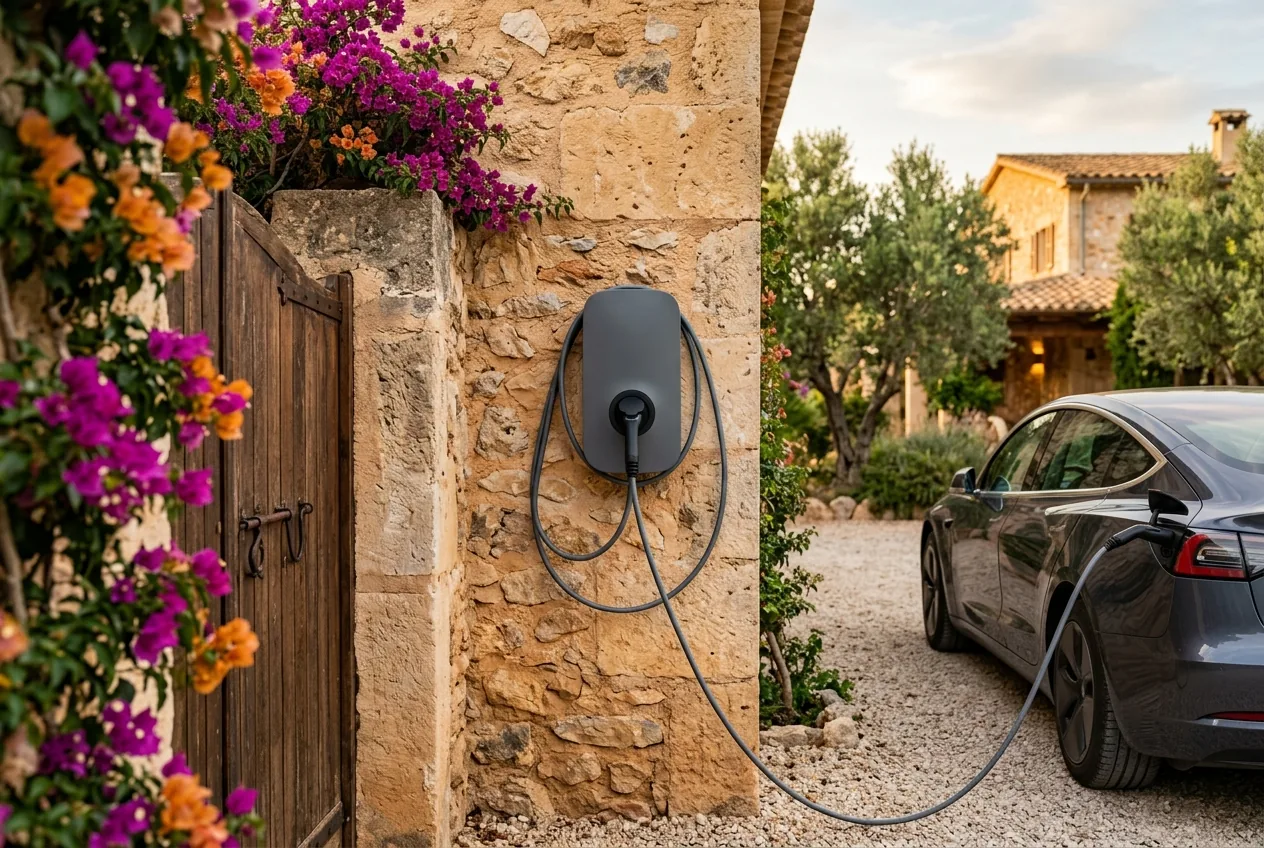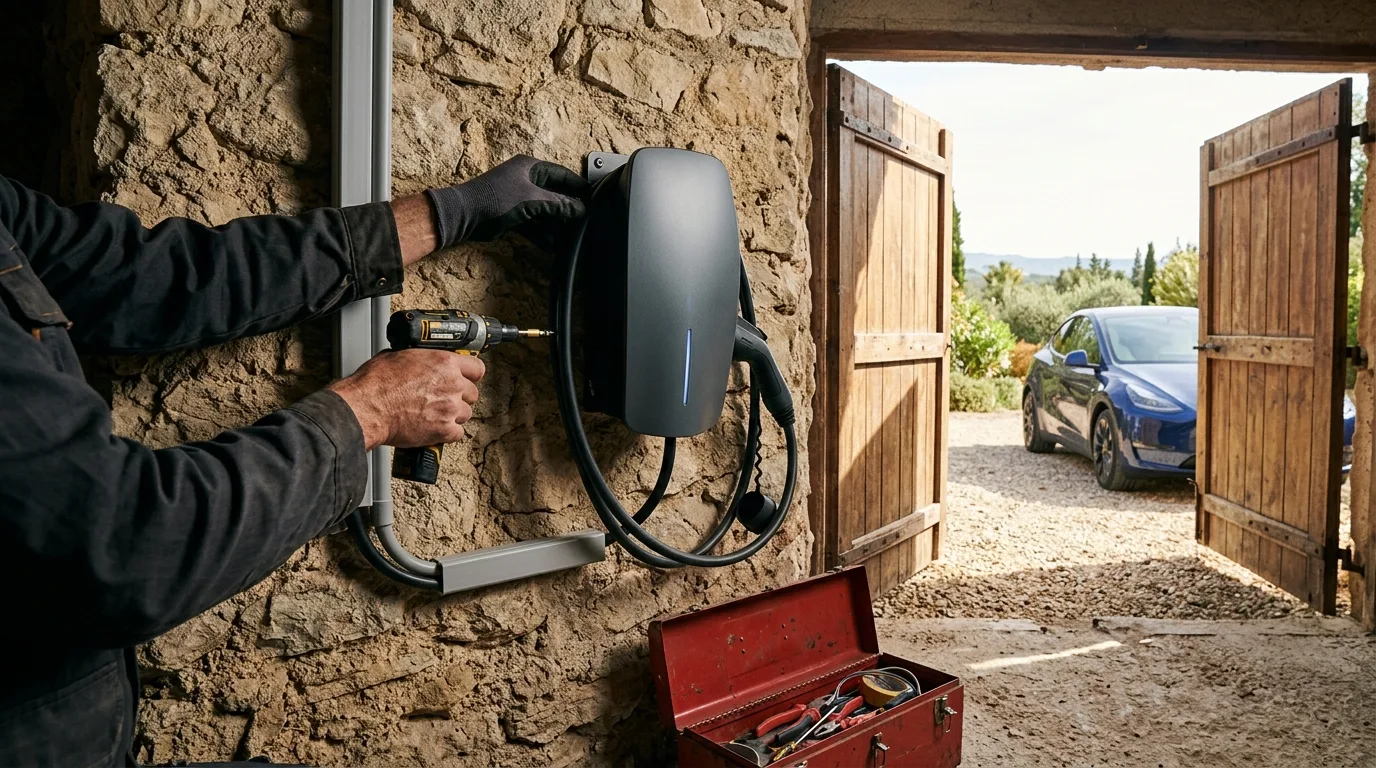
Installing an EV charger at a villa in Mallorca is usually straightforward: an authorised electrician mounts a wall box or post, runs a dedicated circuit from your electrical panel with its own protection, and issues the electrical certificate. A typical installation costs €900–2,500 before IVA, and the biggest variable is how far the charger sits from the panel. Before you buy, check what your car can accept, how much power your contract allows, and whether you want the charger to use surplus from solar panels.
Which home charger suits your car and your villa
Home chargers in Spain fall into two broad groups, depending on whether your villa has a single-phase or a three-phase supply.
- 7 kW single-phase (up to about 32 A): the most common choice for villas with a single-phase supply. It typically adds enough range overnight for normal island driving.
- 11 kW three-phase: faster, and well suited to larger villas that already have a three-phase connection.
- 22 kW three-phase: the fastest home option, but only useful if your car's onboard charger accepts 22 kW AC, and many cars do not.
What matters is what your car can actually take. Many EVs accept up to 7 or 11 kW on alternating current, and some plug-in hybrids accept less. A 22 kW charger will not charge a car faster than its onboard charger allows, so check your vehicle's specifications, or ask your installer, before paying for more power than you can use.
Contracted power: do you need to increase it?
Your electricity contract sets a maximum power (potencia contratada) that you can draw at once. A villa with a pool pump, air conditioning, an oven and an EV charger running together can exceed it and trip the main switch. Many villas in Mallorca have enough contracted power for a 7 kW charger, especially with load management, but some will need an increase.
Your installer can look at your current contract, your typical consumption and the size of your supply, and tell you whether an increase makes sense. The change itself is requested through your electricity company, and in some cases the distribution network may need to confirm that the connection can support it. Costs and timings for this vary, so ask your installer and supplier before you commit. Smart load management, covered below, often avoids the need for a large increase.
Cable runs: the main price factor
The charger itself is only part of the bill. The largest variable is the cable run from the electrical panel to the charging point. A charger mounted on a garage wall a few metres from the panel is quick to install. A post at the gate 40 metres away, across a garden or a driveway, may need trenching, conduit, thicker cable to limit voltage drop, and making good the paving afterwards.
When you ask for quotes, it helps to note:
- where your electrical panel is and where you want to park
- the rough distance between them and what lies in between (walls, terrace, lawn, stone paving)
- whether the panel has spare space or may need upgrading
- whether you have a single-phase or three-phase supply
Wall box or post, and outdoor protection
A wall-mounted charger is the simplest and cheapest option when you park beside the house or in a garage. If your car sits under a carport, at the gate or in an open parking area, a free-standing post (pedestal) brings the charger to the car. Posts need a small concrete base and an underground cable, which adds to the cost but keeps cables tidy and out of the way.
For rustic properties and fincas with long drives, think about where guests and staff park as well as where you do. In protected areas such as the Serra de Tramuntana, keeping the installation discreet and close to existing structures is usually the sensible approach.
Mallorca's climate is hard on outdoor electrics. Strong summer sun degrades plastics and screens, salt air near the coast corrodes metal contacts, and autumn storms bring heavy rain driven by the wind. For outdoor chargers, look for a suitable weather and impact rating, UV-resistant housings, and stainless or coated fixings on coastal properties. A small canopy or a position under a carport roof helps the charger and the cable last longer.
Certificate and permits
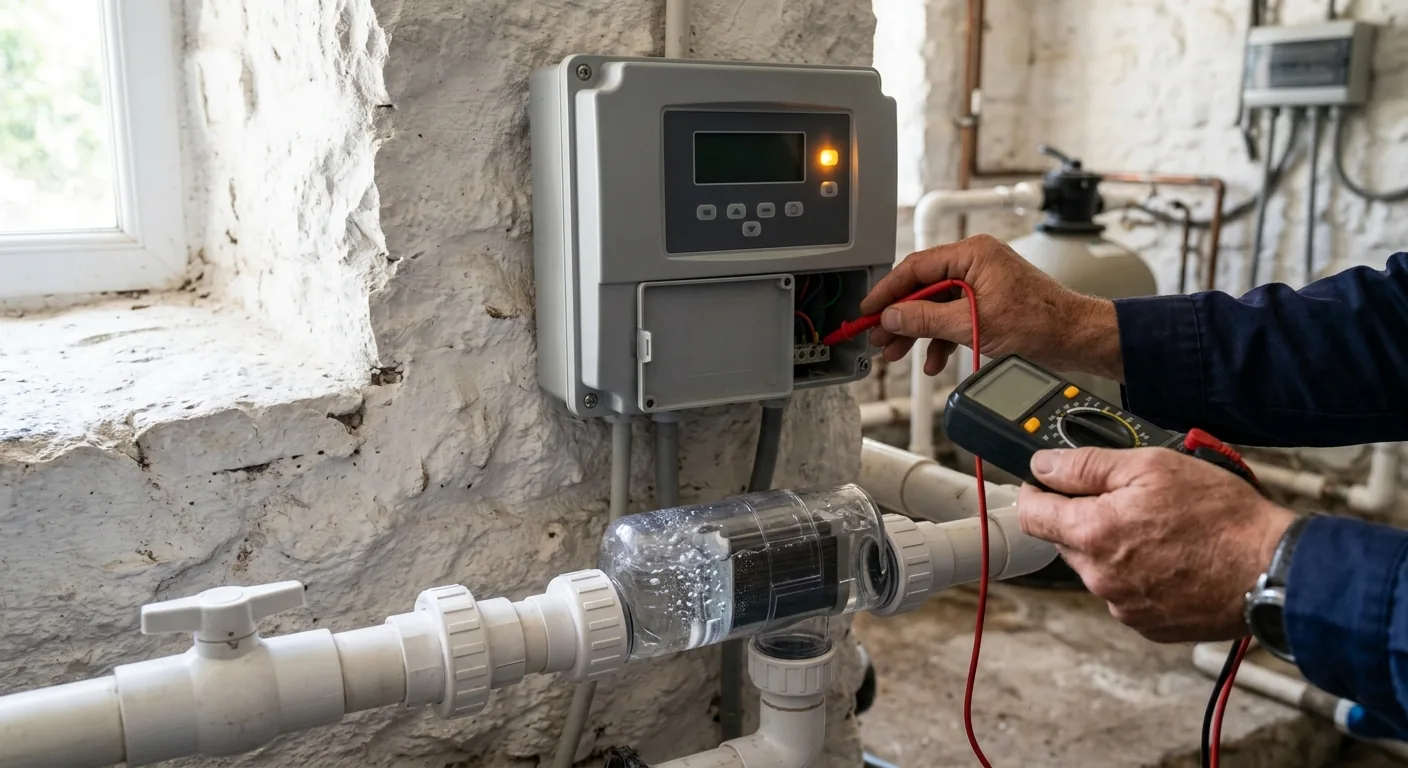
In Spain, a home EV charger should be installed by an authorised electrician, who checks the installation against the low-voltage regulations and issues the electrical certificate for the new circuit. Keep it: your insurer, a buyer or a rental inspection may ask for it.
For a private charger at a detached villa, a building licence is usually not required, because the work is electrical rather than construction. Rules can vary by municipality, however, and trenching, new structures such as a carport, or works on rustic land or in protected areas may need notice to the council (ayuntamiento). Your installer or the council can confirm what applies to your property.
Smart charging, solar and load management
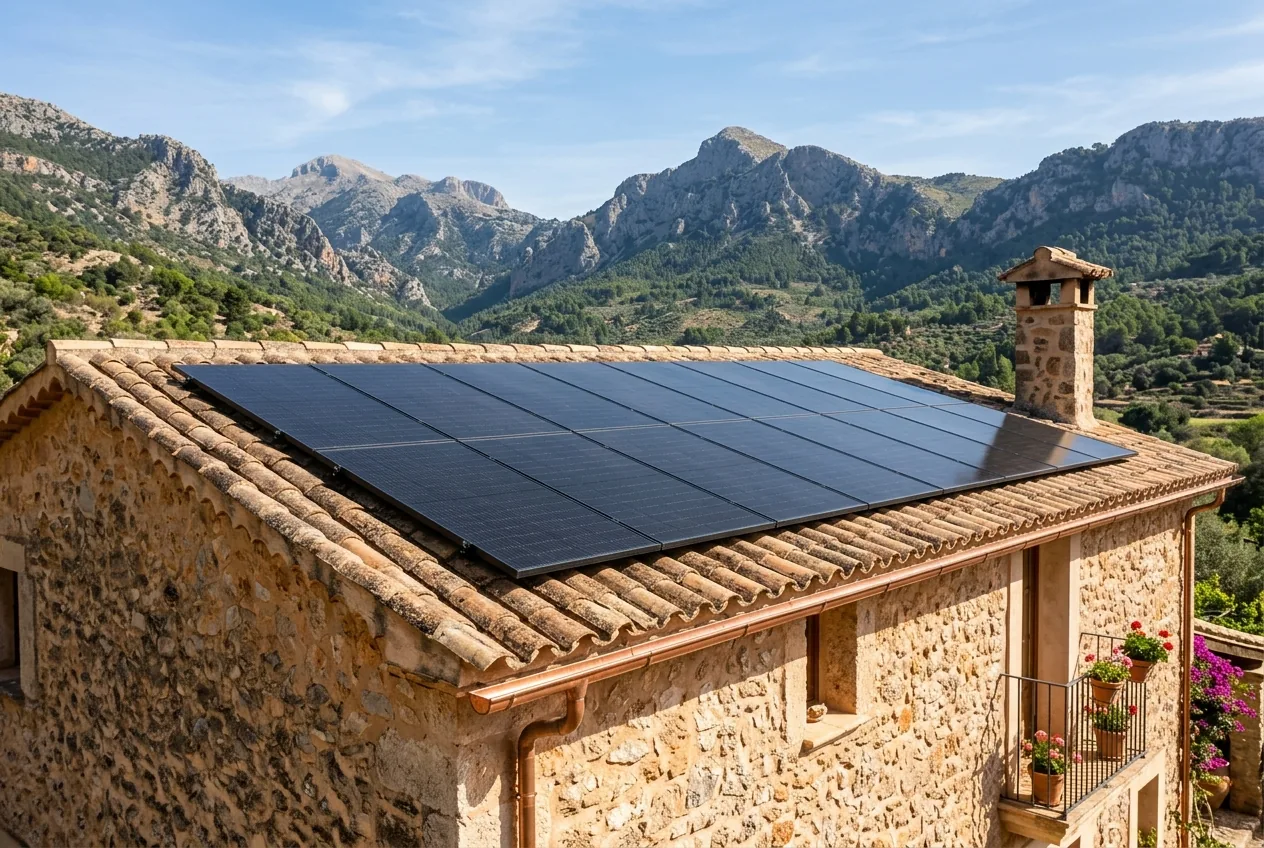
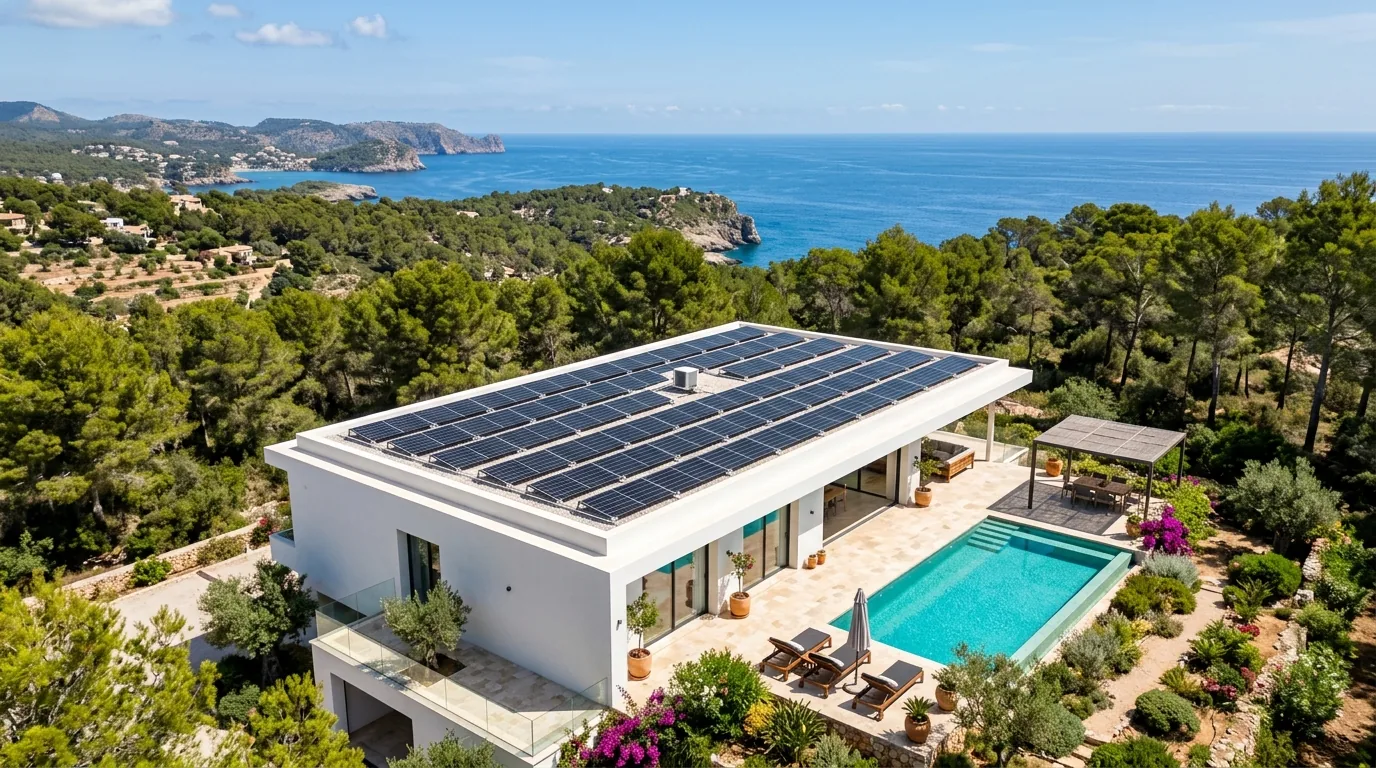
With about 2,800 hours of sunshine a year, Mallorca is a good place to charge from your own roof. A smart charger linked to a solar system can follow the surplus, charging the car with electricity you would otherwise export. This works best if the car is parked at home during the day, for example on a holiday villa or when you work from home. If you charge mostly at night, a battery or time-of-use tariff may matter more.
If you are planning solar at the same time, ask for both to be designed together so the inverter and the charger communicate.
In summer, a villa may run a pool pump, a pool heat pump and several air-conditioning units at once. Dynamic load management uses a meter at the panel to measure total consumption and turns the charger down when other loads rise, then back up when they fall. This protects your main switch, reduces the need for a higher contracted power.
Charging for holiday rental guests
A charger can be a welcome extra for a holiday rental. Think about access control (an app, RFID card or a simple lock), whether you include charging in the price or record consumption per stay, and a clear note in the house manual. A universal Type 2 socket with no tethered cable lets guests use their own lead, while a tethered cable is more convenient for everyday use.
Costs
Typical ranges in Mallorca, before IVA:
- Home EV charger installed: €900–2,500
- Solar system 5–6 kWp, if you want to charge from your own roof: €6,500–9,500
The lower end of the charger range reflects a short cable run to a wall-mounted unit; the upper end covers longer runs, posts, trenching or panel work. Contracted power changes are separate and depend on your supplier.
Getting quotes
You can describe your villa and charging plans once on Mallorca Villa Experts, and up to 3 vetted EV charger specialists in your area will quote you directly. It is free and there is no obligation, so you can compare approaches, power options and prices before you decide.