

Water on a villa or finca: what to know first
Why more owners want their own water
Summer demand, drought years and restrictions in several municipalities have made a reliable supply a real concern, especially for homes with gardens and pools. Many fincas are not connected to the mains at all and rely on wells, cisterns and tanker deliveries. Owning more of your supply gives you control and often lowers costs over time.
Wells need permission
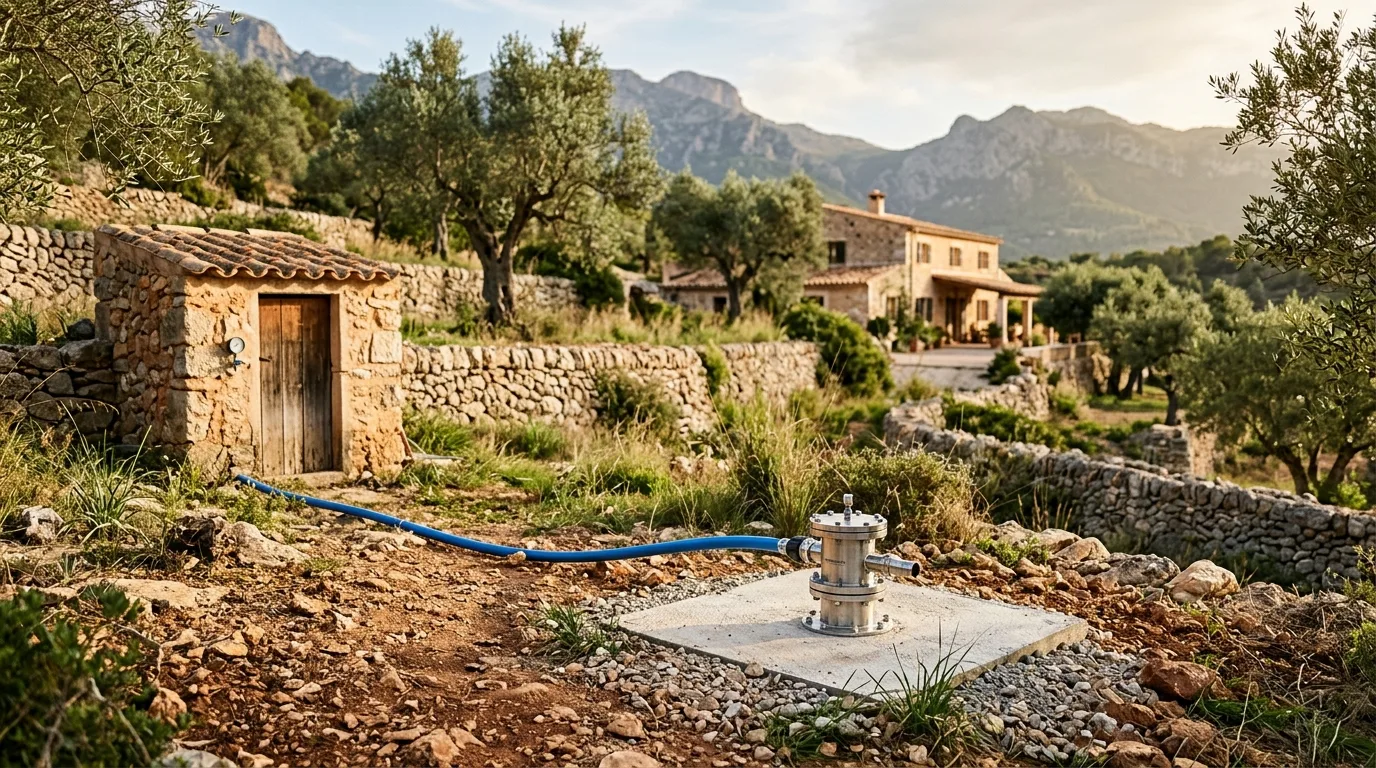
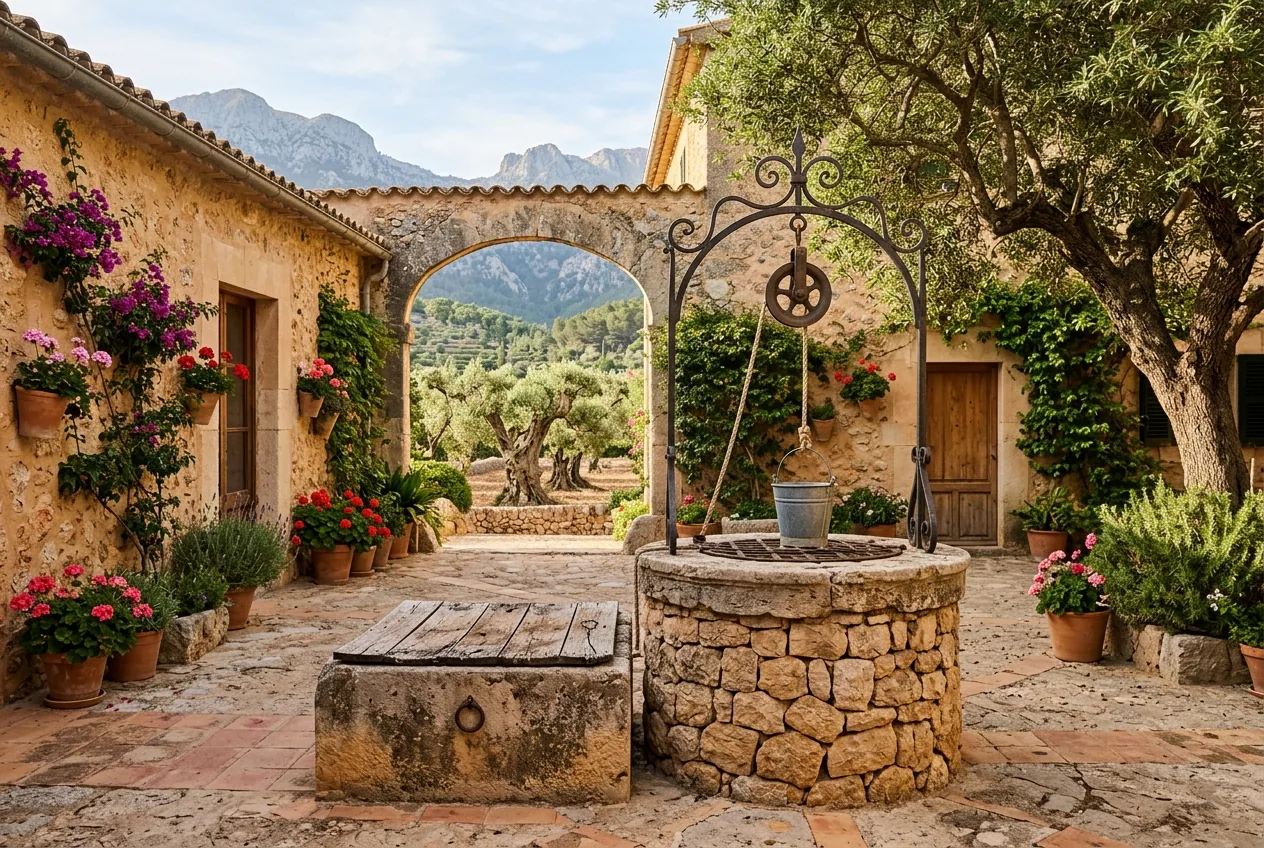
Drilling a new borehole needs authorisation from the Balearic water authority, usually with a hydrogeological study. Existing wells without paperwork can often be legalised. Depth to water varies a lot across the island, from under 100 m in the plains to 300 m on hills and coastal ridges, and that depth drives the price. A good driller will be honest about the chances of finding water on your plot.
Storing water in a cistern
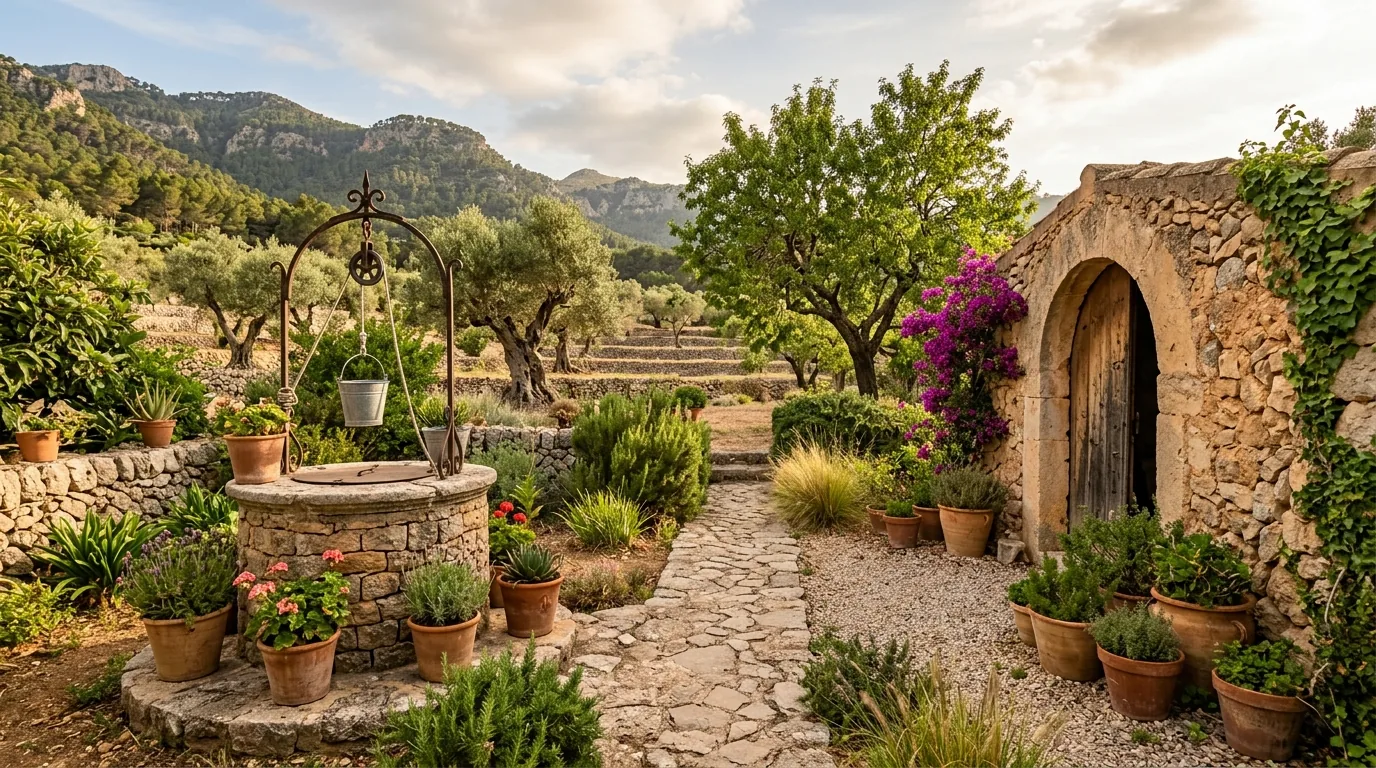
A cistern (aljibe) collects rainwater from roofs and terraces and stores well or delivered water. Many old Mallorcan houses already have one that can be repaired and waterproofed rather than replaced. For a villa with a pool and garden, 50 to 100 m³ is a common size. Add a pump, filtration and level sensors to make it part of daily use.
Treating hard water
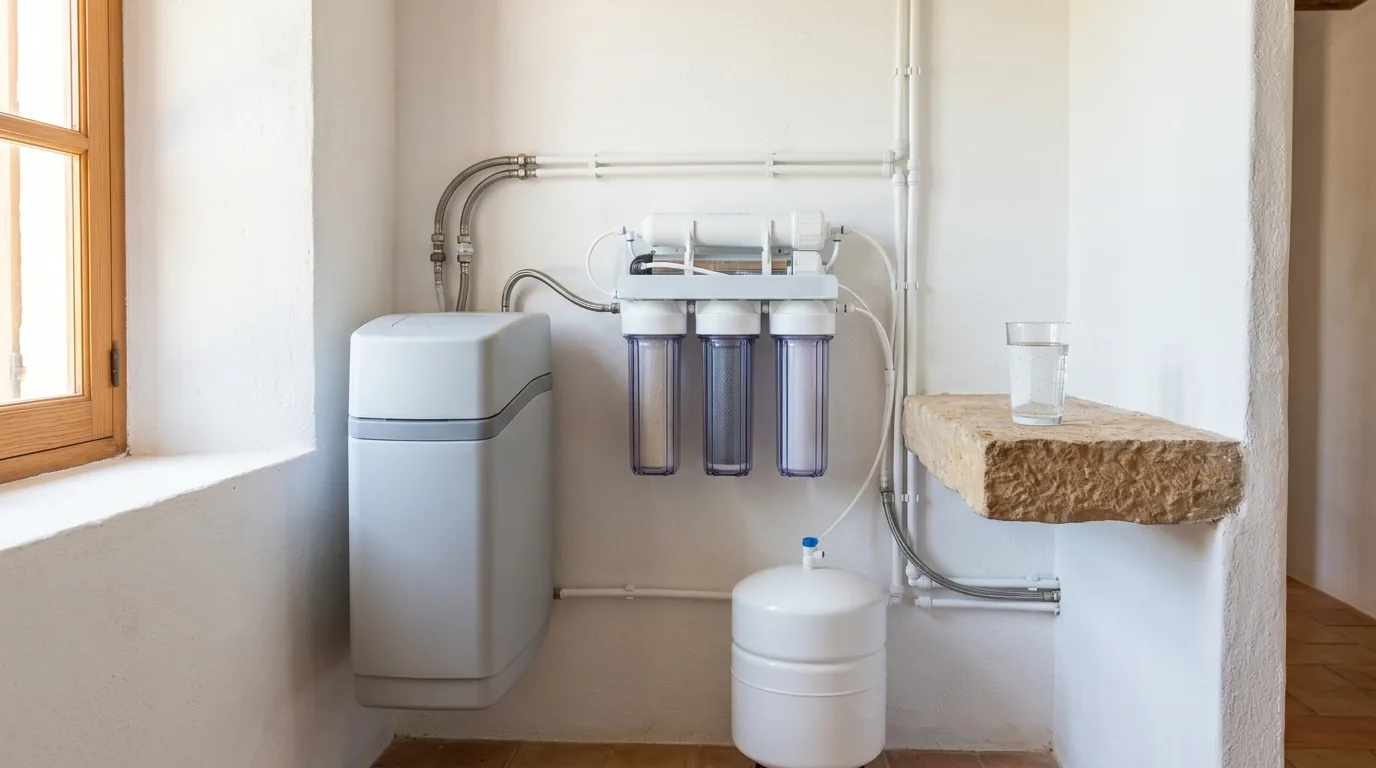
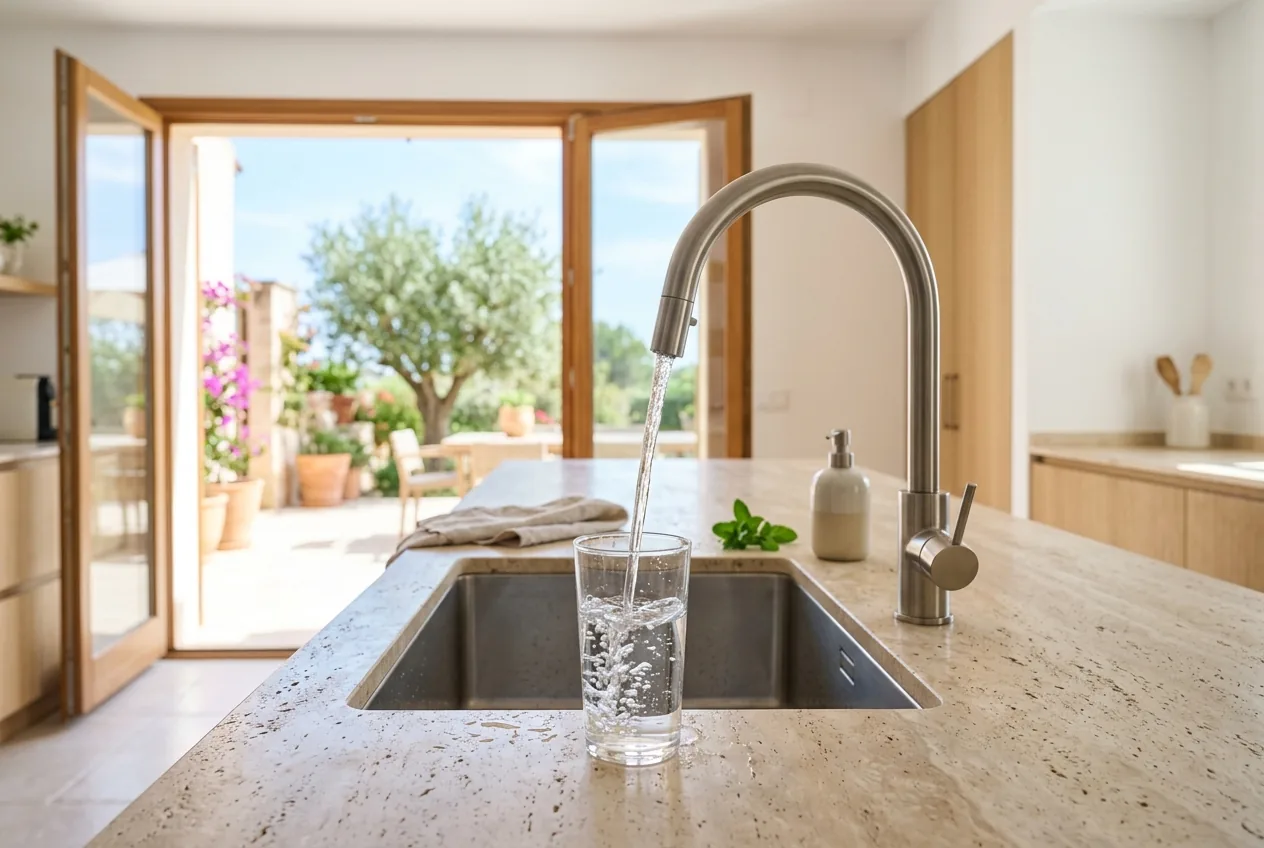
Mallorca's water is hard. Limescale shortens the life of boilers, heat pumps, dishwashers and taps. A softener protects the whole house, reverse osmosis gives better drinking water at the kitchen tap, and filtration with UV makes well or cistern water safe to use. A water analysis is the right first step.
Filling a pool without the mains
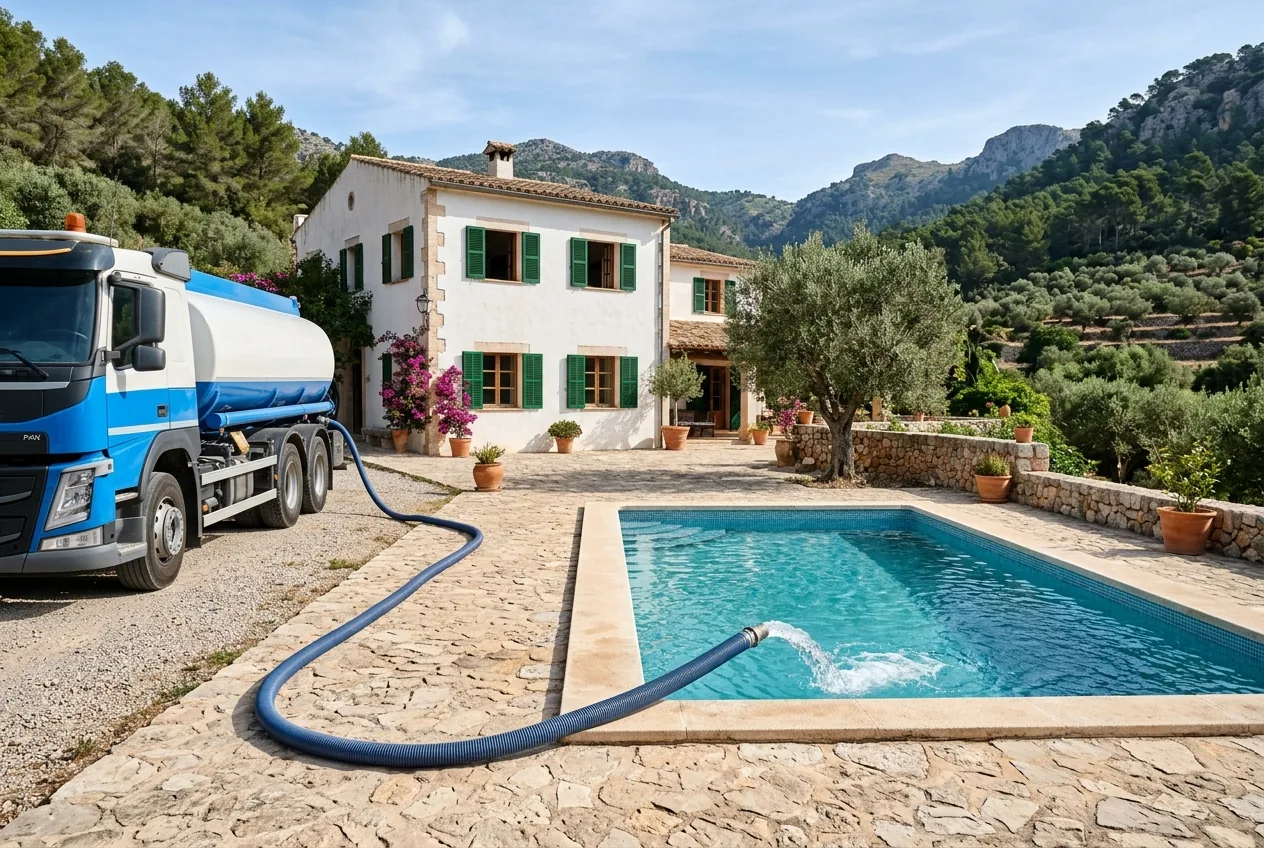
Where filling from the mains is restricted or there is no connection, tankers deliver potable water straight into the pool. Narrow lanes may need smaller trucks and more trips, so mention access when you ask for quotes.
Rainwater from your roofs
A large villa roof can collect tens of cubic metres of water in a normal winter. Gutters, a first-flush filter and pipes to the cistern turn that into free water for the garden and, with treatment, for the house. Rainwater collection is easiest to add during building or renovation works, but it can be retrofitted to most homes.
Pumps, pressure and controls
Wells, cisterns and houses are linked by pumps, pressure vessels and controls. A well-designed system switches automatically between sources, protects pumps from running dry and alerts you when levels are low. On fincas without mains power, solar-powered pumps are a reliable option.
Regular water checks
Water from wells and cisterns should be analysed regularly, especially if it is used for drinking or showering. A specialist can test for bacteria, nitrates and hardness, and recommend the right treatment. Many owners combine an annual service of the softener, osmosis and UV system with a water test.
How to compare quotes
Make sure each quote includes permits, studies, pump and electrical work, and connection to your cistern or house. For drilling, ask how the price changes if water is deeper than expected.