In most Mallorca municipalities, building a new swimming pool requires a building licence (licencia de obra) from the council, backed by a technical project signed by an architect or qualified technician. Smaller works such as retiling or swapping equipment are often handled with a simpler notification. Paperwork usually takes several months, so the owners who swim in June are typically the ones who started planning the previous autumn.
Does your pool project need a licence?
The short answer is that almost any new pool does. A pool involves excavation, structural concrete, drainage and connections to water and electricity, and councils treat it as a building work in its own right. The same usually applies to major renovations that change the size, shape or depth of the pool, add an infinity edge, or move the pool to another spot on the plot.
Simpler works are often treated differently. Depending on the council, these may only need a prior communication (comunicación previa) or a minor works permit:
- Retiling or relining the existing shell without changing its dimensions
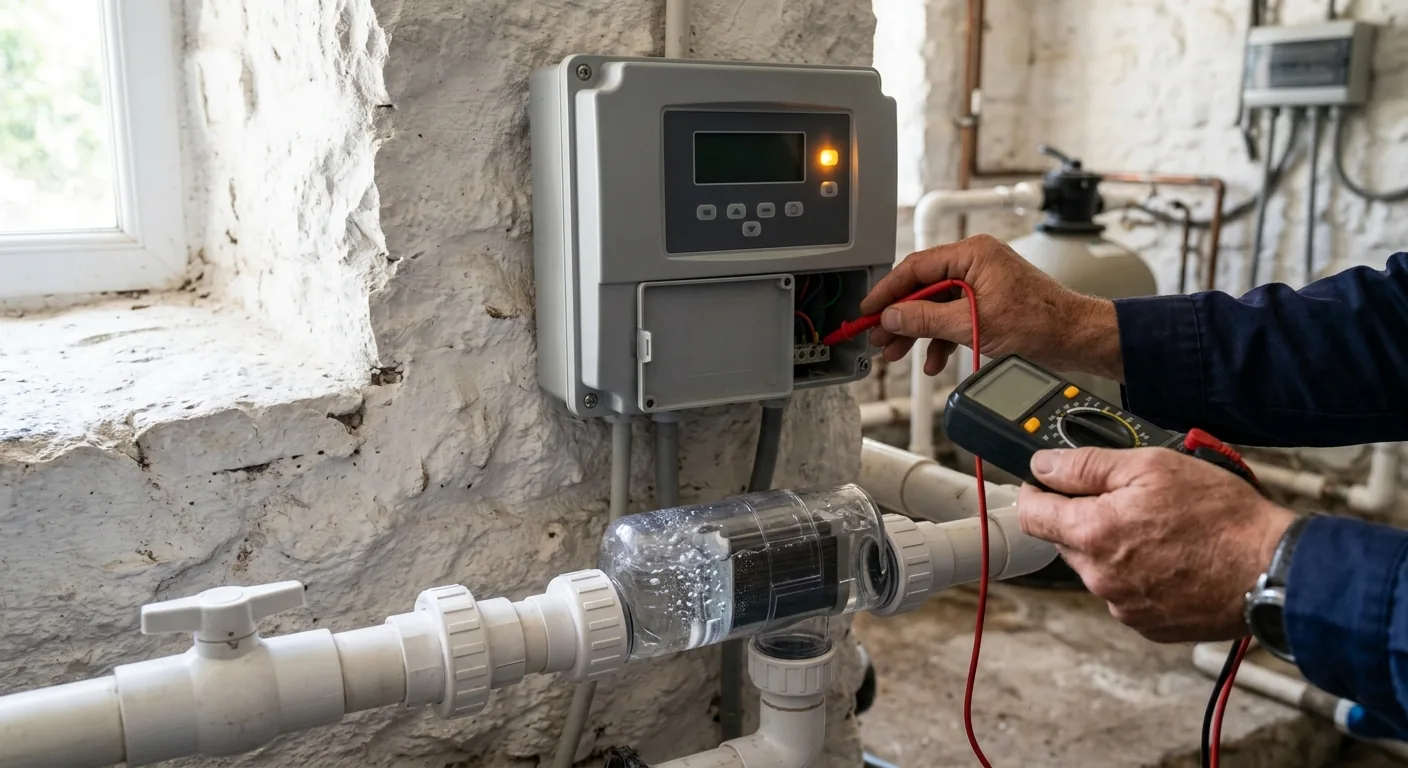
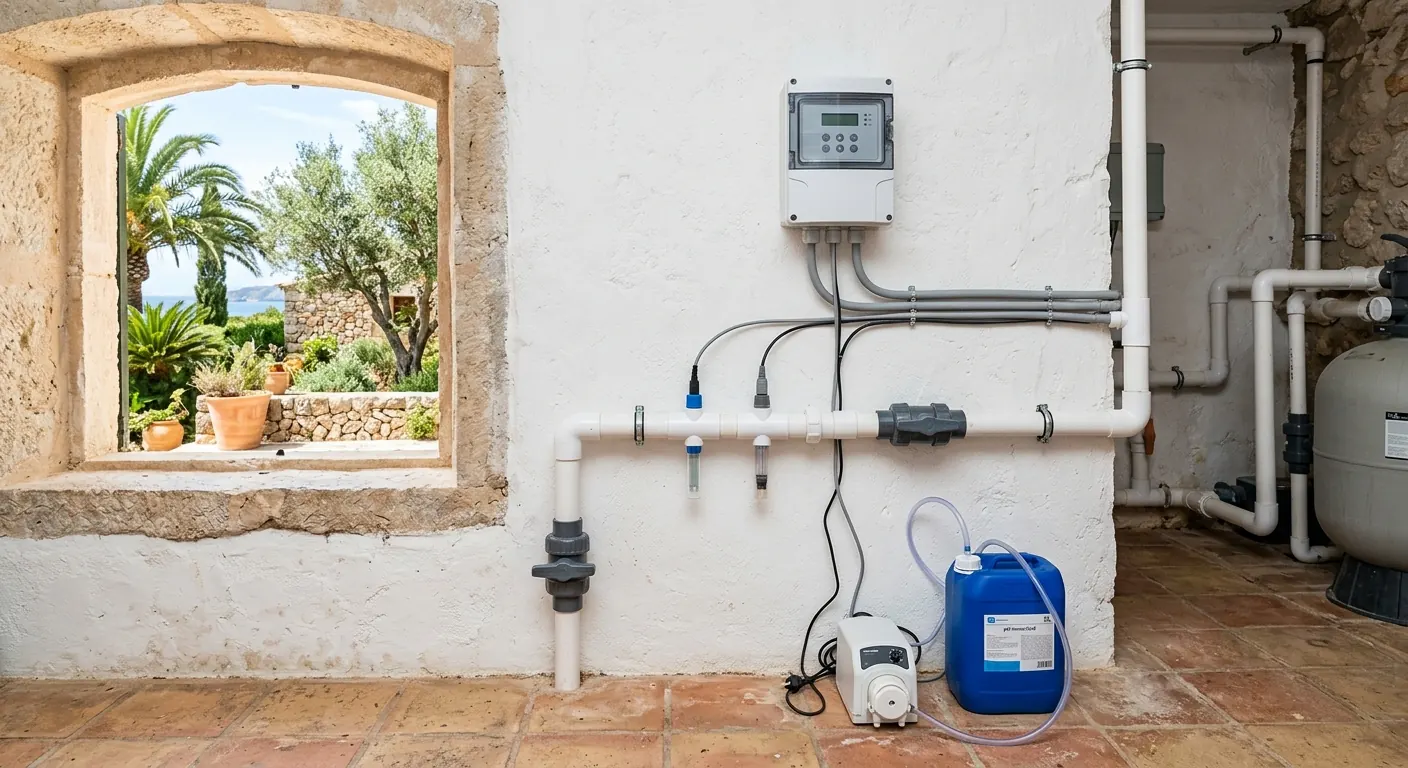
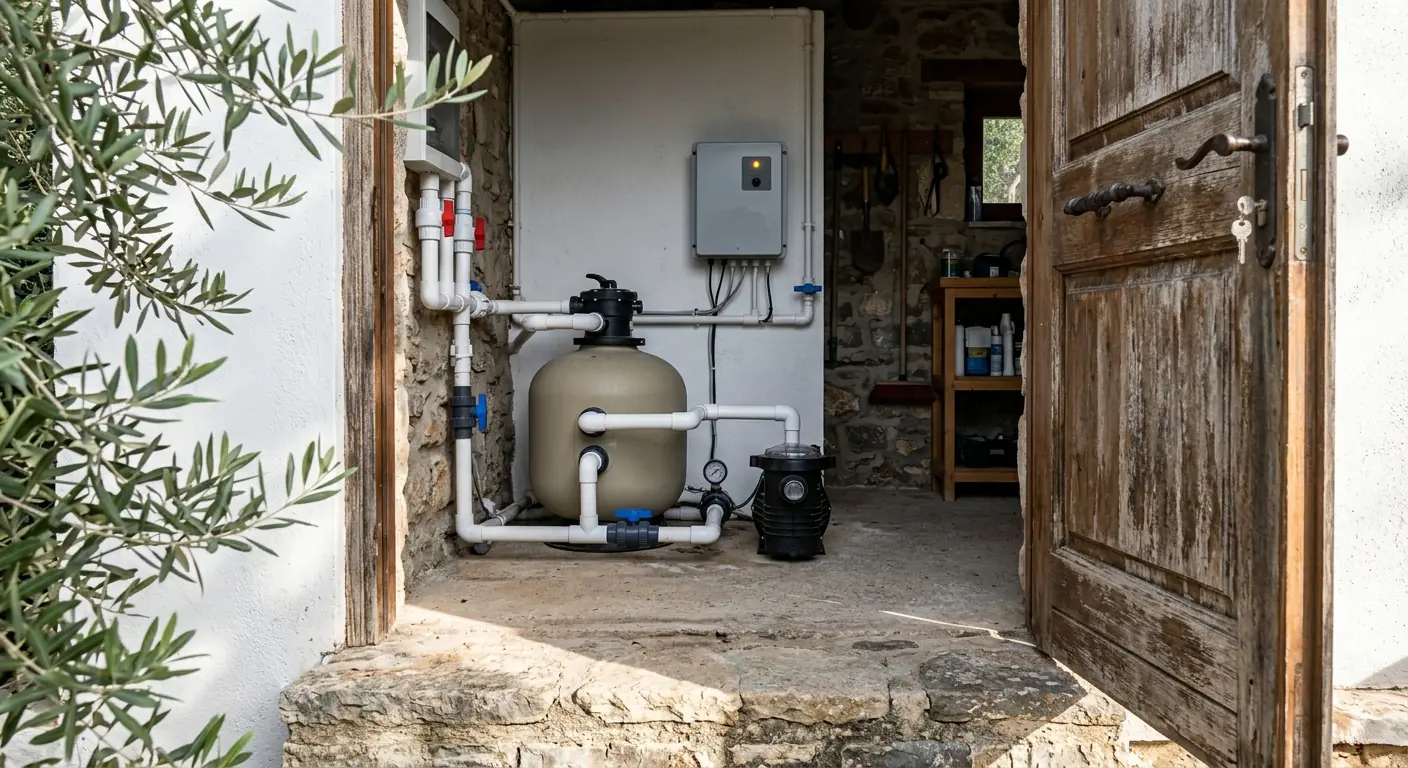
- Replacing the pump, filter or salt chlorinator
- Repairing the skimmers, returns or coping stones
- Adding a heat pump or cover where no new structure is built
The line between "minor" and "major" varies from one ayuntamiento to another, so always ask the council or your specialist before starting. What counts as a simple repair in one town may need a full project in the next.
The technical project and who prepares it
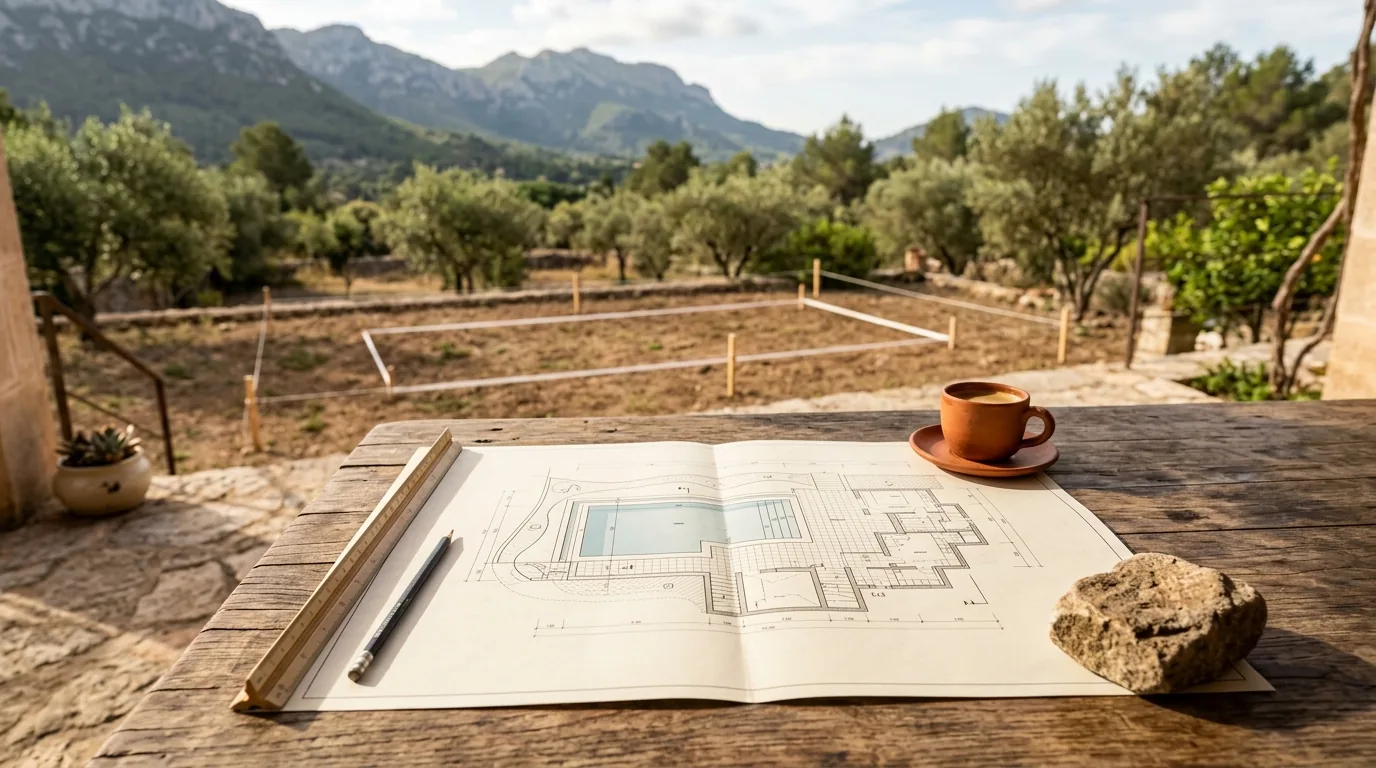
For a new pool or a substantial rebuild, the council will normally ask for a technical project. It is usually prepared by an architect or a technical architect (arquitecto técnico), sometimes working together with the pool builder. It typically includes site plans showing the pool on the plot, structural drawings, the filtration and drainage system, safety measures, and a budget for the works.
Many established pool builders in Mallorca work with architects they know and can coordinate the project for you. If you already have an architect for the villa, it often makes sense to involve them from the start, since they know the property's planning history.
Rustic land and protected areas
A large share of Mallorca's villas and fincas sit on rustic land (suelo rústico), and here the rules are noticeably stricter than in an urban plot. Extra conditions often apply to the size of the pool, how it relates to the existing house, and how much of the plot can be built on. In some cases a report from the Consell de Mallorca or another body is needed in addition to the council licence.
In protected areas, such as parts of the Serra de Tramuntana, landscape and heritage rules may influence materials, colours, terracing and even whether a pool is allowed at all. Natural stone finishes and discreet designs are common for this reason. If your property is in one of these areas, have your architect check the planning status of the plot before you commit to a design.
Distances, setbacks and plot rules
Each municipality's planning rules set out where a pool may go. In general terms, you can expect conditions such as:
- A minimum distance from the boundaries with neighbouring plots and from the road
- Limits on the total built or occupied area of the plot, where the pool may count
- Rules on earthworks, retaining walls and changes to the natural terrain
- Requirements for safety, drainage and how the pool is emptied
The exact figures differ between towns and between urban and rustic land, so treat any number you hear from neighbours with caution. Your architect will confirm the actual setbacks for your plot.
Typical sequence of steps
While each case is different, the process for a new pool usually follows this order:
- Initial visit and feasibility check of the plot and its planning status
- Design and quotes from pool builders
- Technical project prepared and signed by the architect or technician
- Licence application submitted to the ayuntamiento, plus any extra reports for rustic or protected land
- Council review, possible requests for more documents, and the licence being granted
- Construction, with the technician supervising the works
- End-of-works certificate and, where required, final paperwork with the council
How long does it take?
Timing varies a lot by council, the type of land and how complete the application is. For a straightforward pool on an urban plot, a licence can sometimes come through in a few months. On rustic land or in protected areas, or where additional reports are needed, it can take considerably longer, sometimes well over half a year. Ask your architect for a realistic estimate for your municipality.
Construction itself usually takes a couple of months for a standard concrete pool, depending on the ground and the finishes. The practical lesson: start the paperwork in autumn if you want to swim the following summer. That way the licence can be in hand by late winter, and builders can work in the quieter months before the busy spring season.
Risks of an unlicensed pool, including when buying
Building a pool without the required licence can lead to fines, orders to stop the works, and in serious cases orders to demolish. It can also cause problems later: an unlicensed pool may not appear correctly in the property records, which complicates selling, insuring or obtaining a tourist rental licence. Fixing the situation afterwards, where it is possible at all, is usually slower and more expensive than doing it properly from the start.
If you are buying a villa, ask your lawyer to check that the pool and other structures match the licences and the property records. If the pool was built without a licence, it may be possible to regularise it, or it may not, especially on rustic land. The outcome depends on the age of the works, the type of land and local rules. Take this into account in your price negotiation and get professional advice before signing.
Costs
Licence fees, taxes and architect fees vary by municipality and project, so ask the council and your technician for figures. For the works themselves, these are typical ranges in Mallorca before IVA:
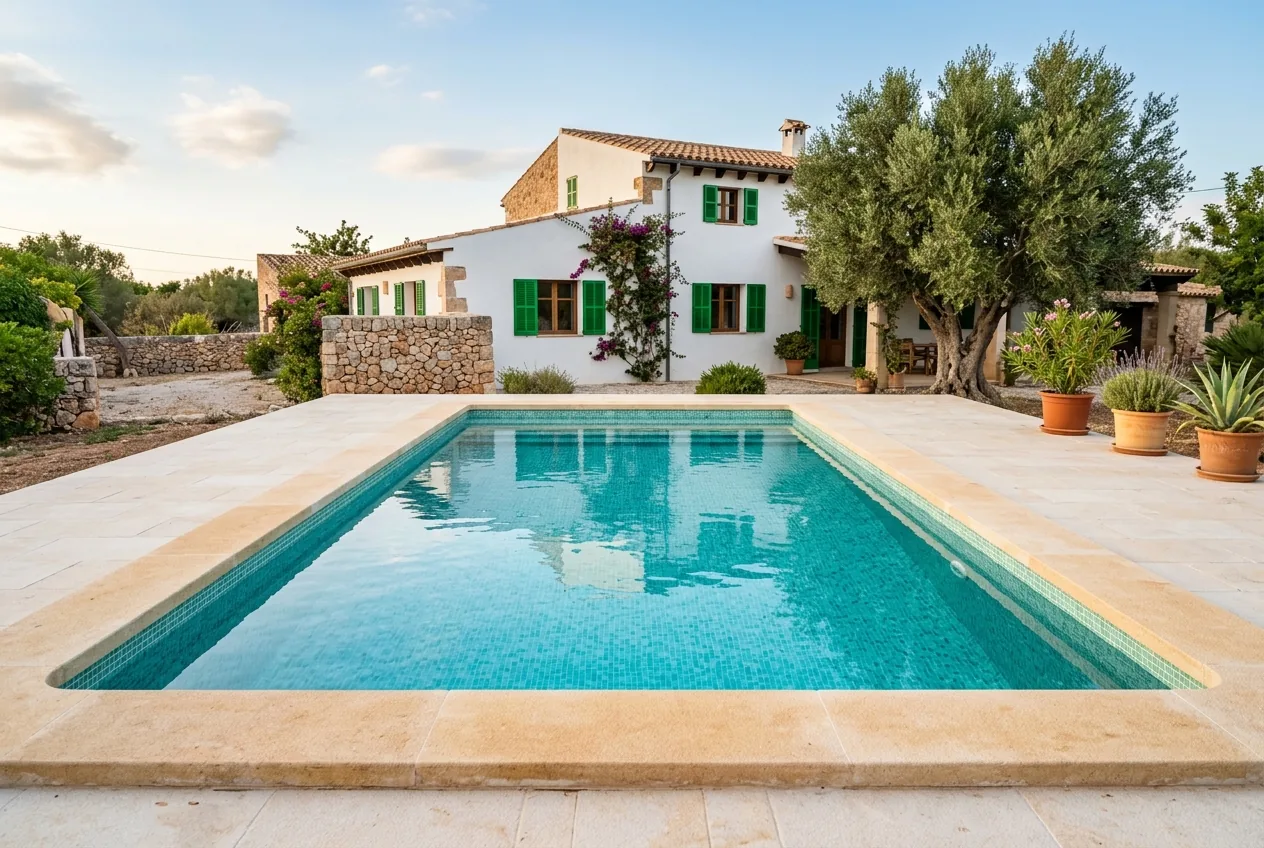
- New concrete pool, about 8 × 4 m: €35,000–70,000
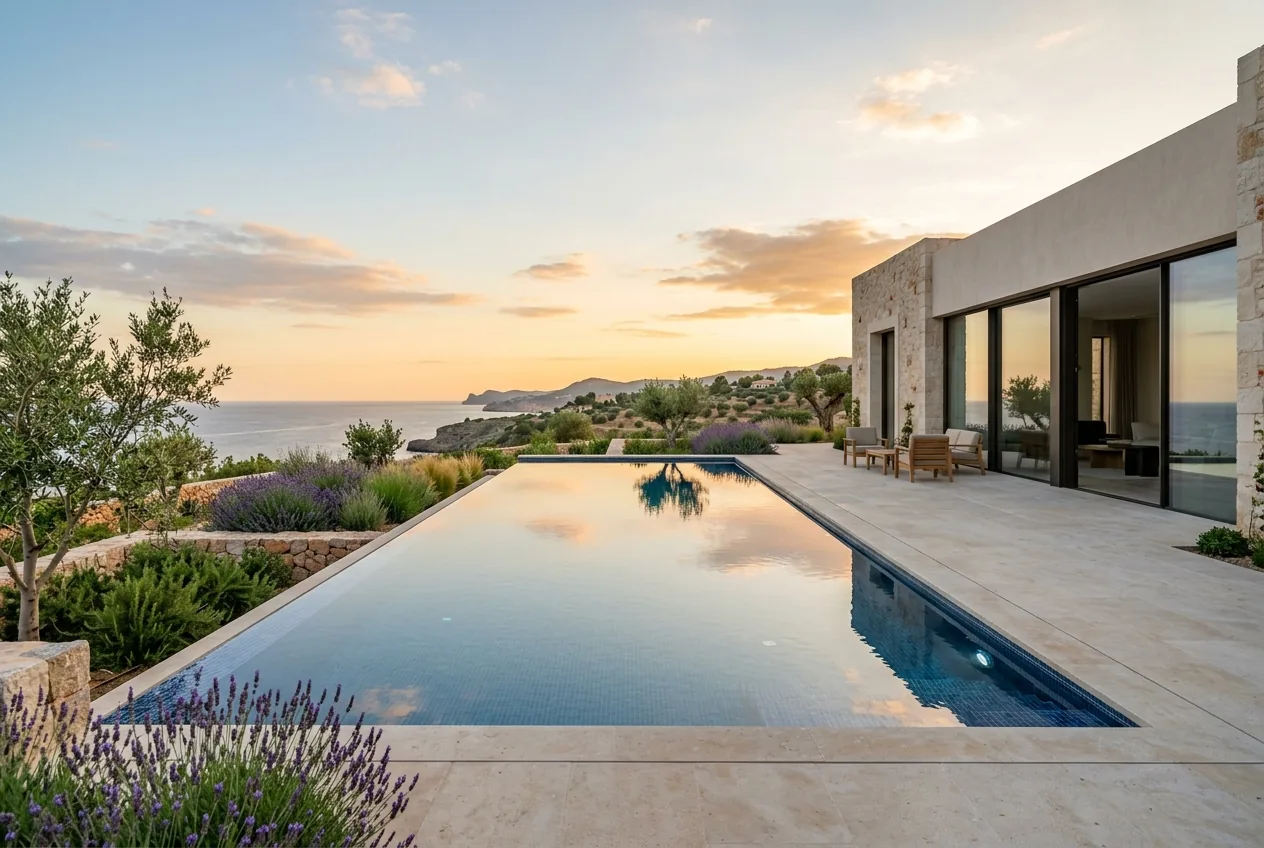
- Infinity or natural-stone pool: €60,000–150,000
- Full pool rebuild with new equipment: €25,000–60,000
- Pool retiling, 8 × 4 m pool: €6,000–18,000
Getting quotes
If you are planning a new pool or a major renovation, you can describe your project once on Mallorca Villa Experts and up to 3 vetted specialists in your area will quote you directly. It is free and there is no obligation, and many of them can coordinate the technical project and licence for you.