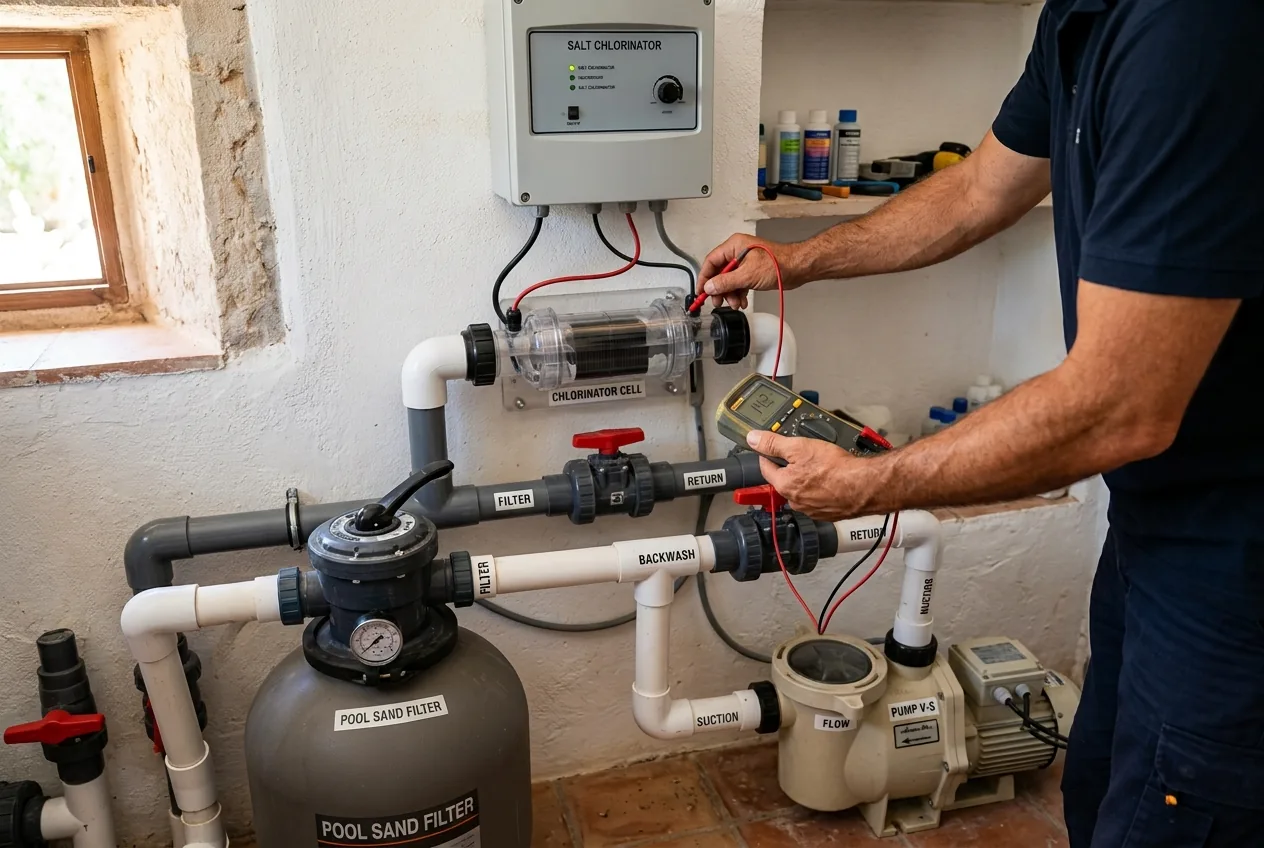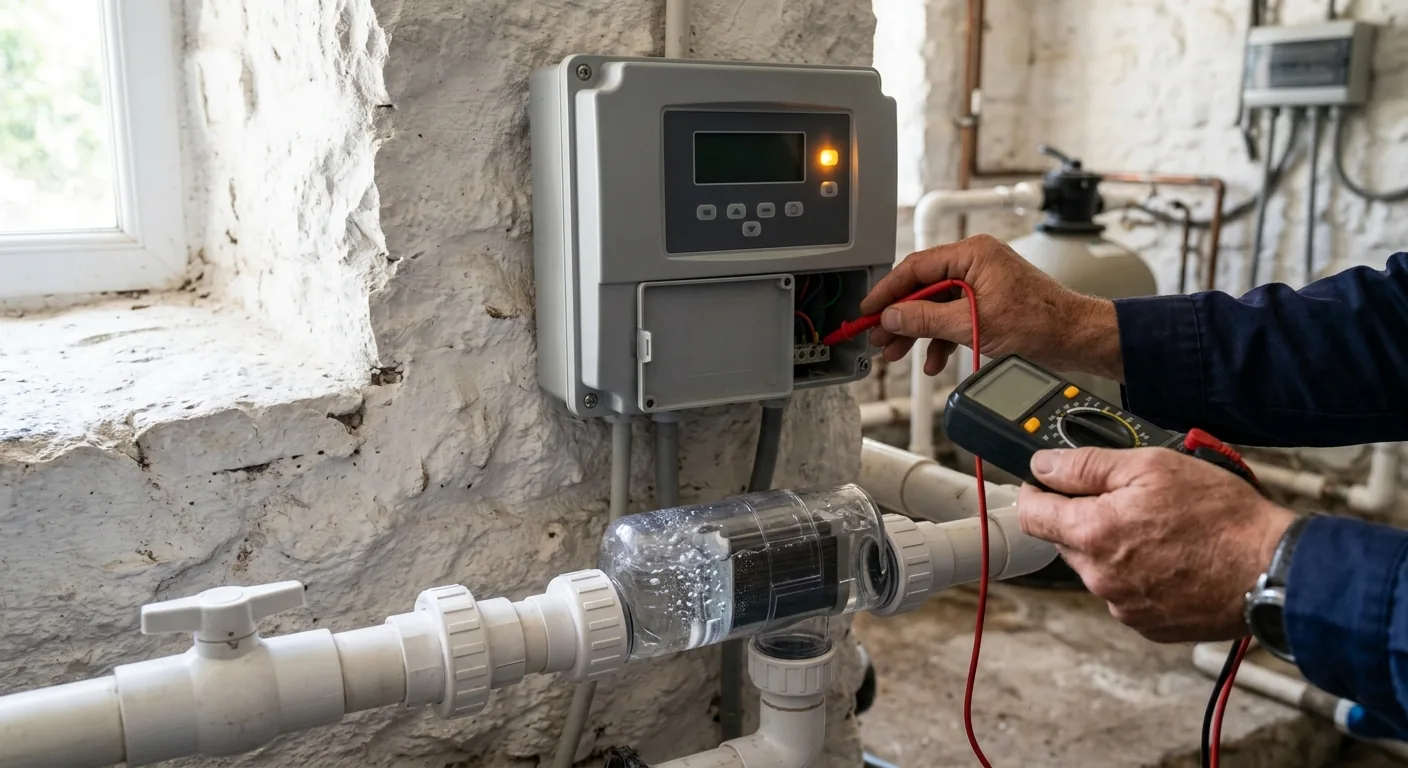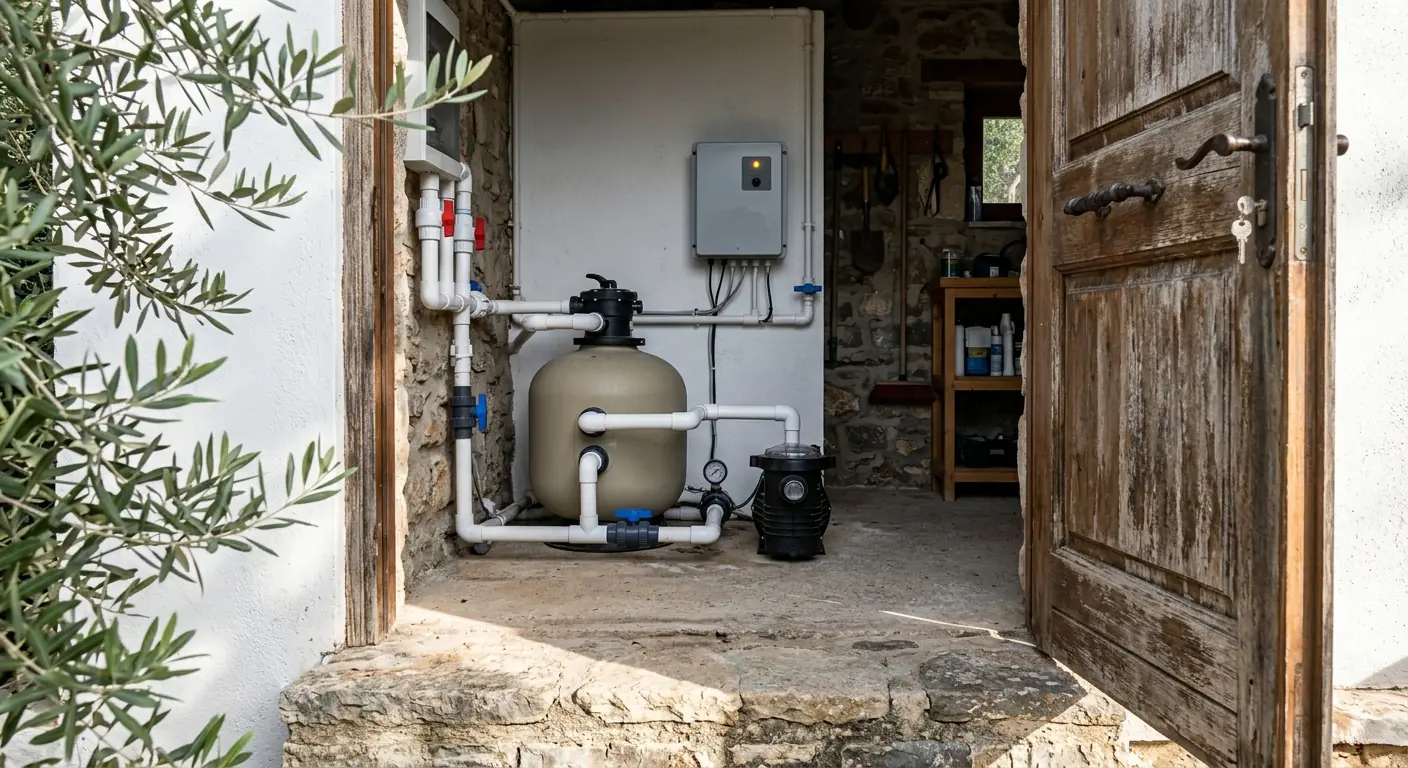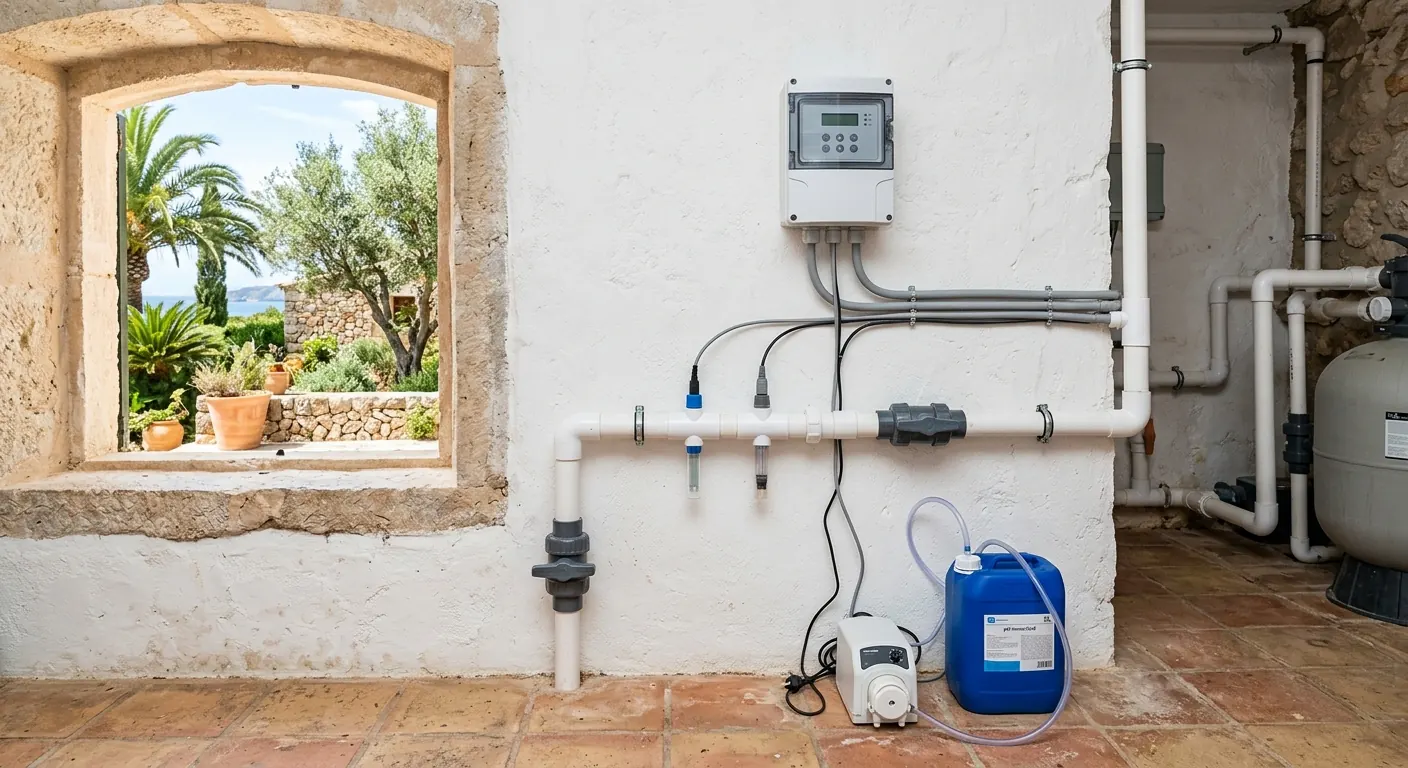
The Innowater SMC is one of the salt chlorinators you find most often in Mallorca pool rooms. The domestic SMC 10, SMC 20 and SMC 30 models are made in Spain and show plain text messages on an LCD screen rather than coded lights, so most faults are easy to identify. This guide explains each message, the checks you can do yourself and when it is time to call a pool technician. It is based on the manufacturer's instruction manual.
How the SMC works
The SMC turns the salt in your pool water into chlorine as the water passes through an electrolytic cell fitted in the return pipe. The number in the model name is the output in grams of chlorine per hour: an SMC 20 makes 20 g/h and, according to distributors, suits pools of roughly 50 to 90 m³. The control unit reverses the polarity of the cell at regular intervals to shed calcium, which is why the display sometimes shows a countdown. The manual gives the cell a life of around 16,000 operating hours.
LOW WATER LEVEL IN CELL (NIVEL BAJO DE AGUA EN CÉLULA)
This message means the probe in the cell does not detect water, so the control unit stops production to protect the cell. Typical causes:
- The pump is off or has lost its prime while the chlorinator still has power
- A dirty filter or full skimmer and pump baskets reducing the flow
- A closed valve or an obstruction in the pipework
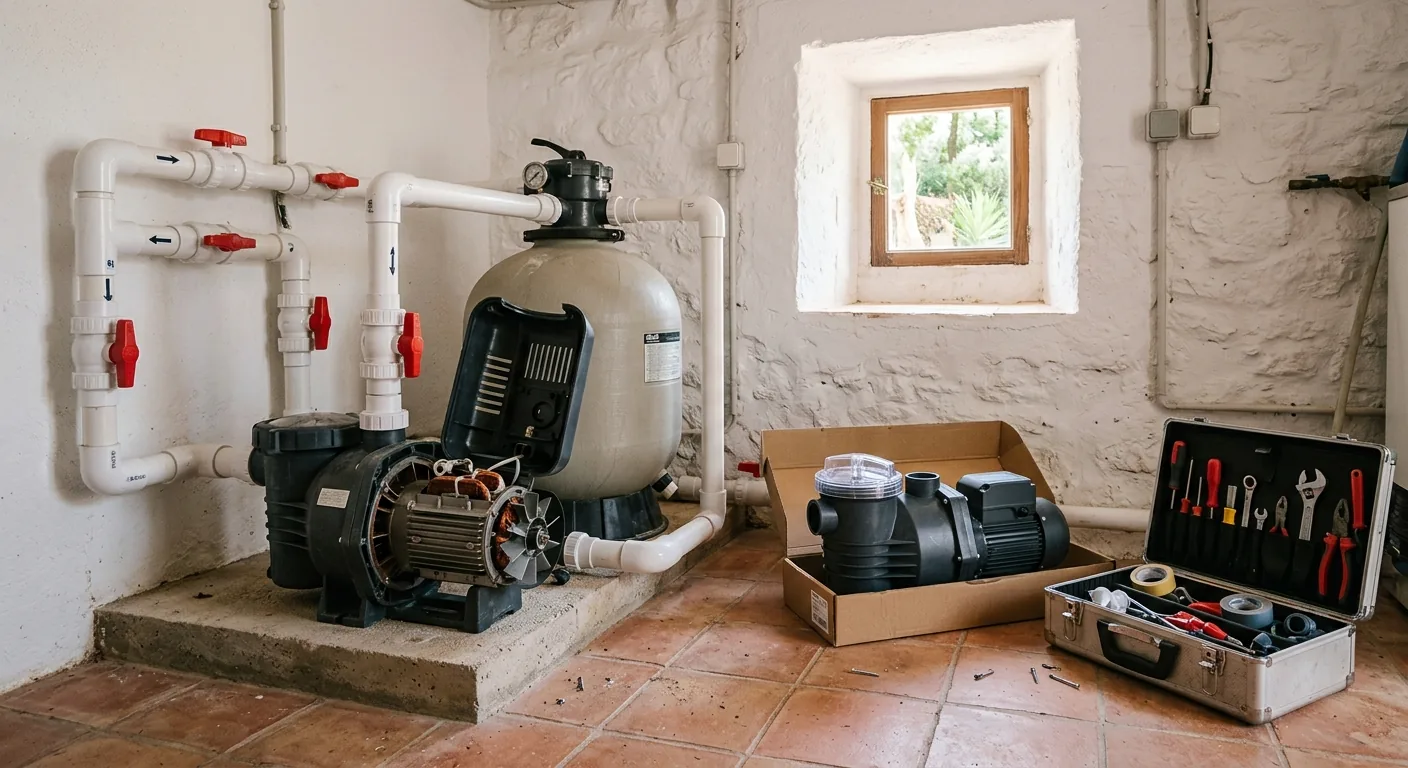
- A pump that is too small for the installation
If the chlorinator has been running without the pump, switch it off straight away. Clean the baskets, backwash the filter, check the valves and make sure the cell is completely full of water. Once the water reaches the probe again, production restarts. If the message stays even with good flow, the probe or its connection may be faulty, which is a job for a technician.
SALT TOO LOW (NIVEL DE SAL INSUFICIENTE)
This message means the unit has measured a salt level too low for safe operation, so it stops producing chlorine. Innowater recommends 5 to 6 kg of salt per m³ of pool water, which is 5 to 6 grams per litre. Salt is not used up, but it is lost through backwashing, overflow after heavy rain and topping up with fresh water.
- Test the salt level with a salt meter or test strips
- If it is low, add pool salt across the pool with the pump running and wait until it has fully dissolved
- Press OK on the control unit to restart
The same message can appear when the salt is fine but the water is very cold, the connection between control unit and cell is poor, or the electrodes are coated in calcium. If a test shows normal salt, check the cell for white scale before adding more: extra salt will not fix a scaled cell. Running the cell for long periods below 3 g/L wears it and is excluded from the warranty.
CELL NOT DETECTED
The control unit does not detect a cell connected to it. This message appears in the English version of the menu. Check that the cell cable is firmly plugged in and that the connector is dry and undamaged, then press OK to restart. A damaged cable or connector, or a cell that has failed, needs a technician.
The polarity change countdown is not a fault
If the screen shows Cambio polaridad with a countdown (Chang. polarity in English), the unit is simply reversing the cell polarity to clean the electrodes, and production pauses for a few minutes. The factory setting reverses the polarity every 8 hours. A shorter period helps in very hard water, but the manual warns that a period under 4 hours drastically shortens the life of the cell, so leave changes to a technician.
Larger SMC models: NO HAY FLUJO and SAL BAJA
The semi-industrial SMC models from 50 to 150 g/h, used on large villa pools and in residential communities, have a flow switch and slightly different messages:
- NO HAY FLUJO (no flow): no water is flowing through the cell, so production stops. Restore the flow, confirm with OK and switch the unit back on
- SAL BAJA (low salt): the salt is lower than normal but production continues. Test the salt and check the electrodes, since cold water and worn or scaled electrodes can cause the same reading
- SAL INSUFICIENTE (salt too low): production stops to protect the cell. Correct the salt level, or check the connection to the cell
Cleaning a scaled cell safely
Palma's water is often ranked among the hardest in Spain, and calcium builds up on the electrodes even with polarity reversal. Innowater's manual recommends trying the gentle methods first: let the cell dry for a day or more, tap it lightly or rinse it with a jet of water. If the scale stays, the manual describes an acid clean:
- Switch off the pump and the chlorinator, unplug the cell cable and remove the cell
- Mix 1 part hydrochloric acid (30%) with 9 parts water, always adding the acid to the water, never the reverse
- Immerse only the electrodes and keep the terminals dry
- Never leave the cell in the acid for more than 5 minutes
- Never scrape the electrodes with anything metal or sharp
- Rinse with fresh water, dry the terminal area and refit the cell
Wear gloves and eye protection. If you would rather not handle acid, a technician can clean the cell during a service visit.
When to call a technician
Call a pool technician when:
- A message keeps returning after you have corrected the salt and the flow
- The cell is clean and the salt is correct, but chlorine stays low, which often means the electrodes are worn
- The cable, connector or control unit shows damage, burn marks or water inside
- The display stays blank although the unit has power
A new cell is the usual repair once the electrodes reach the end of their life. Our salt chlorinator repair page shows typical prices in Mallorca, and we can match you with local technicians who service Innowater units.