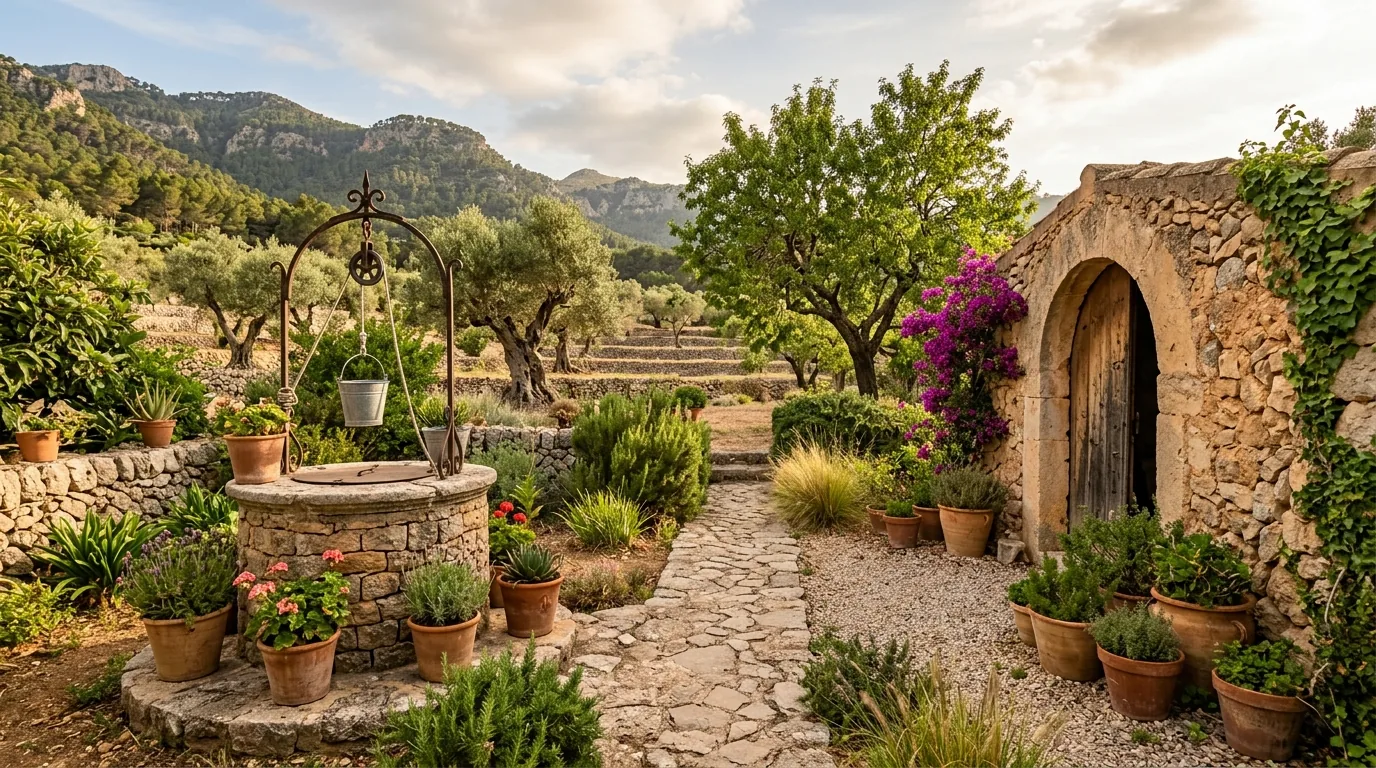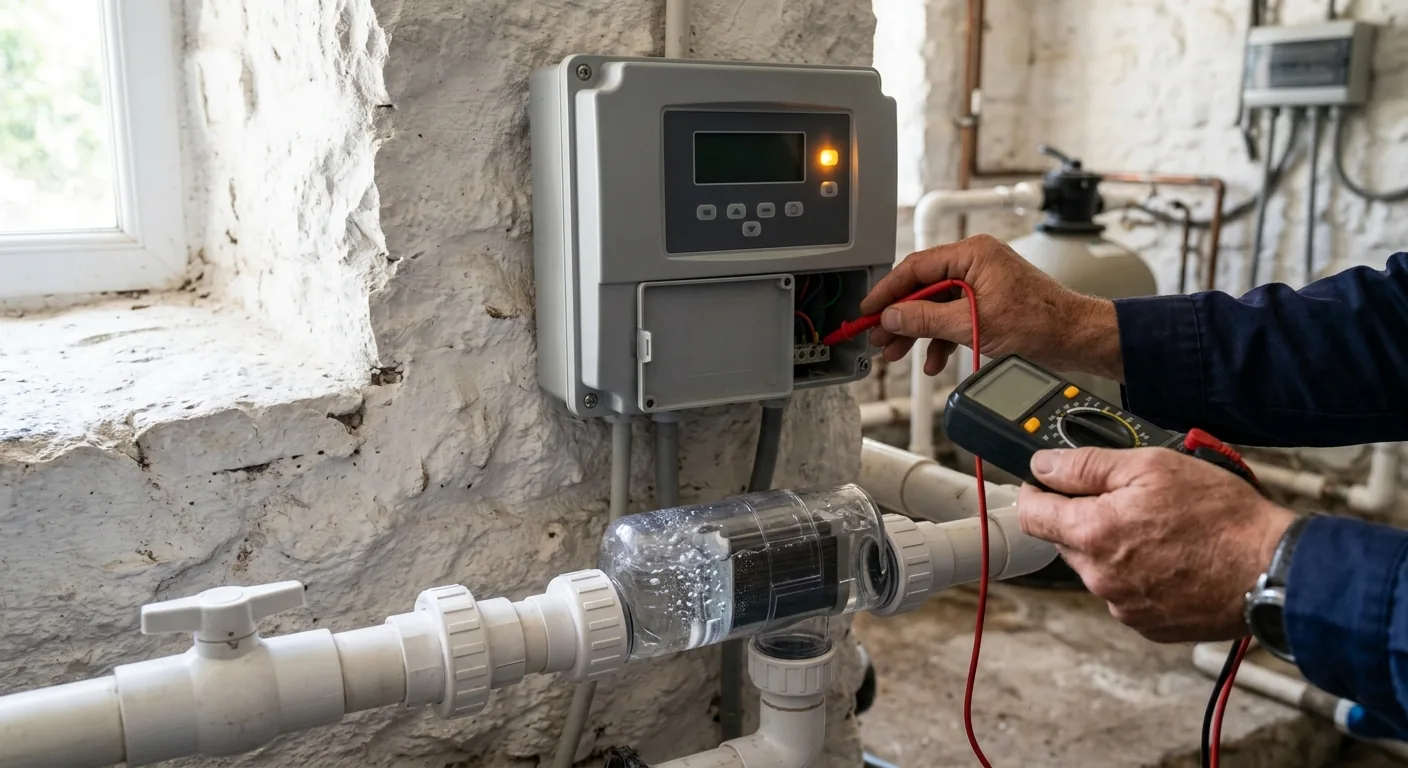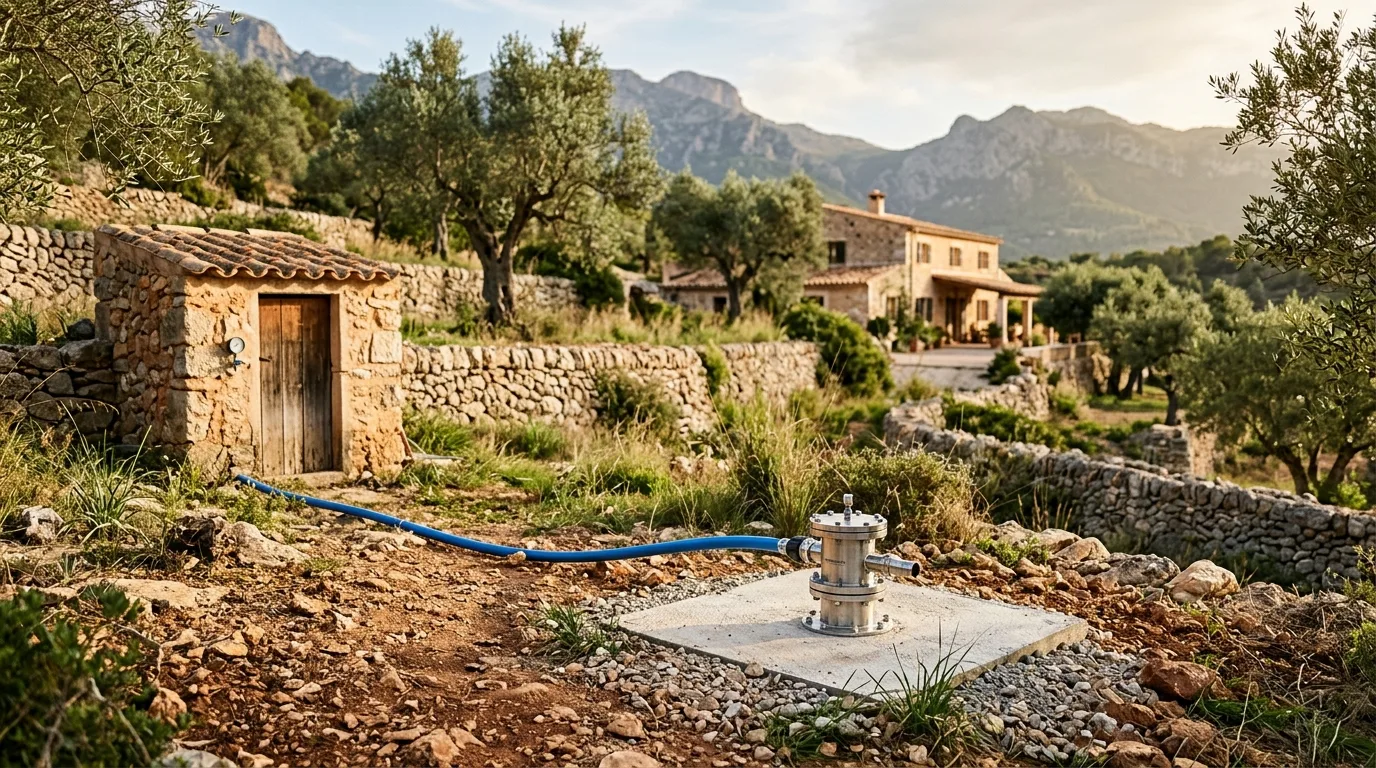
Yes, you can drill a well (pozo) on most fincas in Mallorca, but not without authorisation. In most cases you need a permit from the Balearic water authority before any rig arrives, usually supported by a hydrogeological study. The depth you have to reach, which ranges from under 100 metres on the plains to around 300 metres on hills and near the coast, is the main factor behind the final cost. This guide explains the process, typical costs and common mistakes.
Why owners drill a well
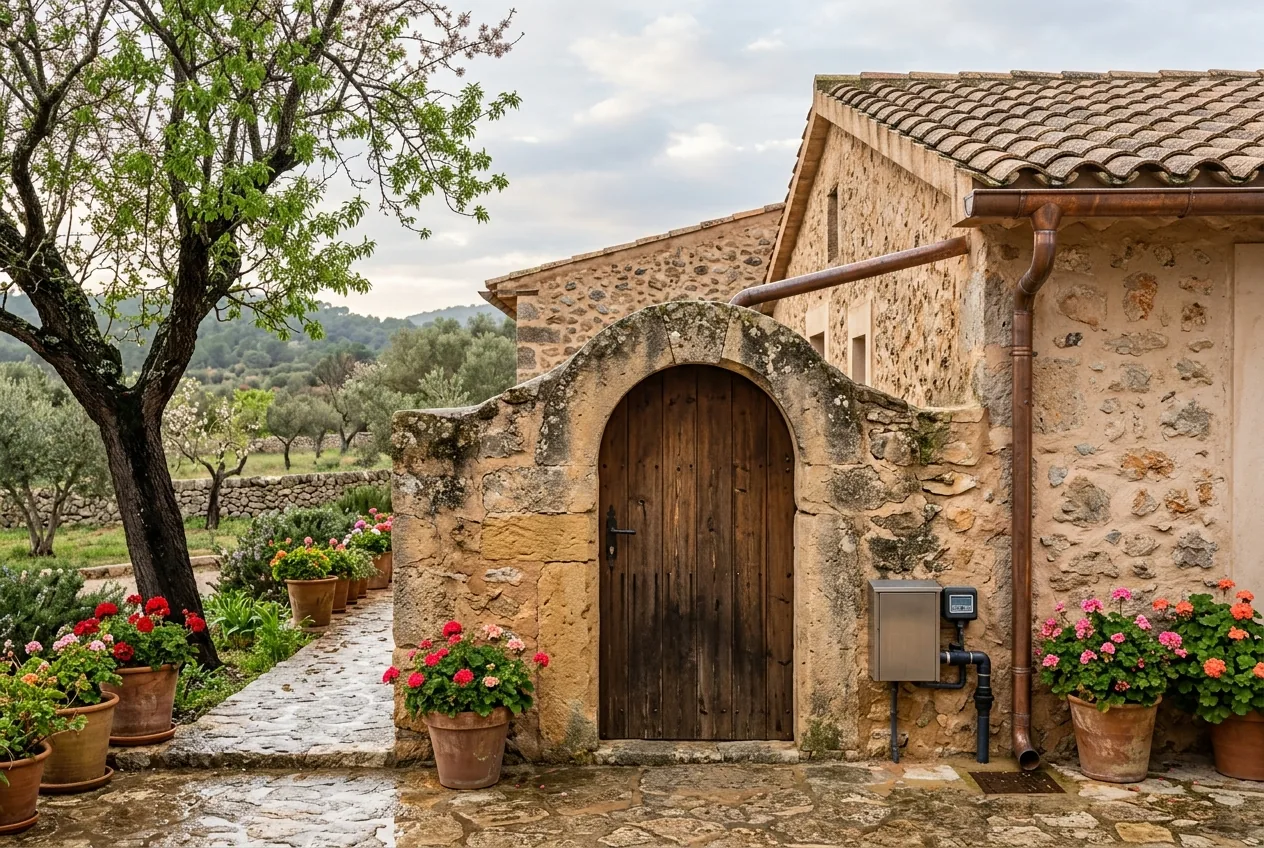
Many rural properties in Mallorca are not connected to a municipal water network, and those that are can face summer restrictions in some municipalities. A well gives you your own supply for the garden, the pool, olive and almond trees and, with the right treatment, the house itself. Owners usually drill to:
- Cut the cost and hassle of regular tanker deliveries
- Irrigate gardens and orchards through the long dry summer
- Top up the pool without relying on mains water
- Add resilience to a holiday rental, where guests expect water to simply work
- Back up a cistern that runs low by August
A well is not a free, unlimited resource, though. Groundwater on the island is under pressure, and the authorities control how much can be extracted and what it can be used for.
Permits and the hydrogeological study
Before drilling, you normally apply to the Balearic water authority for authorisation. The application usually includes a technical project prepared by a qualified professional, often a geologist or engineer, with a hydrogeological study of the site. This study looks at the aquifer beneath your land, the expected depth and yield, the distance to other wells and any risk of affecting neighbouring supplies or drawing in seawater.
The authorisation typically sets the maximum annual volume you may extract and the permitted uses, such as domestic use or irrigation. On rustic land (suelo rústico) and in protected areas such as the Serra de Tramuntana, extra conditions may apply, and the council (ayuntamiento) may also need to be informed or grant its own licence for the works. Processing can take several months and varies widely, so it is worth starting well before you hope to drill. Rules differ between areas, so always confirm the current requirements with your specialist.
If your finca already has an old well with no paperwork, it can often be legalised. This usually means registering it with the water authority, providing technical documentation and sometimes a flow test or a meter. Legalising matters if you plan to sell, rent the property out, or deepen or re-equip the well, because unauthorised extraction can lead to fines and complications in a sale.
How deep will you need to go?
Depth is the biggest variable in a Mallorca well project. On the central plains and in parts of the lowlands, water can often be found at less than 100 metres. On hillsides, in the Tramuntana foothills and along stretches of the coast, boreholes of 150 to 300 metres are common, and occasionally deeper.
Depth drives cost in several ways: more drilling hours, more casing pipe, a more powerful submersible pump, heavier cable and a larger electrical supply to run it. A deeper well also means higher running costs, because the pump has to lift the water further. The hydrogeological study gives an estimate, but no one can guarantee the exact depth at which a productive layer will appear.
The drilling process and the pump
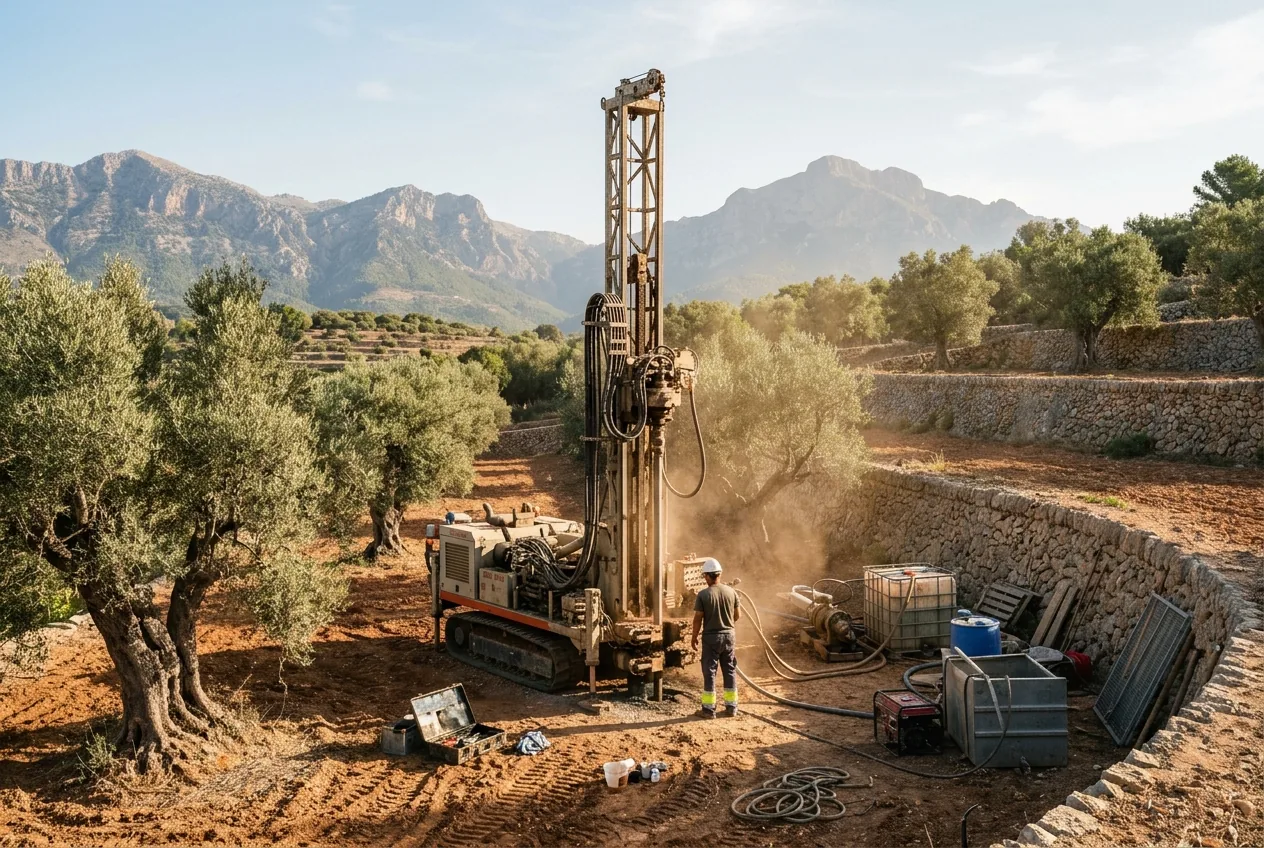
Most wells on the island are drilled with rotary or down-the-hole hammer rigs suited to Mallorca's limestone. A typical project looks like this:
- Site visit, study and authorisation
- Access preparation so the rig and support truck can reach the spot
- Drilling, often over several days depending on depth and rock
- Installing casing and a screen to keep the borehole stable
- A pumping test to measure yield and recovery
- Fitting the submersible pump, riser pipe, cable and control panel
- Connecting to a cistern, tank or pressure system
Many owners pump from the well into a cistern or storage tank rather than directly to the taps. This protects the pump from constant starting and stopping and gives you a buffer. Level sensors and a control panel that cuts the pump if the water level drops help avoid burning out an expensive motor. Autumn and winter are usually the best time to drill, as rigs are less in demand than in spring and gardens are dormant.
Water quality and testing
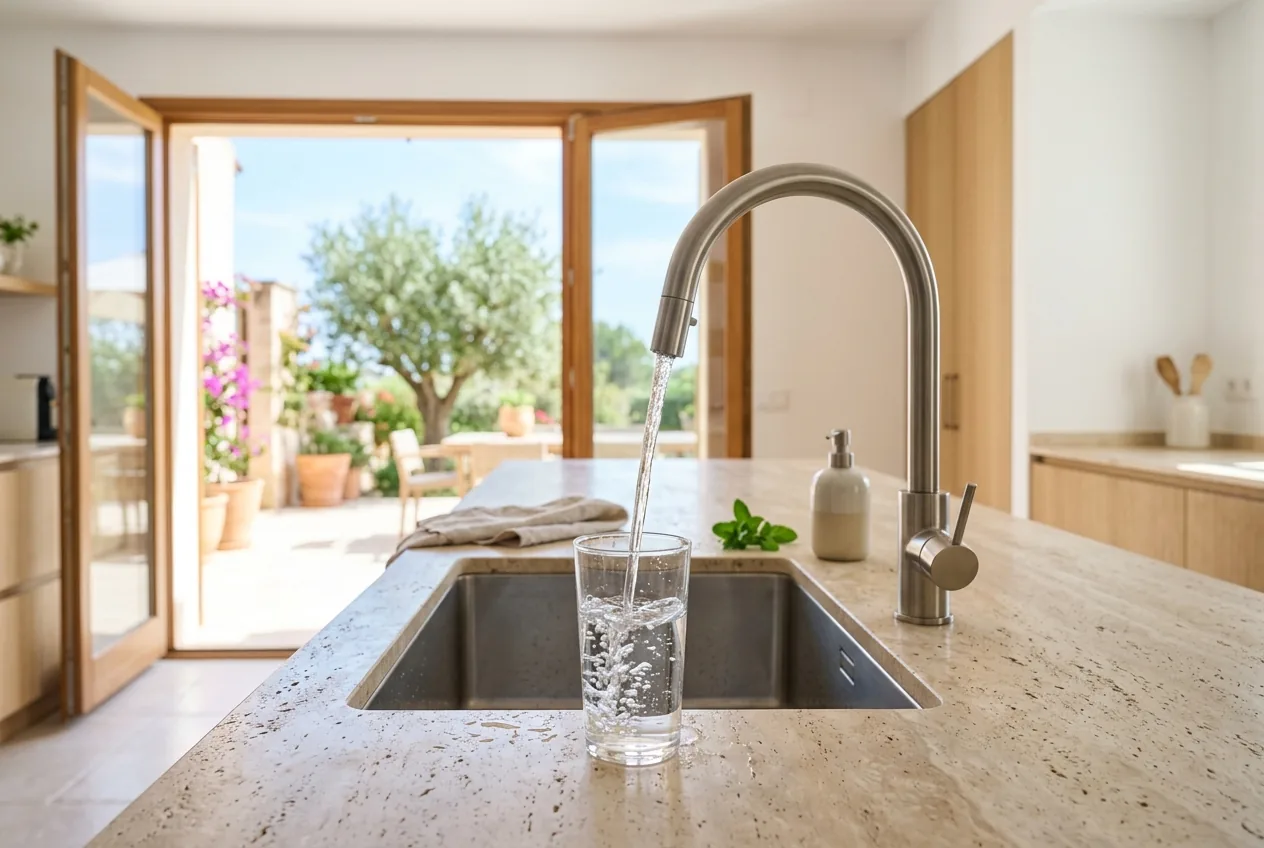
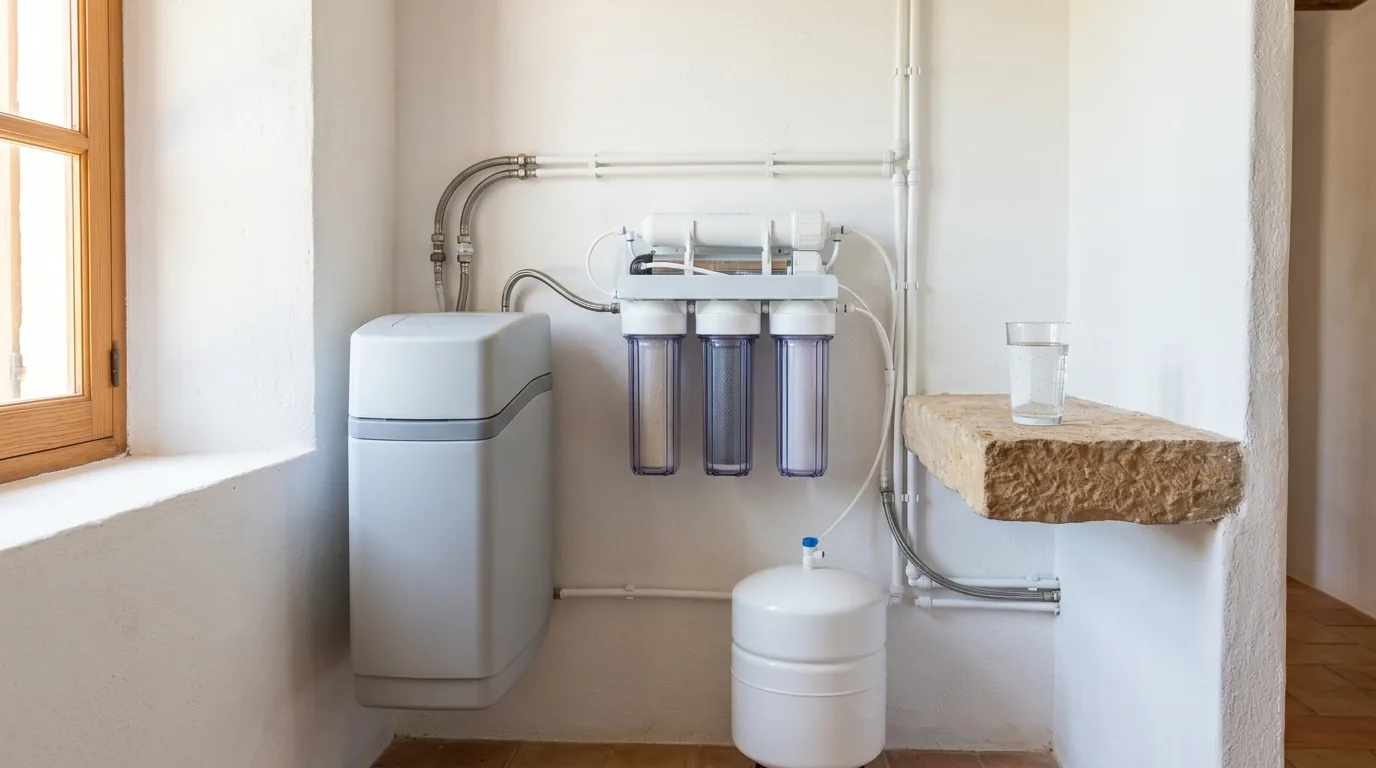
Groundwater in Mallorca is typically very hard and rich in calcium, and in some areas it can carry higher levels of nitrates or salts. Once the well is finished, have a laboratory analysis done before using the water for anything beyond irrigation. Depending on the results, you may need a softener to protect pipes and appliances, or a reverse osmosis system for drinking water. Retesting periodically, and after any change in taste or smell, is good practice.
What can go wrong
Drilling carries some uncertainty, and a good driller will be honest about it. The main risks are:
- A dry or low-yield borehole, even where the study looked promising
- Brackish or salty water near the coast, where heavy extraction can draw seawater into the aquifer
- Yield that drops in late summer when the water table falls
- Collapsing rock or stuck tools in difficult ground, which add time and cost
Ask in advance how a dry result is charged, whether the work is priced per metre, and what happens if the water turns out to be unsuitable. Near the coast, the authorisation itself may limit extraction to reduce the risk of saltwater intrusion.
Costs
These are typical ranges in Mallorca before IVA (VAT). Your quote will depend on depth, access, rock type and the pump you need.
- Hydrogeological study and permits: roughly €1,500–4,000
- Borehole of 150–300 m with pump: €16,000–45,000
- Legalising an existing well (fees): €500–1,500
- Whole-house osmosis, if needed: €2,500–8,000
- Water softener, installed: €1,200–3,500
Shallower wells on the plains usually cost less than the borehole range above, while deep boreholes on hillsides sit towards the upper end. Budget separately for the electrical connection, a cistern or storage tank, and any treatment the lab results call for.
How to choose a driller
Look for a company with its own rigs, experience drilling in your part of the island and a track record of handling the authorisation paperwork. Before signing, check that:
- The quote separates study, permits, drilling per metre, casing, pump and installation
- They explain how a dry or poor result is charged
- They include a pumping test and help with the water analysis
- They hold the necessary insurance and can show recent local work
- They will not start drilling until the authorisation is in place
Getting quotes
Describe your well project once on Mallorca Villa Experts and up to 3 vetted drilling specialists in your area will contact you with quotes directly. It is free and there is no obligation, so you can compare approaches, depths and prices before deciding.