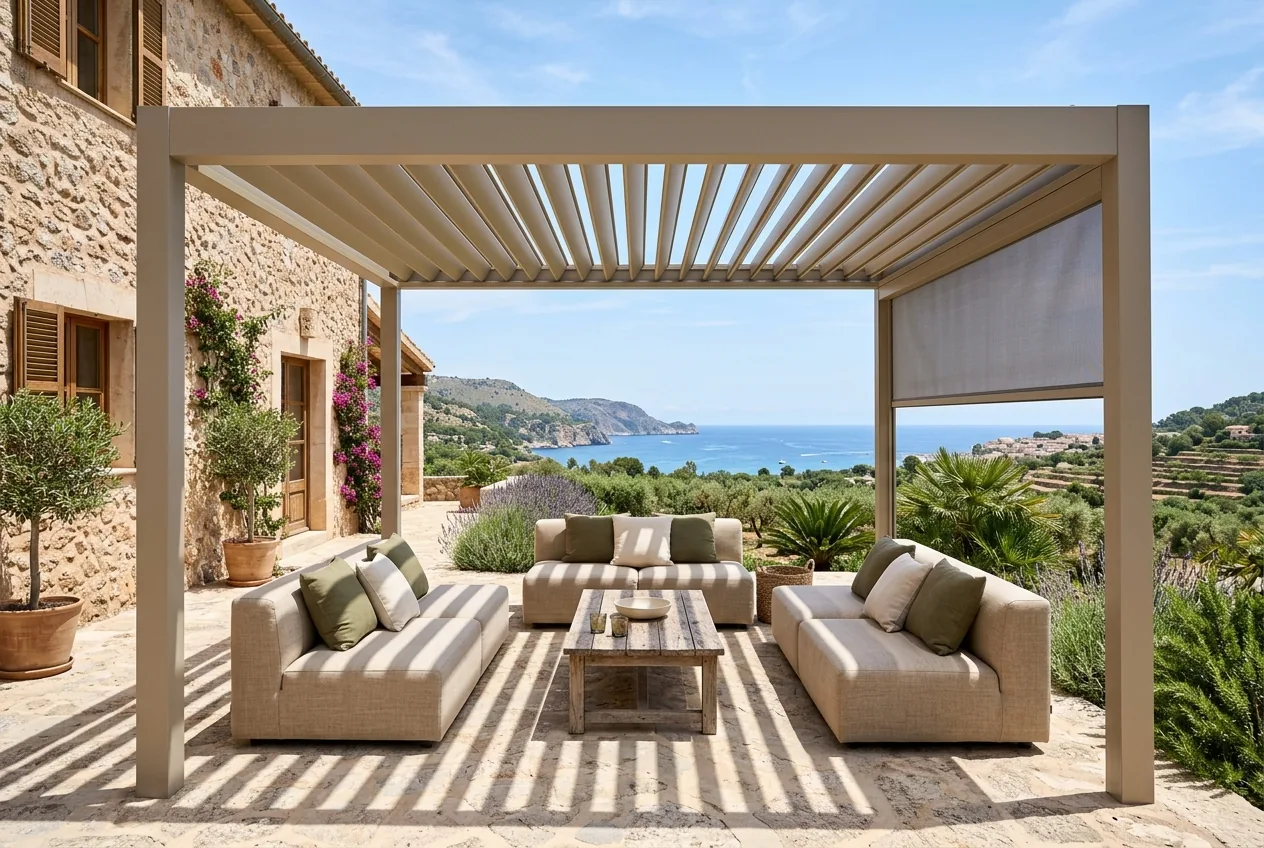
A bioclimatic pergola is one of the most effective ways to make a Mallorca terrace usable from spring to late autumn. In most cases it is a freestanding or wall-mounted aluminium structure with motorised louvres that open for sun and close for shade or rain. Before you order one, check three things: whether your council treats it as a construction needing a licence, whether it is rated for the wind at your site, and whether the materials will cope with salt air. A typical 4 × 4 m pergola costs roughly €8,000–18,000 before IVA.
What it is and why it suits Mallorca
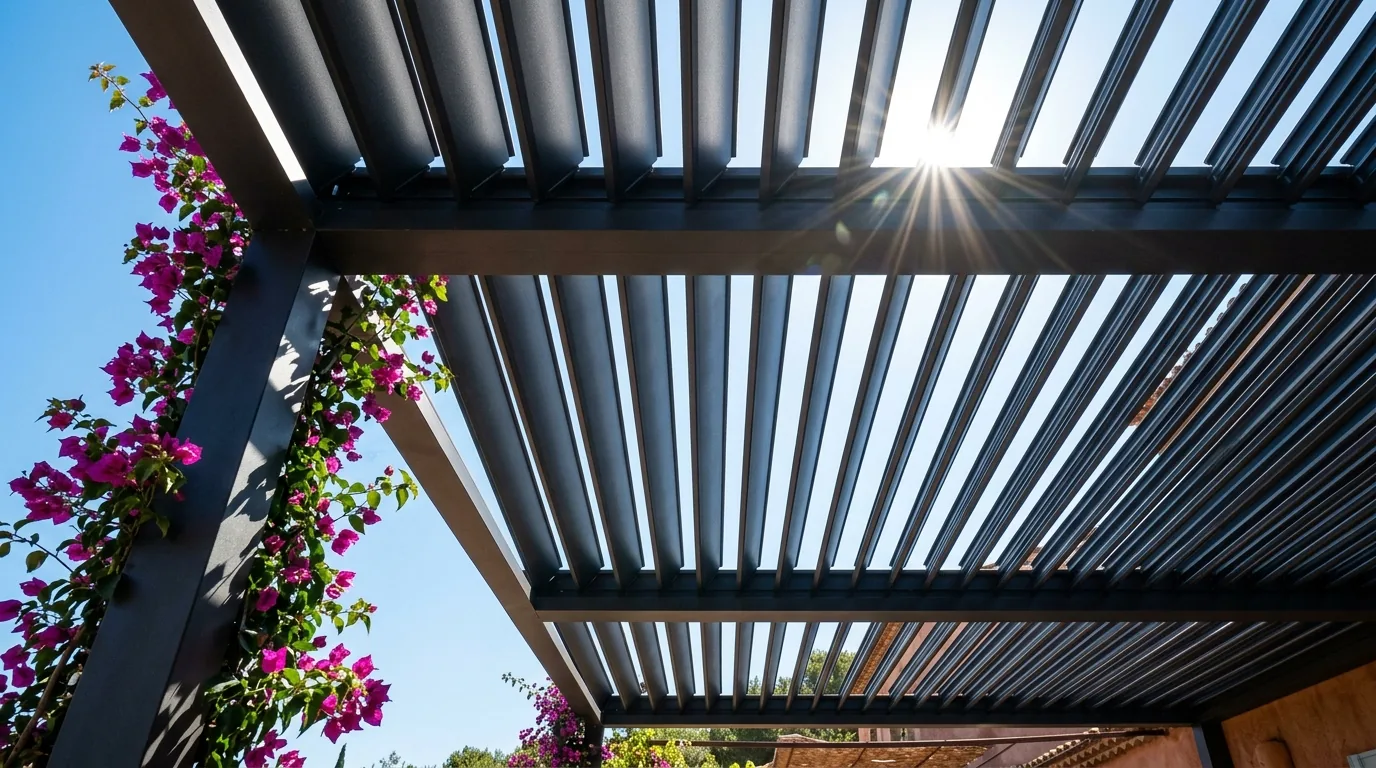
Unlike a fixed pergola or an awning, a bioclimatic pergola has a roof of aluminium blades (louvres) that rotate, usually up to about 135 degrees, driven by a small electric motor. Half open, the blades let hot air escape while blocking direct sun. Fully closed, they form a near-watertight roof and channel rainwater into gutters hidden in the beams and down through the posts. Most systems are operated by remote control, wall switch or app, and many can be linked to wind, rain and temperature sensors.
The frame is normally extruded aluminium with a powder-coated finish in a choice of colours. Sizes are modular, so a pergola can cover a small dining area or run the full length of a pool terrace with several roof modules joined together.
With about 2,800 hours of sunshine a year, shade is the main reason owners buy one. The adjustable louvres let you choose between full sun on a mild February afternoon and deep shade in August, without moving parasols around. Because hot air can vent through the blades, the space underneath usually feels cooler than under a solid roof or fabric awning.
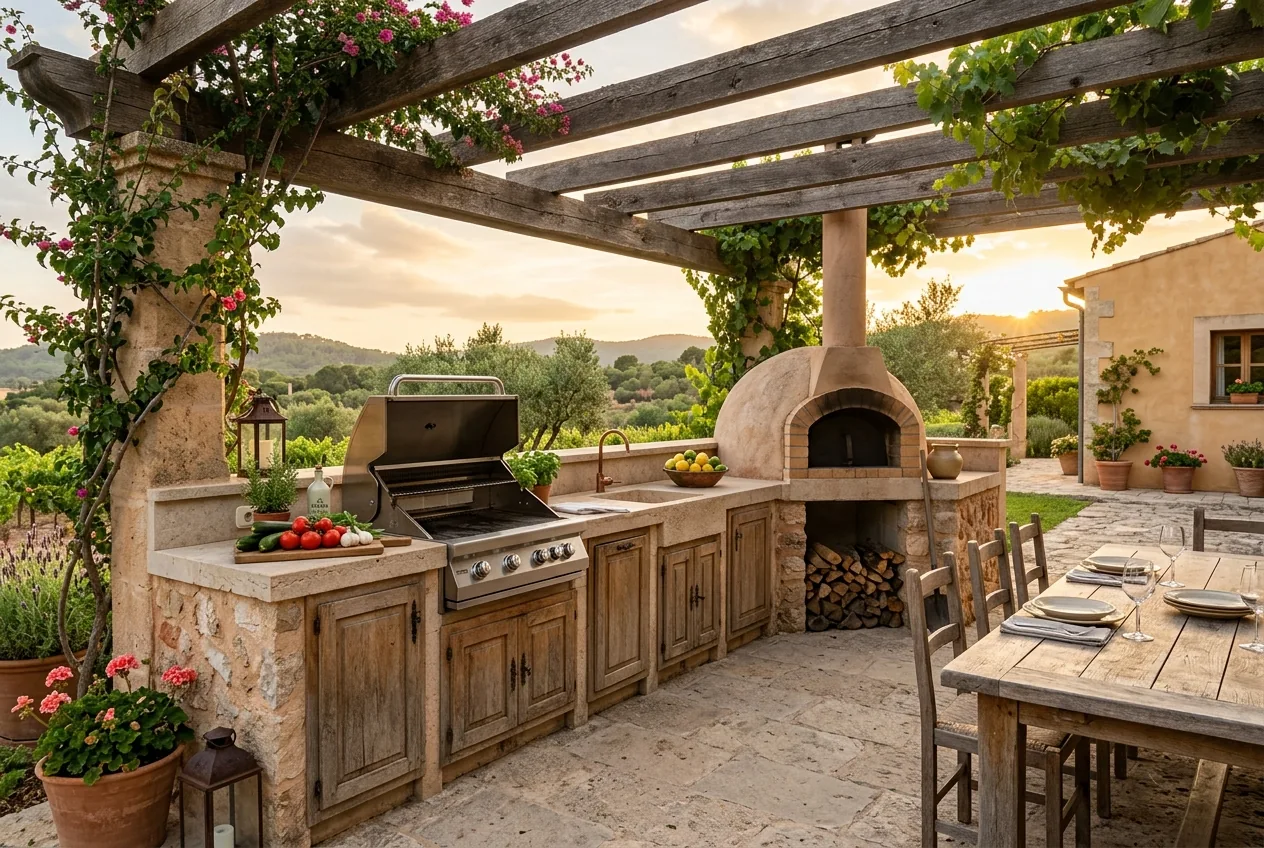
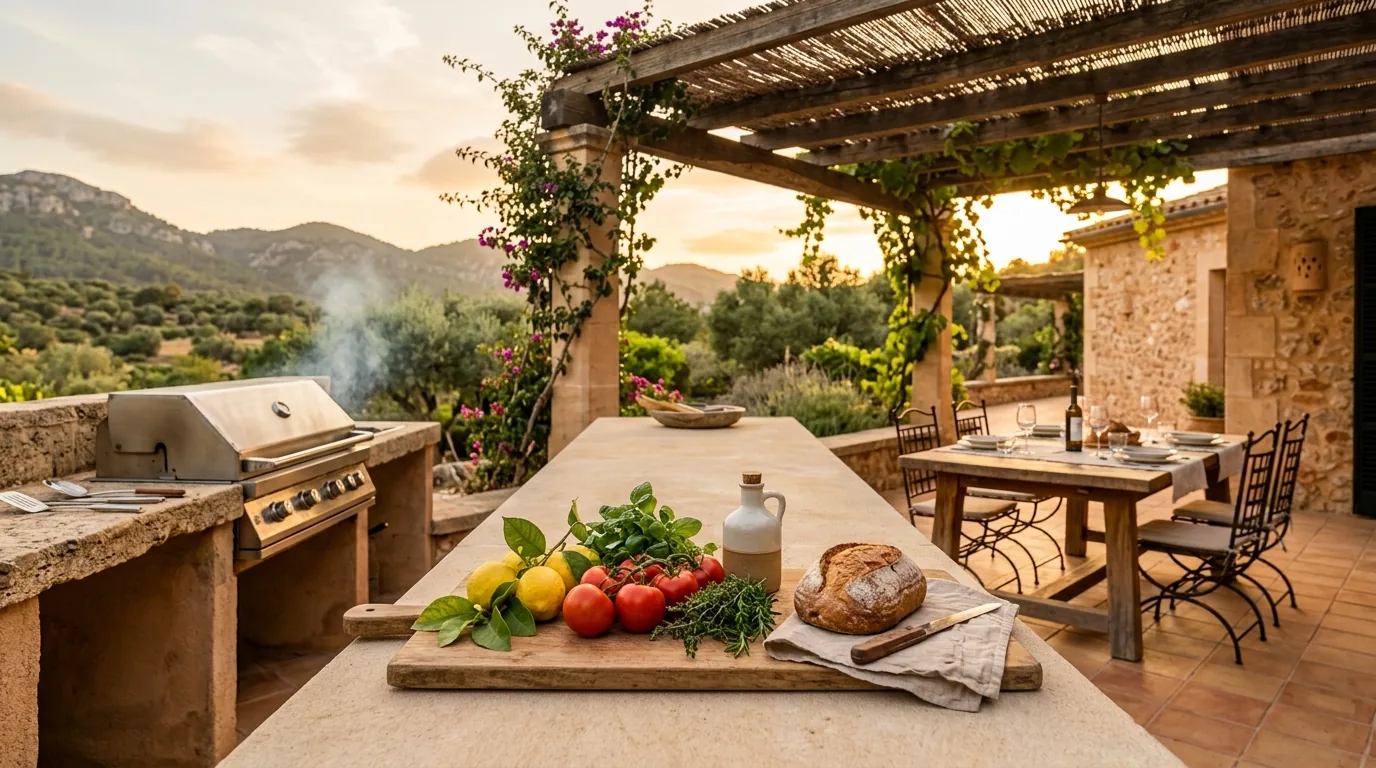
The closed roof also protects outdoor furniture and kitchens from the short, heavy autumn downpours, which extends the season for both family use and holiday rentals. For rental villas, a well-finished pergola over the main terrace is a feature guests notice in photos.
Wind, tramuntana and sensors
Wind is the most important technical question in Mallorca. The tramuntana can blow hard from the north, especially on the north coast and in exposed parts of the Serra de Tramuntana, and coastal sites can see strong gusts year-round. Ask suppliers for:
- The wind resistance rating of the system with the louvres closed and open, and how it was tested
- Whether the rating changes with module size, span or side screens fitted
- A wind sensor (anemometer) that automatically opens or positions the blades in strong wind
- A rain sensor that closes the roof when showers arrive
- Post spacing and anchoring suited to your exposure
Side screens and glass walls increase the wind load on the structure considerably, so they should be part of the original design, not an afterthought. On very exposed plots, a reputable installer may recommend extra posts or a smaller span.
Salt air and materials
Near the sea, salt spray attacks cheap coatings and ordinary steel quickly. Look for marine-grade aluminium alloys with a high-quality powder coating (ideally with a seaside or marine certification from the coater), and stainless steel fixings, preferably A4 (316) rather than A2. Ask how the motor and electrics are protected, what the warranty covers on coastal properties, and whether it requires a specific cleaning routine. Avoid mixing metals that cause galvanic corrosion where they touch.
Licence questions
In most Mallorca municipalities, a bioclimatic pergola anchored to the ground or the house is treated as a construction rather than garden furniture, so some form of permission is usually needed. Depending on size and location this may be a simpler communication to the council (ayuntamiento) or a full building licence, and some councils count the covered area towards the buildable area of the plot.
Rules are stricter on rustic land (suelo rústico) and in protected areas such as the Serra de Tramuntana, where additional structures may be limited or not allowed at all. Rules vary by municipality, so ask the council or your specialist before you sign an order. A good supplier will tell you what documentation they can provide, such as technical drawings and structural calculations.
Foundations and drainage
The posts need a solid base. On an existing reinforced terrace, they can sometimes be bolted to the slab; on garden ground or weak paving, concrete footings are usually required. Your installer should check the slab or soil and specify the anchoring.
Drainage is often underestimated. When the roof closes in heavy rain, all the water comes down through the posts, so plan where it goes: into a garden drain, a soakaway, or even a cistern for irrigation. Make sure the outlets do not discharge onto the terrace or towards the house.
Extras worth considering
- Vertical side screens (zip screens) for shade and insect protection
- Sliding glass walls to create a semi-enclosed room for cooler months
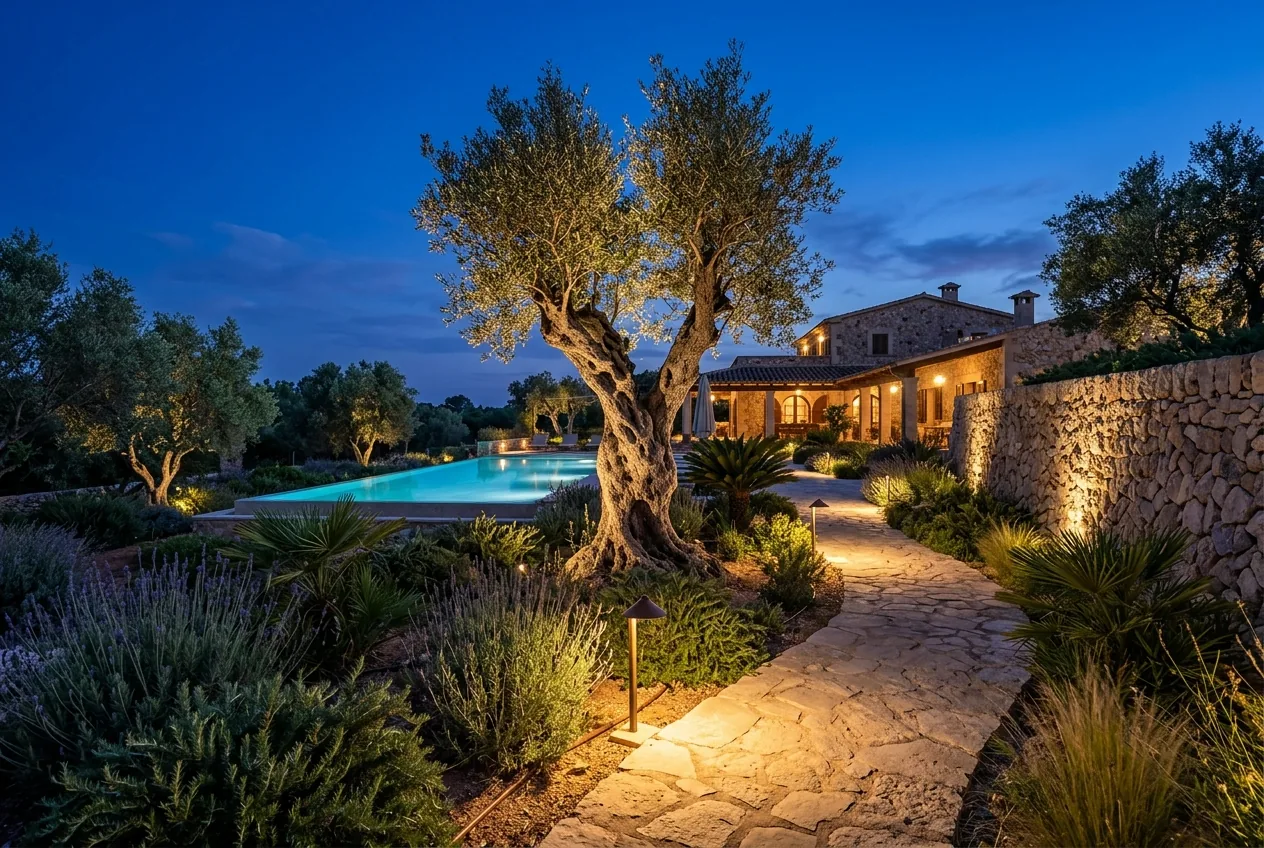
- Integrated LED lighting in the beams or louvres, often dimmable
- Infrared heaters to extend evening use in spring and autumn
- Sensor packages and smart-home integration
Each extra adds cost and, for glass walls, may affect the licence position, as an enclosed space can be treated differently from an open pergola.
Costs
Typical ranges in Mallorca, before IVA:
- Bioclimatic pergola, about 4 × 4 m: €8,000–18,000
- Large pergola with side screens and lighting: €18,000–40,000
The final figure depends on size, number of modules, wind specification, finish, foundations and the extras you choose. Project fees for drawings or permits, if needed, are usually extra.
Maintenance and choosing a supplier
Maintenance is light but important on the coast. Rinse the frame and louvres with fresh water a few times a year, and more often within sight of the sea. Clear leaves and dust from the gutters before the autumn rains, and check that the drainage outlets are flowing. Have the motor, seals and sensors checked periodically, and avoid abrasive cleaners that damage the powder coating.
Choose a company that installs regularly in Mallorca, can show finished projects in similar exposures, explains the wind rating clearly and puts warranty terms in writing. Ask who handles after-sales service and how quickly. Autumn and winter are usually the best time to order, as installers are less busy than in spring.
Getting quotes
You can describe your pergola project once on Mallorca Villa Experts, and up to 3 vetted specialists in your area will quote you directly. The service is free and there is no obligation to accept any quote.