For most fincas in Mallorca the answer is not strictly one or the other. A cistern (aljibe) stores rainwater or delivered water and is relatively simple to build and permit, while a well taps groundwater, needs authorisation from the Balearic water authority and costs more up front, but can supply far more water. Many owners end up combining the two. This guide compares them so you can decide what suits your property, your water use and your budget.
How a cistern (aljibe) works
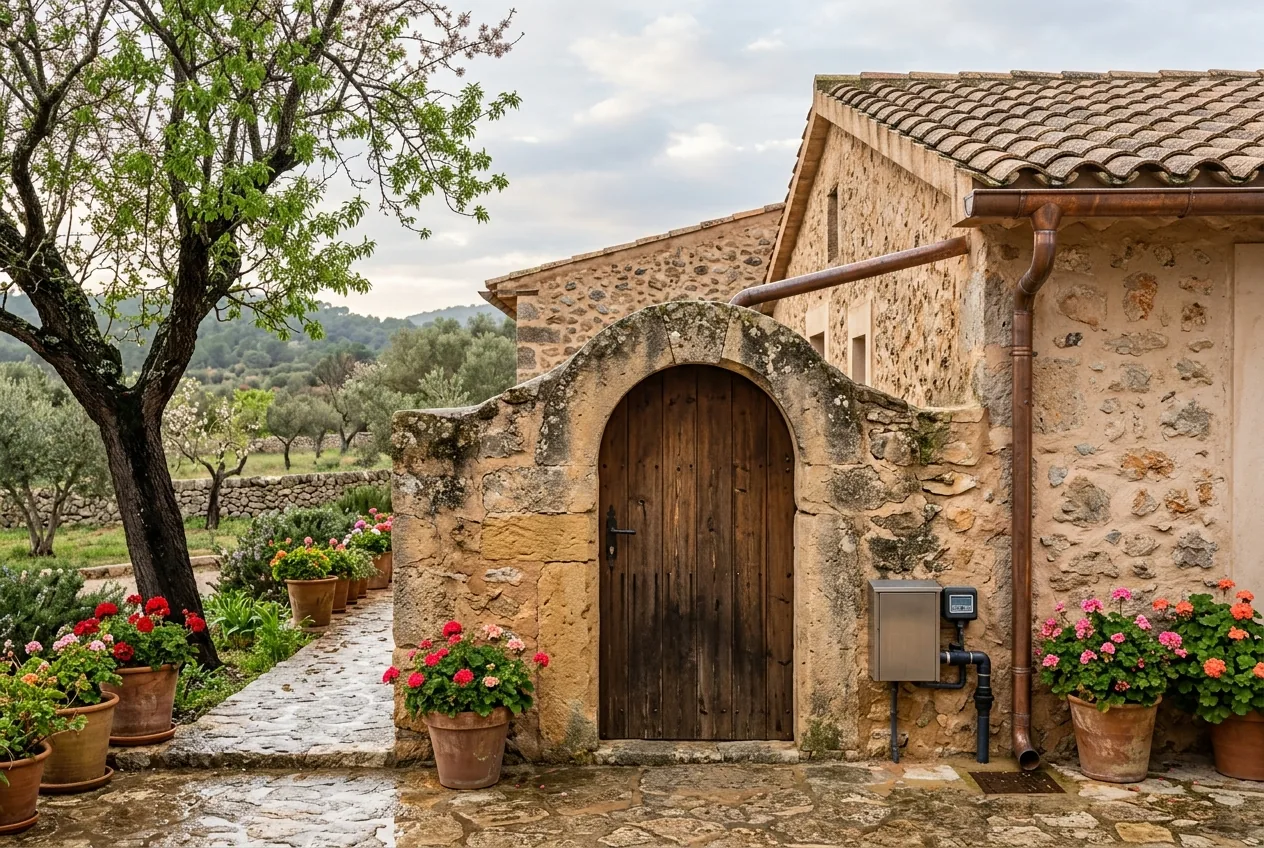
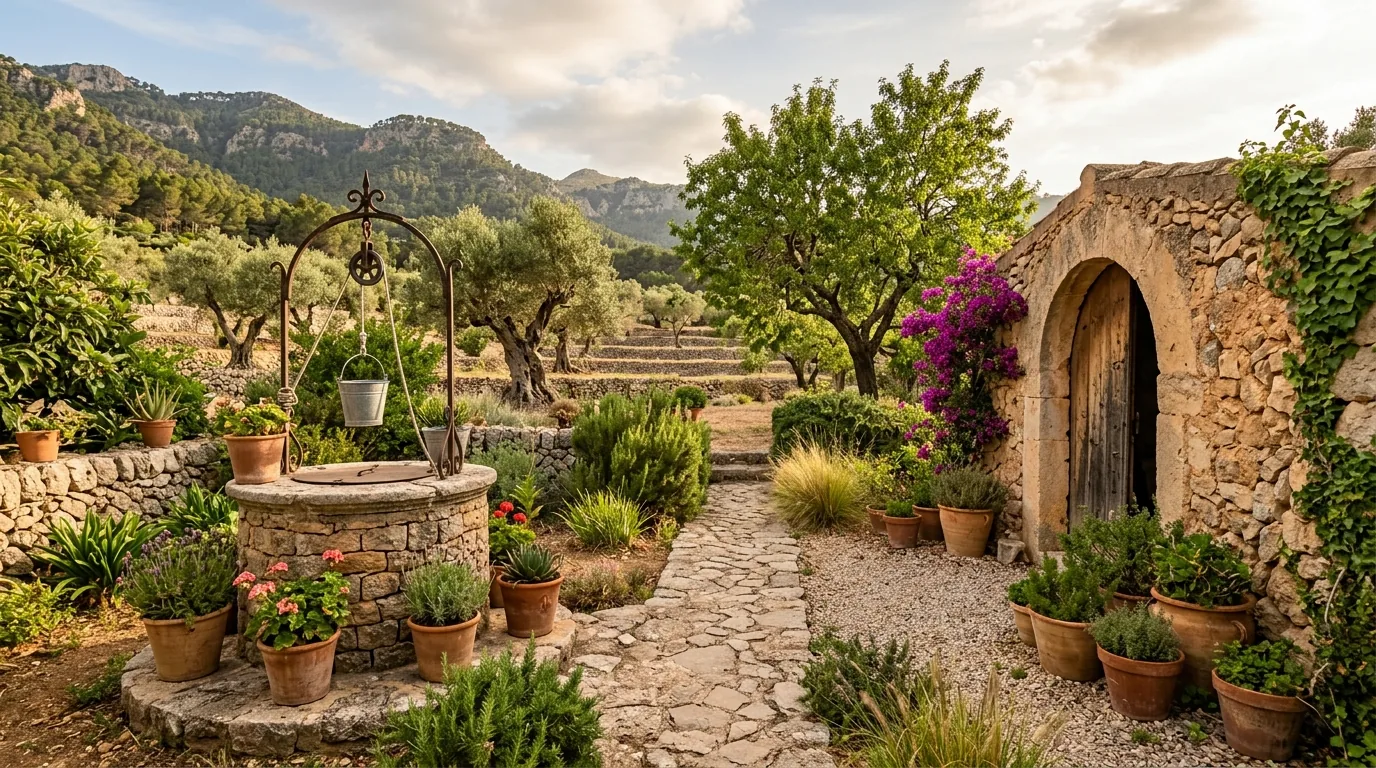
Cisterns have been part of Mallorcan rural architecture for centuries. A cistern is a sealed, usually underground tank, traditionally built in stone and today often in reinforced concrete or prefabricated modules. It is filled by rainwater collected from roofs and terraces, by tanker deliveries, or from a well or mains connection.
Rainwater harvesting works by channelling water from gutters and downpipes through a filter, which removes leaves and debris, into the cistern. A first-flush device diverts the dirtiest water at the start of each storm. How much you collect depends on roof area and rainfall, which is concentrated in autumn and winter and varies considerably across the island, with the Tramuntana generally much wetter than the south and east. A pump and pressure vessel then deliver the water to the garden or house.
How a well works
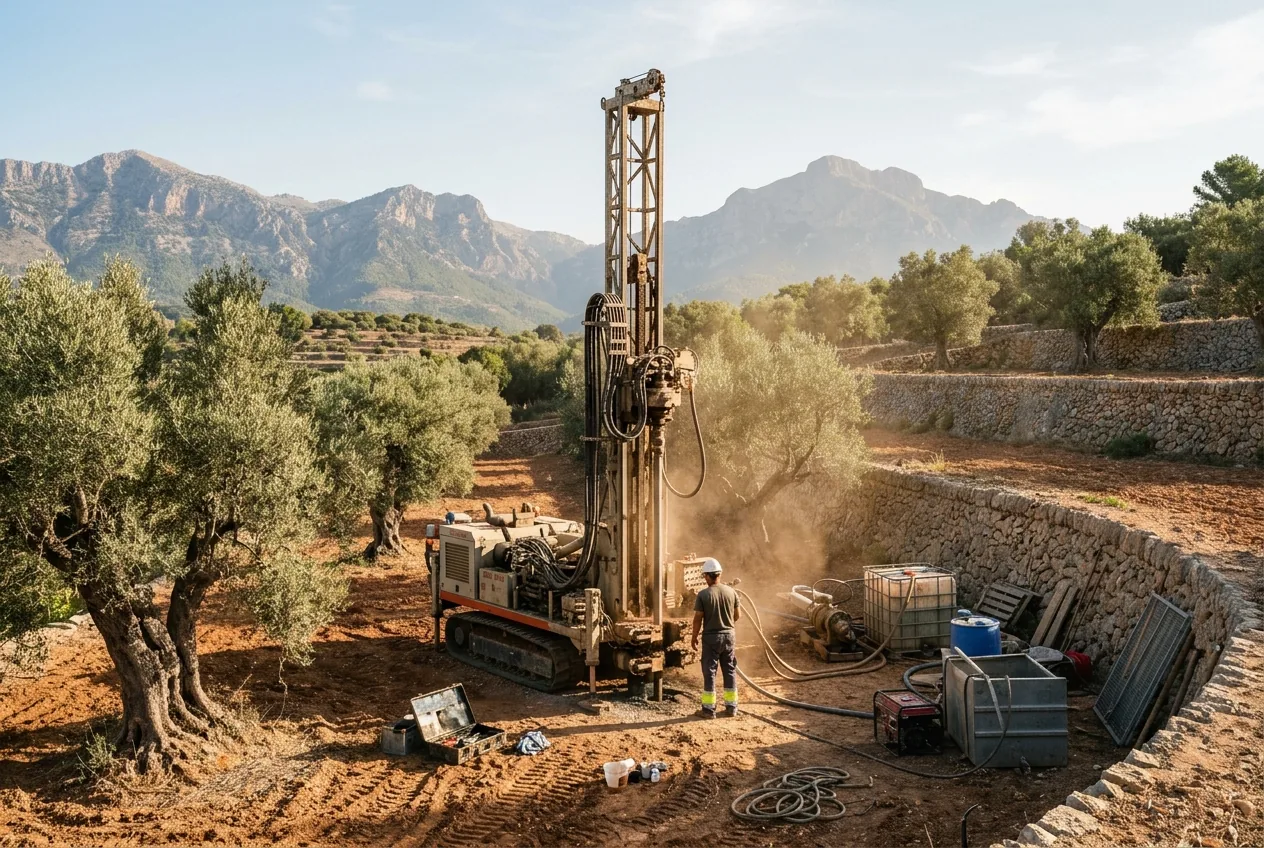
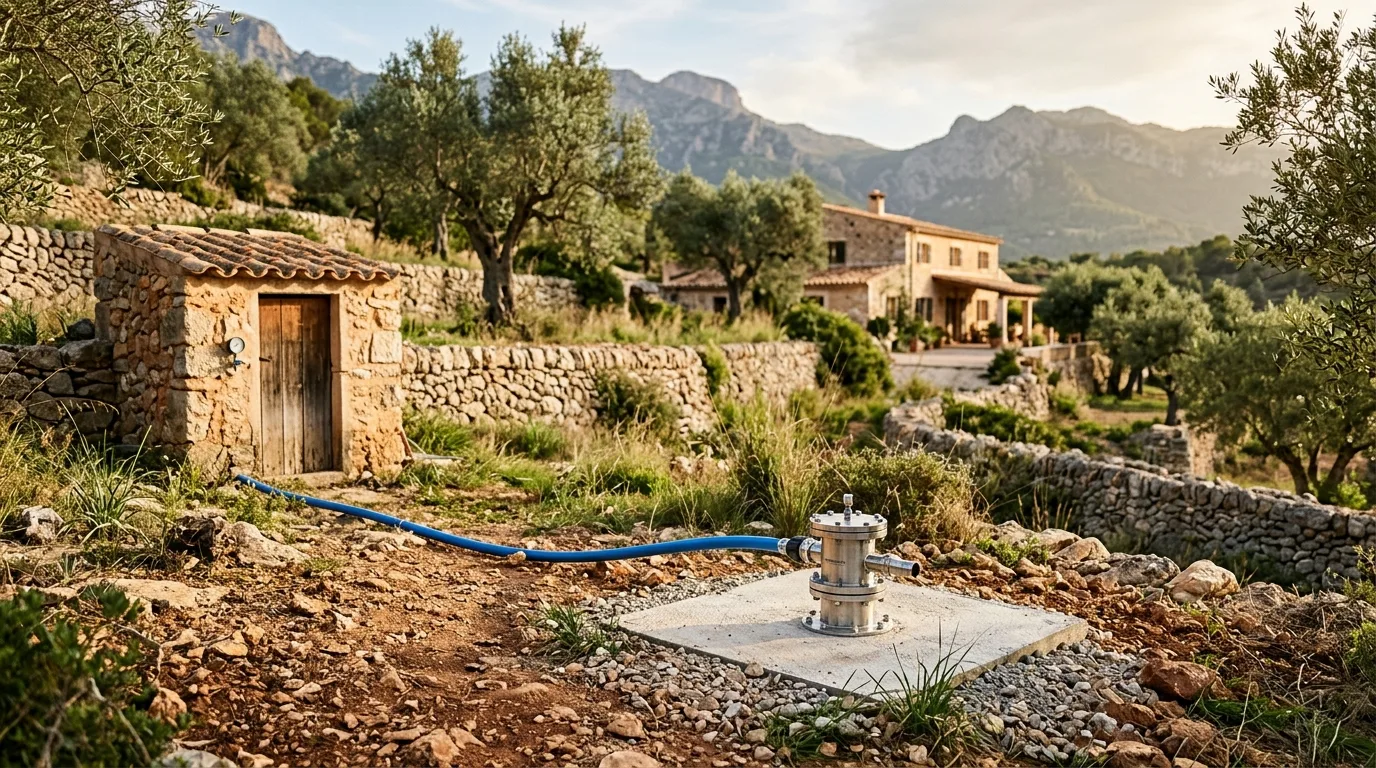
A well or borehole reaches down into the aquifer and draws groundwater up with a submersible pump. Depending on location, water may be found at less than 100 metres on the plains or at up to around 300 metres on hills and near the coast. A productive well can supply water all year round, independent of rainfall, within the limits set by its authorisation. The result is never guaranteed, though: a borehole can turn out dry, low-yielding or, near the coast, brackish.
Permits
This is one of the biggest differences between the two:
- A well usually requires prior authorisation from the Balearic water authority, normally supported by a hydrogeological study, and the permit sets how much you can extract and for what uses
- A cistern is usually treated as a building matter, handled through the council (ayuntamiento) with a works licence or notification depending on its size and location
- On rustic land (suelo rústico) and in protected areas such as the Serra de Tramuntana, both can face stricter conditions on siting, excavation and visual impact
Requirements vary by municipality, so ask the council or your specialist before you commit to a design.
Costs
Typical ranges in Mallorca before IVA (VAT):
- New cistern of 30–60 m³: €8,000–25,000
- Rainwater harvesting system: €3,000–12,000
- Borehole of 150–300 m with pump: €16,000–45,000
- Hydrogeological study and permits for a well: roughly €1,500–4,000
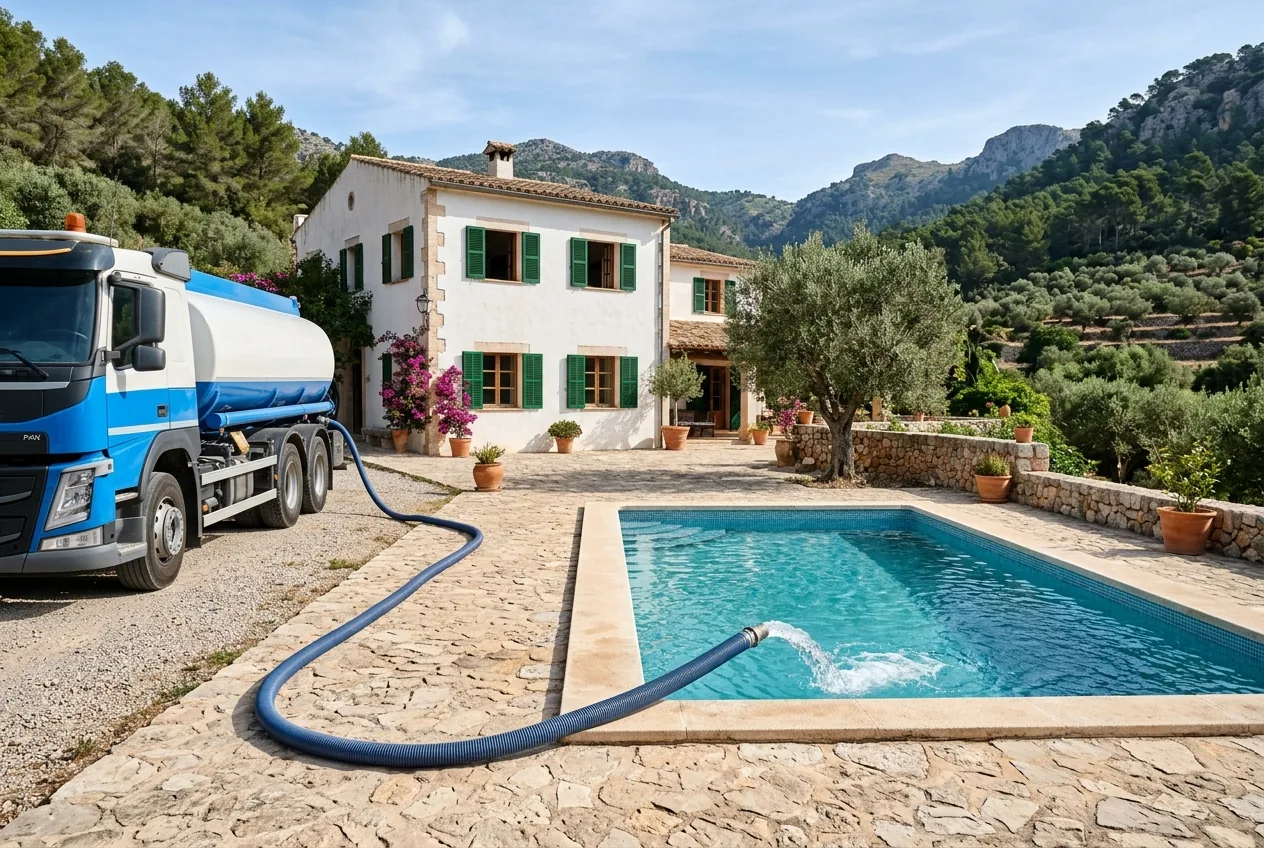
- Tanker water delivery per load: €180–450
A cistern is usually the smaller investment and its cost is predictable. A well costs more up front and carries the risk of a poor result, but once it works, the water itself costs little beyond the electricity to pump it. If you currently rely on frequent tanker loads through the summer, those recurring costs add up and can shift the comparison.
Maintenance and water quality
A cistern needs regular care: removing sediment every few years, checking for cracks and leaks, keeping filters and gutters clear and making sure no light or animals get in. Rainwater is naturally soft, a real advantage on an island with hard, calcium-rich mains and groundwater, but it is not safe to drink without filtration and disinfection.
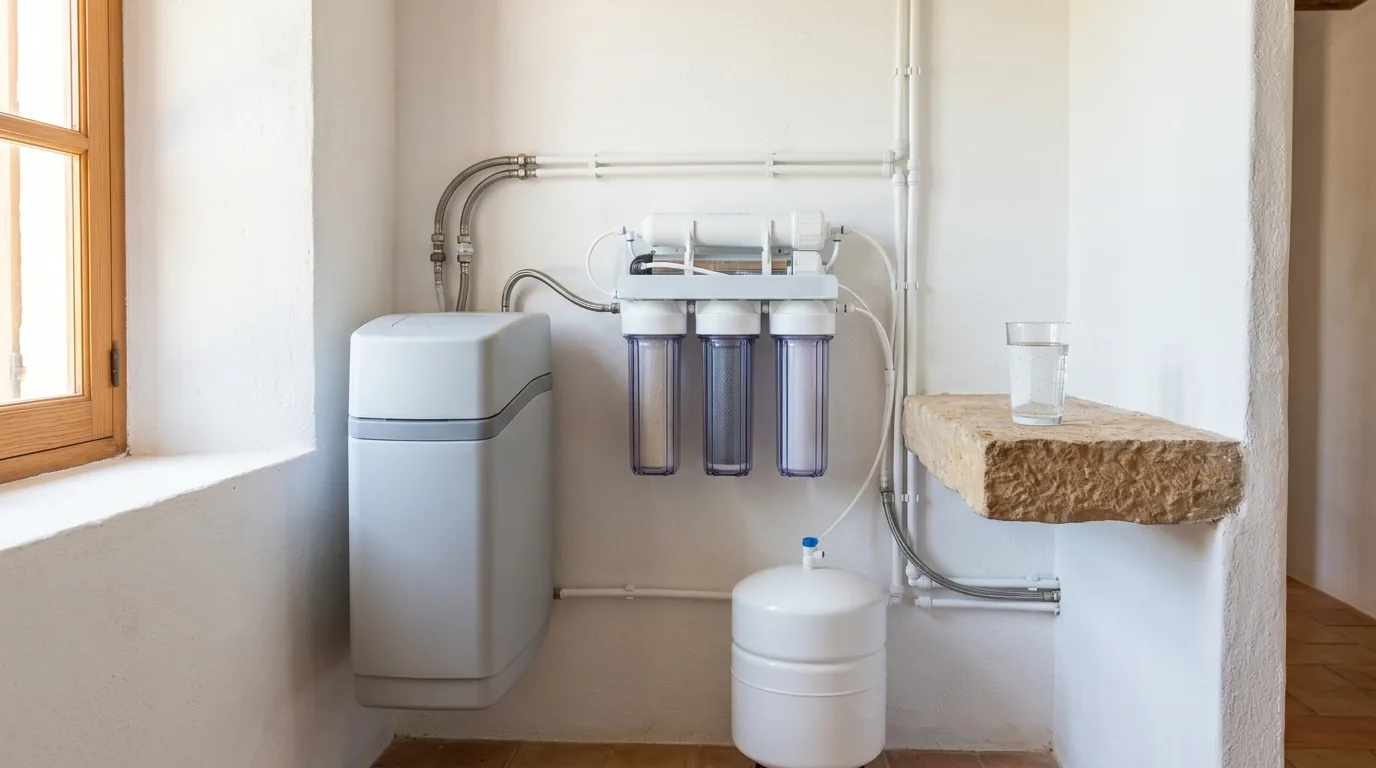
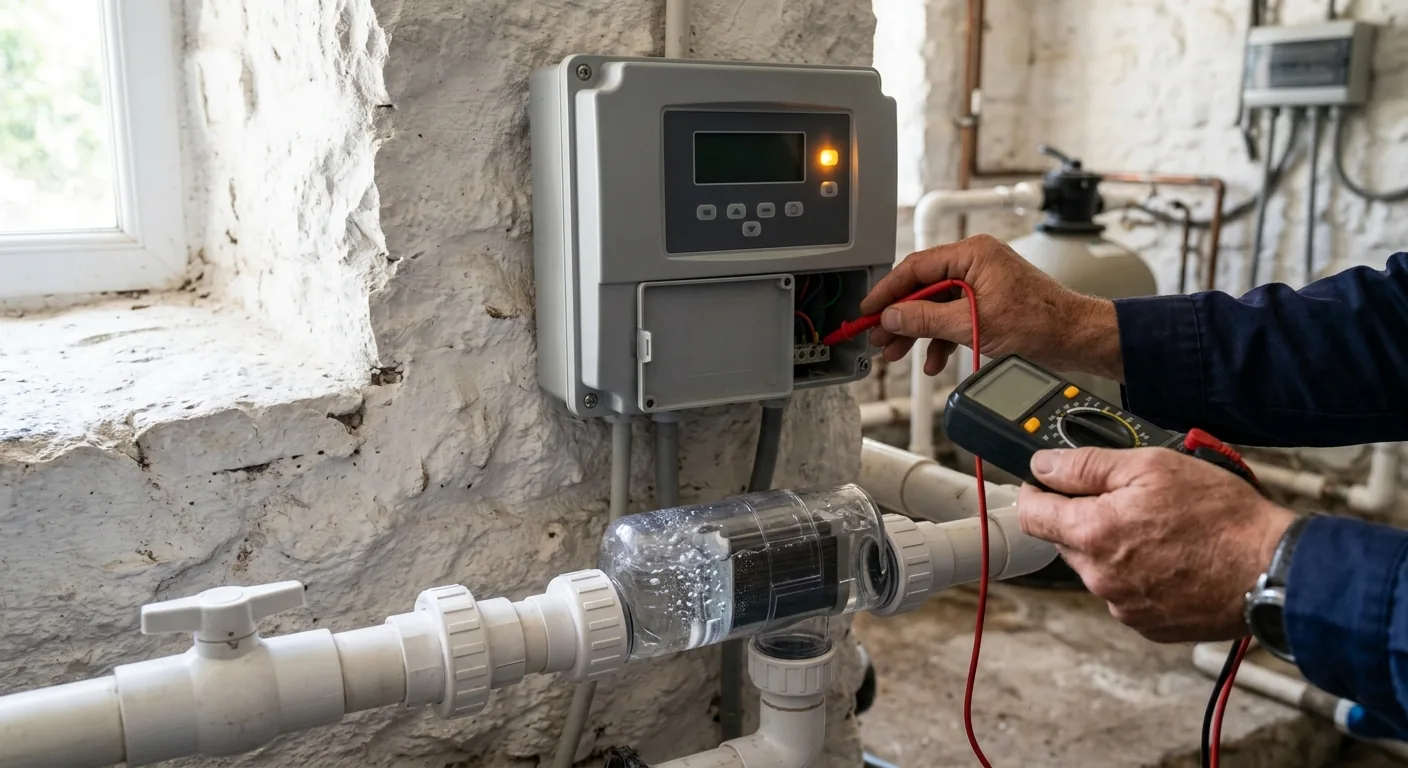
Well water is usually very hard and should be analysed by a laboratory before use. Depending on the results, you may need a softener to protect pipes and appliances or osmosis for drinking water. The pump, control panel and level sensors also need periodic checks, and a deep submersible pump is costly to pull out and replace.
Reliability in a dry summer
In a long, dry summer a cistern only holds what you stored over the winter. A typical 30 to 60 m³ cistern can run low quickly if it also has to supply a pool, a lawn and a fully booked holiday rental. A well keeps producing, but yields can fall in late summer as the water table drops, and in some areas extraction is restricted.
Tanker deliveries remain the standard backup for both. A cistern with good truck access means you can order water whenever you need it. Suppliers are busiest in peak season, so it is wise to book early.
Combining a cistern and a well
For many fincas the most robust set-up uses both. The well pumps into the cistern, which acts as a buffer, and a separate booster pump supplies the house and garden at steady pressure. Rainwater from the roofs tops up the cistern in winter, reducing how much you need to pump. Useful elements include:
- Level sensors and a controller that start the well pump only when the cistern needs filling
- Dry-run protection so neither pump runs without water
- Separate circuits for irrigation and domestic use, with treatment only where it is needed
- Remote monitoring, handy for holiday homes that sit empty for weeks
Decision checklist
Work through these questions, ideally with a specialist:
- How much water do you use in July and August, including the pool, garden and guests?
- Is your property connected to the mains, and does your municipality impose summer restrictions?
- How large are your roofs and terraces for rainwater collection?
- What does a hydrogeological study suggest about depth and yield on your land?
- Are you on rustic land or in a protected area?
- Is there access for a drilling rig and for water tankers?
- Is the property a holiday rental where supply must never fail?
If your use is modest and your roofs are generous, a cistern with rainwater harvesting may be enough. If you irrigate extensively or run a busy rental, a well feeding a cistern is often the better long-term answer.
Getting quotes
Describe your project once on Mallorca Villa Experts and up to 3 vetted water specialists in your area will quote you directly, whether for a cistern, a well or both. It is free and there is no obligation.